
Solving WW2 Mystery: Finding Soviet POW Tom

Jersey family's decades-long search to locate Soviet soldier Tom, who escaped Nazi labour camp during WWII. A compelling tale of wartime rescue and post-war mystery.
In the aftermath of World War II, countless stories of survival and heroism emerged from the ashes of conflict, yet many remained incomplete. One such narrative centers on a Soviet prisoner of war named Tom, whose fate became intertwined with a Jersey family that sheltered him during one of history's darkest periods. After finding sanctuary with his rescuers, Tom's subsequent disappearance into the Soviet Union would spark a decades-long quest for answers that has only recently begun to yield results.
The story begins during the war years when Nazi labour camps served as instruments of systematic oppression and exploitation across occupied Europe. These camps, designed to extract maximum labor from prisoners while minimizing their care and sustenance, claimed countless lives. Tom's escape from one such facility represented not merely a personal triumph of survival, but a harrowing journey through occupied territory with uncertain prospects for safety or asylum. The very act of fleeing marked him as a fugitive facing multiple dangers, both from Nazi authorities who would have executed him for desertion and from the treacherous landscape he had to traverse.
During his flight, Tom's path eventually led him to the Channel Islands, specifically to Jersey, where a compassionate family took an extraordinary risk by providing him shelter. In occupied territory under Nazi control, harboring an escaped prisoner was an act of profound courage that could have resulted in severe punishment or death for the entire household. Yet this Jersey family chose humanity over self-preservation, offering Tom food, safety, and hope during some of the war's most perilous final months. Their decision to shelter a stranger of enemy nationality spoke volumes about their character and moral conviction during an era when such choices were genuinely life-and-death matters.
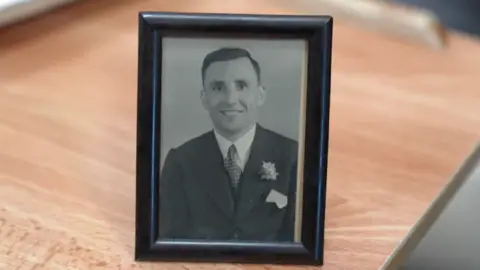
The family's protection of Tom created bonds that transcended the typical wartime refugee experience. Unlike soldiers captured and processed through official channels, Tom existed in a liminal space—neither fully at peace nor formally at war, dependent entirely on his benefactors' discretion and generosity. The family integrated him into their household, provided him with civilian clothes, and helped him maintain a low profile to avoid detection by occupying forces. These daily acts of kindness, repeated over weeks and months, forged connections of gratitude and genuine affection between Tom and his rescuers.
When the war finally concluded and liberation came to the Channel Islands, Tom's situation became complicated by international politics and the emerging Cold War tensions. Though the Nazi threat had been vanquished, the Soviet Union now represented another power threatening to reshape Europe according to its ideological vision. Tom, as a Soviet citizen and former military man, would have faced pressure or obligation to return to his homeland, even as the family that saved him hoped he might remain. The post-war period, despite bringing peace, introduced new uncertainties about displaced persons and the repatriation of Soviet nationals.
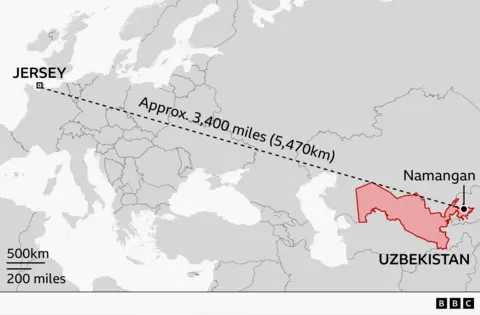
The circumstances surrounding Tom's departure from Jersey remain shrouded in the fog of historical records and family memory. Whether he was forcibly repatriated as part of official Soviet prisoner exchanges, chose to return to his homeland hoping to reunite with family members, or was compelled by political pressure, the exact details have long remained unclear. What is certain is that Tom disappeared into the Soviet Union, severing contact with the family that had risked everything for him. For decades, they were left with questions and memories, wondering what had become of the man they had saved.
The family preserved their memories of Tom, passing the story down through generations. Children who had known him grew into adults carrying fragments of his memory—the sound of his voice, details about his appearance, snippets of conversation, the emotional weight of his sudden absence. These intimate recollections, while precious, could not bridge the gap created by the Iron Curtain and the difficulties of international communication during the Cold War. Letters might go unanswered, inquiries disappear into bureaucratic systems, and hopes for reunion faded as years turned into decades.
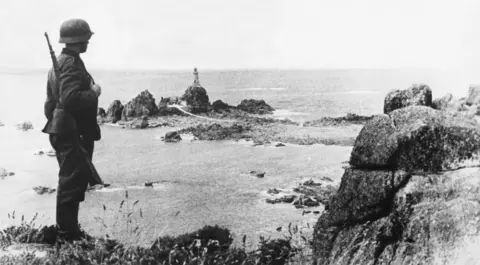
In recent years, advances in historical research and international cooperation have created new possibilities for solving such mysteries. Genealogical databases, digitized military records, and improved access to Soviet-era documentation have opened avenues previously closed to researchers. The family mystery of Tom's fate has attracted the attention of historians and researchers interested in documenting these human stories that punctuate the broader historical narrative. What was once an impossible task—tracing a single Soviet soldier across decades and continents—has become increasingly feasible through modern investigative methods.
The search for Tom represents something larger than one family's quest for closure. It embodies the universal human desire to complete interrupted stories and honor those who touched our lives. During wartime, national allegiances and ideological divisions seemed absolute and insurmountable, yet individuals like Tom's Jersey family demonstrated that compassion transcends such boundaries. Their willingness to risk their safety for a stranger challenged the dehumanizing logic of war and suggested that personal morality could overcome nationalist fervor.
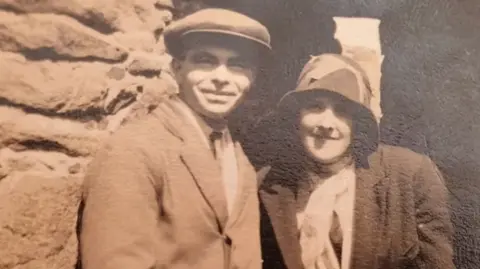
As modern investigators piece together Tom's story, they are not merely answering questions about one man's whereabouts—they are illuminating broader patterns of displacement, repatriation, and the complex fates of those caught between empires. Many Soviet prisoners and soldiers faced tragic ends after repatriation, including execution or imprisonment by Stalin's paranoid regime, which viewed those who had contact with the West with suspicion. Understanding Tom's specific trajectory offers insights into these larger historical forces that shaped countless individual lives.
The process of solving this WW2 family mystery involves detective work that spans multiple countries and institutional archives. Researchers must navigate Russian, British, and international records, cross-reference testimonies, and piece together fragmented evidence. Each discovered document, each confirmed detail, moves the investigation closer to understanding what became of the young man who found refuge with the Jersey family. The emotional stakes are considerable for the family members who have carried this mystery for generations.
What makes Tom's story particularly poignant is the contrast between the wartime rescue—an act of immediate, visible courage—and the prolonged uncertainty that followed. The family knew exactly what to do when Tom needed shelter: they provided it. But the post-war world, with its complex geopolitical realities and rigid systems, offered no straightforward path to answers. The Soviet repatriation process, the mechanics of Cold War bureaucracy, and the general chaos of post-war displacement created obstacles that family letters and inquiries could not overcome.
Recent developments in the case suggest that solving Tom's disappearance may finally be within reach. With greater cooperation between countries and more accessible historical documentation, researchers are making progress in tracing his movements and determining his fate. For the Jersey family, this ongoing investigation offers both hope and the possibility of achieving closure on a question that has haunted their family history. Whether Tom survived and lived a full life in the Soviet Union or met a tragic end, knowing his story can finally honor both his memory and the sacrifice of those who saved him.
The enduring relevance of Tom's story lies in its fundamental message about human connection across conflict and separation. In an era of global division, the quiet act of a Jersey family protecting a Soviet soldier reminds us of our shared humanity and capacity for kindness in the darkest circumstances. As researchers continue their work to locate Tom and complete his narrative, they engage in an essential act of historical preservation and human dignity.
Source: BBC News


