
Sony Predicts AI Tools Will Flood Market With Games

Sony CEO warns that efficient AI development tools will dramatically increase game releases. Learn how artificial intelligence is reshaping the gaming industry landscape.
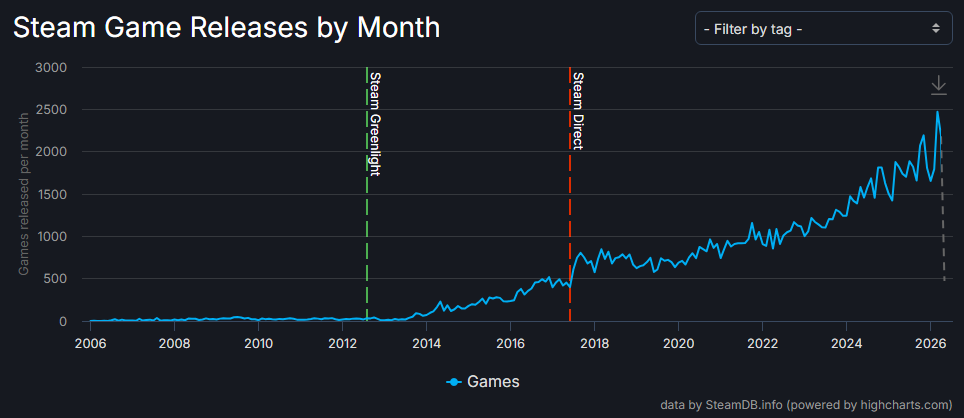
The modern video game industry has undergone a dramatic transformation over the past decade, fundamentally altering how games are created and distributed to consumers worldwide. Anyone following the evolution of game development knows that the emergence of accessible, user-friendly game engines combined with the accelerating shift toward digital distribution models has enabled an unprecedented surge in the quantity of commercial games released annually across all platforms. From major console storefronts to digital marketplaces like Steam, the volume of new titles launching each year has reached historically high levels, creating both opportunities and challenges for the industry.
Now, Sony Interactive Entertainment President and CEO Hideaki Nishino is projecting that this explosive growth trajectory will only intensify further in the coming years. According to Nishino, the emergence of sophisticated AI development tools will serve as a major catalyst for accelerating the rate at which new games enter the market. These advanced technologies are specifically designed to streamline the creative process, reduce production friction, and democratize game development to an even greater degree than current tools have already accomplished.
During a comprehensive presentation to investors held on Friday, Nishino articulated Sony's strategic outlook for the gaming landscape, emphasizing the company's expectations for significant market expansion. The executive projected that Sony will "expect[s] to see a meaningful increase in the volume and diversity of content available to players" in the immediate future. This ambitious forecast reflects the company's confidence in how AI tools are reshaping the fundamental economics and logistics of game production across the industry.

According to Nishino's analysis, the proliferation of artificial intelligence in game development is fundamentally changing the barriers to entry for new creators and established studios alike. The executive emphasized that these AI development tools are actively "lowering barriers to creation, accelerating development cycles, and enabling more creators to enter the market." By reducing the technical complexity and resource requirements traditionally associated with game development, AI technologies are democratizing access to professional-grade development capabilities that were previously available only to well-funded studios with substantial technical expertise.
The implications of this technological shift are profound and multifaceted. Development cycles that once required years of production time and large teams of specialized professionals can now be compressed significantly through intelligent automation and AI-assisted workflows. This compression of timelines directly translates into reduced development costs, faster time-to-market for new titles, and the ability for smaller independent developers to compete more effectively with established industry players. The result is a market dynamic that fundamentally favors increased output volume and greater creative diversity.
To substantiate his projections and demonstrate Sony's commitment to this technological trajectory, Nishino pointed to concrete evidence drawn from Sony's own first-party game development operations. The company's internal studios are actively integrating AI-powered tools into their creative and production pipelines, serving as both practical demonstrations of the technology's efficacy and proof-of-concept examples of how major publishers envision the future of game development. By showcasing how Sony's own talented developers are leveraging these tools to enhance their workflow efficiency, the executive provided tangible evidence that his forecasts are grounded in real-world implementation rather than mere speculation.

The broader context for Sony's optimistic assessment includes the industry's ongoing struggles with game market saturation and the increasing difficulty of standing out in crowded digital storefronts. While the sheer volume of available games provides consumers with unprecedented choice, it simultaneously creates challenges for discoverability and creates intense competition for limited consumer attention and spending. However, Sony's analysis suggests that this saturation is less problematic than diversification is beneficial, as more games means more opportunities for niche audiences to find titles that specifically appeal to their interests and preferences.
The executive's remarks also reflect broader industry trends that have been accelerating for several years. The democratization of game development through accessible engines and tools has already enabled independent developers to create commercially successful titles that rival or exceed the quality of triple-A studio productions. AI represents a natural evolution and amplification of this existing trend, promising to extend these advantages even further down the development spectrum. This technological progression suggests that the gap between hobbyist developers and professional studios will continue to narrow, enabling more creators to transform their visions into commercially viable products.
From a consumer perspective, Sony's projection carries significant implications about the gaming landscape players will encounter in coming years. Increased volume and diversity of available content theoretically means more options tailored to specific preferences, niche interests, and underserved audience segments. However, it also raises important questions about quality control, curation, and how players will navigate increasingly crowded digital storefronts to discover the titles that will genuinely engage and satisfy them. The challenge of finding quality content amid abundant supply may emerge as one of the defining consumer issues in the gaming market's future.
The competitive dynamics among major publishers will likely shift significantly as AI-powered development becomes increasingly mainstream and accessible. Studios that effectively integrate these tools into their workflows may gain substantial advantages in terms of time-to-market and production efficiency, potentially allowing them to release more titles across diverse genres and platforms simultaneously. This could reshape traditional market competition, where larger budgets and team size have historically provided competitive advantages. Instead, efficiency in leveraging AI capabilities could become a more decisive factor in determining which studios succeed in capturing market share and player engagement.
Sony's positioning on this issue also reflects the company's broader strategic interests as a major stakeholder in the gaming ecosystem. By actively promoting awareness of how AI will increase content volume and diversity, Sony is simultaneously building narrative support for the technological transition and potentially positioning itself as a forward-thinking leader embracing innovation. The company's substantial investments in AI research and development, coupled with its massive installed base of PlayStation users, position Sony to benefit substantially from the acceleration of game releases that improved AI tools will facilitate.
Industry observers and analysts will likely monitor closely how accurately Nishino's projections manifest in actual market data over the coming months and years. Tracking metrics such as the total number of new game releases, average development timelines, development team sizes, and the proportion of titles created by independent developers versus established studios will provide concrete measures of whether AI's impact matches the ambitious predictions Sony's leadership is currently making. If these projections prove accurate, the gaming industry could be on the cusp of a transformative period characterized by unprecedented levels of creative output and market experimentation.

The long-term sustainability of such an acceleration in game releases remains an open question, however. While increased production efficiency and lower barriers to entry will undoubtedly enable more games to reach market, whether the quality, originality, and commercial viability of these titles will match historical averages remains uncertain. The gaming market has experienced periodic quality concerns and saturation issues in specific genres when production volume increased beyond the market's capacity to absorb new releases effectively. Balancing increased quantity with maintained or improved quality will represent a critical challenge for developers and publishers navigating this new landscape that Sony's executive is helping to articulate and promote.
Source: Ars Technica


