
South Africa President Faces Resignation Pressure

Constitutional Court rules MPs wrongly blocked impeachment proceedings against President Cyril Ramaphosa, intensifying political pressure.
South Africa's political landscape has been shaken by a significant Constitutional Court ruling that has intensified calls for President Cyril Ramaphosa to step down from his position. The court determined that members of parliament acted improperly when they blocked impeachment proceedings against the sitting president, marking a pivotal moment in the nation's ongoing political crisis. This decision has reignited debates about presidential accountability and the proper functioning of parliamentary oversight mechanisms in the country.
The impeachment proceedings that were initially halted by parliament centered on serious allegations against President Ramaphosa. According to reports, the blocked impeachment motion was supported by multiple political parties who believed the president's actions warranted formal investigation and potential removal from office. The constitutional court's intervention signaled that parliament's decision to prevent the proceedings from moving forward was fundamentally flawed and violated established legal procedures designed to ensure transparency and accountability in the nation's highest office.
This ruling represents a significant victory for those advocating for stronger presidential accountability mechanisms in South Africa. The court's decision underscores the importance of allowing impeachment processes to proceed when there are substantial allegations against sitting leaders. Legal experts have noted that the ruling reaffirms the constitutional protections designed to ensure that no individual, regardless of their position, is above the law or immune from scrutiny by elected representatives.
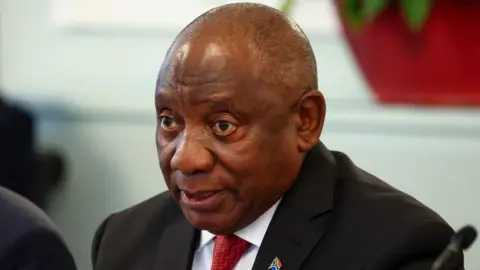
The political implications of the court's decision are far-reaching and multifaceted. Opposition parties have seized upon the ruling as vindication of their earlier push to pursue the impeachment motion, and many have renewed their calls for President Ramaphosa to resign voluntarily. The ruling has also sparked intense debate within the ruling African National Congress (ANC) party, with some members questioning whether the party should continue its support for the president or allow the impeachment process to proceed without obstruction.
President Ramaphosa has faced mounting pressure from various quarters within South African politics and civil society. The constitutional ruling against parliament's blockade of impeachment proceedings has given fresh momentum to those who argue the president can no longer effectively govern the country. Political analysts suggest that the court's decision may force a recalibration of parliamentary dynamics and potentially alter the political calculations of various parties as they consider how to navigate the unfolding crisis.
The broader context of this ruling involves concerns about presidential conduct and governance in South Africa. Allegations against President Ramaphosa have been central to political debates regarding the integrity of the nation's executive branch. The constitutional court's determination that parliament was wrong to block the impeachment proceedings validates the concerns raised by opposition members who argued that blocking such proceedings circumvented democratic processes and prevented proper oversight of executive power.

Legal scholars and constitutional experts have praised the court's reasoning in the decision. They argue that the ruling establishes an important precedent for ensuring that parliamentary impeachment mechanisms function as intended under South Africa's constitution. The decision reinforces the principle that parliamentary procedures cannot be arbitrarily suspended or blocked without violating constitutional safeguards that protect democratic accountability and the separation of powers.
The ANC's response to the ruling has been carefully measured, with party officials acknowledging the court's authority while suggesting they need time to consider the implications. Some senior party members have indicated that while they respect the court's decision, the party will evaluate its options and determine the most appropriate path forward. This cautious response reflects the deep divisions within the ruling party regarding how to handle the president and the broader questions of party leadership and direction.
Opposition parties, particularly the Democratic Alliance and the Economic Freedom Fighters, have expressed strong support for the court's ruling. These parties have used the decision to reinvigorate their calls for parliamentary oversight and stronger accountability mechanisms in South African politics. Their statements suggest they intend to use the court's validation of their earlier position to push forward with impeachment proceedings and force a formal examination of the allegations against the president.
The timing of this ruling comes at a particularly challenging moment for South African governance. The nation has been grappling with multiple crises including energy shortages, economic challenges, and service delivery issues. The constitutional court's decision regarding the impeachment proceedings adds another layer of complexity to an already strained political environment and raises questions about whether the government can effectively address these pressing national concerns amid ongoing political turmoil.
International observers have taken note of the ruling and its implications for South African democracy. The decision demonstrates that the country's judicial system continues to function independently and enforce constitutional protections even when ruling against the executive or legislative branches. This development may help restore confidence in South Africa's institutional checks and balances, though it also highlights the vulnerability of the political system to internal divisions and conflicts over governance priorities.
The road ahead for President Ramaphosa remains uncertain following the constitutional court's decision. The ruling eliminates one significant legal obstacle that previously prevented impeachment proceedings from advancing through parliament. Whether the president will choose to resign voluntarily, fight the impeachment process, or attempt to negotiate a political settlement with various factions remains to be seen. Each option carries different consequences for the president's political future and for South Africa's broader political stability.
The constitutional court's decision is expected to have lasting implications for how presidential accountability is enforced in South Africa. By ruling against parliament's blockade of impeachment proceedings, the court has reaffirmed that constitutional processes cannot be circumvented through procedural maneuvers or political calculations. This precedent may influence how future constitutional crises are handled and could shape the trajectory of South African politics for years to come.
Civil society organizations have responded to the ruling with a mix of satisfaction and concern. While many praised the court for upholding constitutional principles and democratic accountability, others have expressed worry about the political instability that may result from intensified calls for the president's removal. These organizations emphasize the need for constructive dialogue and a focus on addressing the nation's broader challenges while ensuring that proper legal and constitutional procedures are followed in addressing the impeachment question.
Source: BBC News


