
South Africa's President Suspends Police Chief Amid Court Charges

President Cyril Ramaphosa suspends police commissioner Fannie Masemola following court charges, citing the critical role in crime prevention.
South Africa's President Cyril Ramaphosa has made the significant decision to suspend Police Commissioner Fannie Masemola following serious court charges filed against him. The suspension, announced through official presidential channels, represents a major development in South African law enforcement leadership during a critical period for the nation's security apparatus. Ramaphosa's move underscores the gravity of the allegations and the ongoing challenges facing the country's police force.
The suspension of Masemola comes at a time when South Africa's police leadership has faced mounting scrutiny and pressure to address escalating crime rates across the country. Police Commissioner suspension decisions of this magnitude are rarely taken lightly, and this action signals the president's commitment to accountability within the security establishment. The timing of this suspension reflects broader concerns about corruption and misconduct within law enforcement agencies that have plagued the nation for years.
According to official statements from the presidency, Ramaphosa emphasized that the suspension was implemented specifically because of the critical role Masemola plays in the ongoing fight against crime in South Africa. This paradoxical reasoning—suspending the commissioner while acknowledging his importance to crime prevention efforts—highlights the delicate balance between maintaining operational continuity and ensuring proper legal accountability. The president's decision underscores the complexity of managing institutional leadership during periods of legal and political turbulence.
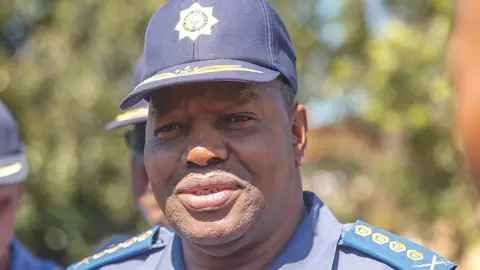
Fannie Masemola has served as the head of the South African Police Service, holding one of the most consequential leadership positions in the country's security infrastructure. Under his tenure, various initiatives aimed at combating organized crime, gang violence, and other serious offenses have been implemented across multiple provinces. His role in shaping law enforcement strategy and resource allocation has been substantial, making any disruption to his leadership potentially consequential for ongoing operations.
The court charges that precipitated the suspension remain a matter of significant public and political interest, drawing attention to questions about integrity within the highest echelons of the police force. These charges represent more than just personal legal jeopardy for Masemola; they reflect broader institutional challenges that have long plagued South African law enforcement. The suspension decision demonstrates that even senior officials are subject to legal scrutiny and accountability mechanisms, though the effectiveness of these mechanisms has been questioned by critics.
South Africa's law enforcement leadership has undergone numerous transitions in recent years, often amid controversy and scandal. The nation has grappled with persistent corruption allegations at various levels of the police hierarchy, leading to public demands for reform and stronger oversight. Masemola's appointment and subsequent suspension represent part of this larger narrative of institutional challenges and attempts at renewal within the security sector.
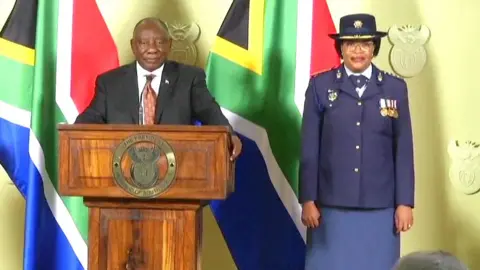
The suspension raises important questions about the stability and continuity of South Africa's security apparatus during a period when crime prevention remains a paramount national concern. With the commissioner suspended pending legal proceedings, the chain of command and decision-making authority within the police force becomes subject to potential disruption. This transition in leadership could impact ongoing investigations, policy implementation, and the morale of officers throughout the organization.
Ramaphosa's decision to suspend Masemola while acknowledging his critical role in crime fighting reflects the difficult position in which the president finds himself. Removing the commissioner could potentially hamper ongoing security operations, yet failing to act in response to court charges would undermine confidence in the rule of law and institutional accountability. This decision ultimately prioritizes legal accountability while attempting to minimize operational disruption within the police force.
The suspension of the police commissioner has significant implications for South Africa's approach to crime prevention and law enforcement strategy. The nation faces considerable challenges related to violent crime, corruption, and gang activity, all of which require strong, consistent leadership at the highest levels of law enforcement. The temporary absence of Masemola from his post creates uncertainty regarding the continuity and direction of various initiatives designed to address these persistent security threats.

Political analysts have noted that the suspension decision demonstrates the government's stated commitment to constitutional principles and the rule of law, despite frequent accusations of selective accountability and political interference in judicial processes. The move sends a message to both domestic constituencies and international observers that South African leadership is willing to take decisive action when senior officials face legal challenges. However, critics argue that such actions should have been taken more comprehensively and consistently across all levels of government.
The suspension also raises questions about succession and interim leadership arrangements within the police force. Determining who will assume Masemola's responsibilities during his suspension requires careful consideration of institutional stability, legal compliance, and operational effectiveness. The presidential office would need to ensure that designated leadership maintains continuity while the legal proceedings against Masemola proceed through the court system.
Ramaphosa's handling of this situation reflects the broader challenges facing South African governance, where institutional integrity, operational effectiveness, and political considerations often intersect. The president must balance competing demands: maintaining the legitimacy of law enforcement institutions, ensuring continued progress in fighting crime, and demonstrating that no one, regardless of rank or position, is above the law. This suspension represents an attempt to navigate these complex institutional and political dynamics.
Looking forward, the suspension of Fannie Masemola will likely remain a focal point of national discussion regarding institutional reform, accountability, and the future direction of South African law enforcement. The outcome of the court proceedings against Masemola could have far-reaching consequences for police leadership and public confidence in security institutions. As the legal process unfolds, South Africa's citizens and international observers will be watching closely to see how the nation's justice system handles this high-profile case and what it ultimately means for the country's law enforcement future.
Source: BBC News


