
South Carolina GOP Plan Targets Historic Black Congressman

South Carolina Republicans propose redistricting that would dismantle James Clyburn's district, the state's only Black congressional seat since 1897.
James Clyburn, who has represented South Carolina in Congress for decades, faces an unprecedented political challenge as state Republicans advance a controversial redistricting proposal that would effectively eliminate his historically significant district. The potential dismantling of his seat marks a troubling development in the ongoing struggle over voting rights and minority representation, coming at a time when the Supreme Court has substantially weakened protections under the Voting Rights Act.
For over 125 years, South Carolina has sent exactly one Black representative to Congress—and that representative has been James Clyburn since his election in 1992. This remarkable historical continuity reflects both the deep-rooted racial demographics of the state and the calculated political calculations that have shaped congressional districts throughout South Carolina's modern history. Clyburn's presence in Congress represents a hard-won achievement in a state with a complex and often painful history regarding race relations and political representation.
The current proposal to redraw South Carolina's political map represents what critics have characterized as "Jim Crow 2.0"—a reference to the Jim Crow laws that enforced racial segregation throughout the American South. The comparison carries significant weight given that the redistricting effort specifically targets the elimination of a district designed to ensure Black representation in Congress, raising fundamental questions about voting rights, democratic principles, and the protection of minority interests in the political process.

The current configuration of South Carolina's sixth congressional district is a sprawling geographic entity that stretches across more than 200 miles of the state. Beginning at the southern border with Georgia, the district encompasses the suburban communities surrounding Savannah before extending northward for approximately 100 miles. The district's path winds deliberately around the heart of Charleston, one of South Carolina's most significant metropolitan areas, before cutting through the rural Black belt farmland that characterizes the interior of the state. The district continues its remarkable journey by eventually reaching Columbia, the state capital, which lies another 115 miles to the north.
This unusual geographic configuration was deliberately constructed to ensure that communities with predominantly Black populations were grouped together within a single district, thereby creating a district where Black voters could elect their preferred representative. Such majority-minority districts were intended to be protected under the Voting Rights Act of 1965, one of the cornerstone pieces of civil rights legislation. However, the Supreme Court's significant weakening of the Voting Rights Act in recent years has undermined these protections substantially, leaving districts like Clyburn's vulnerable to redistricting challenges.
The Supreme Court's decisions to gut major provisions of the Voting Rights Act have had cascading consequences for minority voting rights across the nation. The Court's rulings eliminated the requirement that states with histories of racial discrimination must obtain federal approval before making changes to their voting procedures or district boundaries. This development removed a crucial safeguard that had previously prevented the deliberate dilution of minority voting strength through strategic redistricting.
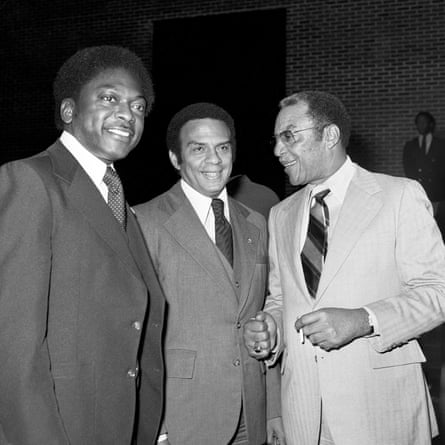
South Carolina's Republican-controlled legislature has seized on this legal opportunity to advance its redistricting proposal, which would fundamentally alter the political landscape of the state. By breaking up Clyburn's district and dispersing its Black population among multiple neighboring districts, the proposal would effectively eliminate the only district in South Carolina where Black voters represent a clear majority capable of electing their candidate of choice. This strategy is part of a broader pattern of partisan gerrymandering that has affected states across the nation.
The timing of this proposal is particularly significant given the broader national context of voting rights debates. As conservative majorities on the Supreme Court have systematically dismantled voting rights protections that were considered settled law for decades, states controlled by Republican legislatures have moved aggressively to reshape electoral districts to their partisan advantage. While some of these changes are motivated purely by partisan considerations, the elimination of a district specifically designed to ensure Black representation raises particularly acute concerns about racial discrimination in redistricting.
Throughout American political history, the elimination of majority-minority districts has been a common tactic employed to reduce the political influence of Black voters and other communities of color. The current proposal in South Carolina represents a continuation of this troubling pattern, albeit now operating in a legal environment significantly more permissive toward such actions. The weakening of the Voting Rights Act has essentially reopened doors that many believed had been permanently closed following the civil rights movements of the 1960s.

James Clyburn's legacy in Congress extends far beyond his electoral success in South Carolina. As a senior member of the Democratic caucus and a respected voice on numerous policy issues, Clyburn has wielded considerable influence in shaping legislation and advancing his party's agenda. His presence in Congress has provided South Carolina's Black population with direct representation at the highest levels of government, a position that could be lost if the proposed redistricting plan advances.
The fight over South Carolina's congressional districts reflects broader tensions between competing visions of American democracy. Supporters of the Republican proposal argue that the current district configuration is inefficient and that redistricting based purely on partisan considerations is standard political practice. However, critics contend that deliberately targeting a district specifically to eliminate Black representation crosses a constitutional and moral line, particularly in light of America's history of racial discrimination in voting and elections.
The potential dismantling of Clyburn's district also carries symbolic significance that extends beyond South Carolina's borders. If successful, the proposal would send a message that the elimination of minority voting strength is now permissible under federal law, encouraging similar efforts in other states. The ripple effects could fundamentally alter the diversity of representation in Congress and reduce the political voice of Black Americans in an era when voting rights protections have been substantially weakened.

The path forward for Clyburn and supporters of voting rights protection remains uncertain. Legal challenges to the redistricting proposal are expected, but the current composition of the Supreme Court offers little hope for relief through the federal judiciary. Instead, the battle may play out in the court of public opinion and potentially through electoral politics, where voters in other states may react with concern to efforts to eliminate minority representation.
This situation underscores the ongoing struggle for voting rights and equitable representation in American democracy. While significant progress has been made since the Jim Crow era, the current assault on voting rights protections demonstrates that the fight for full political participation and fair representation remains far from over. South Carolina's proposed redistricting represents a critical moment in this ongoing struggle, with implications that extend well beyond the state's borders.
Source: The Guardian


