
Southern China Braces for Severe Flooding

Heavy rainfall exceeding 100mm threatens southern China provinces. Government agencies mobilize emergency response as flooding risks escalate across Guangxi and Guangdong.
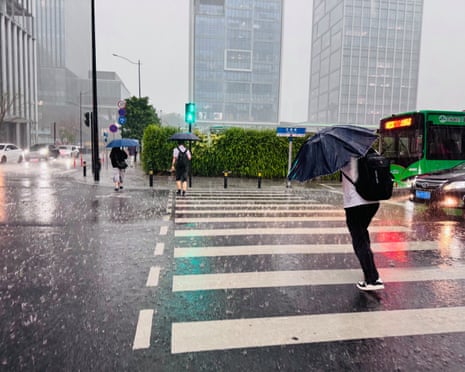
Severe weather patterns are reshaping climate conditions across multiple continents, with southern China facing an unprecedented deluge of rainfall that threatens widespread flooding in coming days. The torrential rain currently sweeping across the region has prompted urgent action from government authorities, who are mobilizing comprehensive emergency management protocols to protect vulnerable communities and critical infrastructure from potential inundation.
The meteorological forecasts indicate that by Wednesday, rainfall accumulation will reach dangerous levels across a vast expanse of southern provinces. Rainfall totals are anticipated to exceed 100 millimeters across numerous populated areas throughout Guangxi, Guangdong, Fujian, Zhejiang, Jiangxi and Hunan provinces. In particularly susceptible zones, precipitation measurements could surge to between 150 and 200 millimeters, representing exceptionally heavy downpours that pose significant risks to both rural and urban environments.
In response to these alarming meteorological predictions, the Office of the State Flood Control and Drought Relief Headquarters has convened multiple emergency meetings with the Ministry of Emergency Management to coordinate a comprehensive response strategy. These discussions have brought together specialists from meteorological and hydrological departments to assess current conditions, evaluate predictive models, and develop contingency plans. The emphasis throughout these consultations has centered on the critical importance of reinforced patrols throughout potentially affected regions and the implementation of rapid-response emergency protocols designed to mitigate the catastrophic consequences that flooding could inflict upon the population and surrounding territories.
A particularly pressing concern for government authorities involves the management of reservoir systems throughout the affected regions. Officials have mandated that reservoirs currently identified as having safety vulnerabilities must be maintained in an empty or minimal-capacity state during the immediate period of heavy rainfall. This precautionary measure is intended to maximize the storage capacity of these critical water management structures, allowing them to absorb the anticipated runoff from the torrential precipitation without breaching their embankments or triggering catastrophic structural failures. This directive is expected to remain in effect not only during the current weather emergency but throughout the entire upcoming rainy season.
The flood relief strategies being implemented represent a sophisticated approach to disaster management that integrates multiple layers of protection. Emergency response teams have been placed on heightened alert status, with personnel positioned in strategic locations throughout the vulnerable provinces to respond swiftly to developing crises. Communication networks have been reinforced to ensure that critical information regarding weather developments, rainfall measurements, and flooding incidents can be rapidly disseminated to local authorities and affected communities, enabling timely evacuation procedures and protective actions.
Meanwhile, the broader context of global weather patterns reveals that extreme weather conditions are manifesting across diverse geographic regions simultaneously. Across the Indian subcontinent, heatwaves are intensifying to dangerous levels, with temperatures soaring to approximately 45 degrees Celsius in various locations. These severe heat conditions create their own public health crisis, straining medical infrastructure, elevating heat-related illness and mortality rates, and exacerbating water scarcity issues in already vulnerable regions.

In stark contrast to the oppressive heat enveloping India, portions of central Canada are experiencing unseasonably cold weather patterns that deviate significantly from typical springtime conditions. This geographic divergence in weather phenomena underscores the complex and increasingly unpredictable nature of global climate patterns. Scientists and meteorologists are closely monitoring these anomalous weather conditions to better understand the underlying atmospheric mechanisms driving such dramatic regional variations and to improve predictive models for future seasonal forecasting.
The convergence of multiple simultaneous weather crises across different continents highlights the increasing challenges facing global disaster management systems. As climate change intensifies weather volatility, nations must develop more robust and adaptive emergency response frameworks capable of addressing diverse and simultaneous natural hazards. The situation unfolding in southern China exemplifies the urgent need for continued investment in early warning systems, infrastructure resilience, and coordinated international approaches to climate adaptation and disaster preparedness.
For residents and officials in the threatened regions of southern China, the coming days represent a critical period requiring heightened vigilance and strict adherence to emergency guidelines. Evacuation plans must remain in readiness, communication channels must stay open and functional, and emergency supplies must be adequately stockpiled throughout vulnerable communities. The coordinated response from China's national and regional authorities demonstrates a commitment to minimizing casualties and property damage through proactive intervention and comprehensive emergency management protocols, setting an important example for how nations worldwide can address escalating climate-related challenges.
Source: The Guardian


