
Southern States Redraw Maps to Dilute Black Voting Power

Following Supreme Court ruling, southern states rush to eliminate Democratic districts and dilute Black voter influence in congressional elections.
In a coordinated effort that has alarmed voting rights advocates across the nation, southern states are aggressively redrawing congressional maps to eliminate Democratic districts and substantially weaken the electoral power of Black voters. This sweeping campaign represents one of the most significant assaults on minority voting representation since the passage of the Voting Rights Act of 1965, with states including Louisiana, Alabama, Tennessee, and others pursuing aggressive redistricting strategies despite ongoing primary elections in some jurisdictions. The unprecedented speed and scope of these efforts have been directly enabled by a pivotal Supreme Court decision that fundamentally weakened the legal protections that have safeguarded minority voters for nearly six decades.
The catalyst for this redistricting surge stems from the Supreme Court's landmark ruling that gutted Section 2 of the Voting Rights Act, a critical provision that has long served as the primary federal mechanism for challenging discriminatory electoral practices at the state and local levels. This decision represents a dramatic reversal of decades of voting rights jurisprudence and has given Republican-controlled legislatures across the South unprecedented latitude to reshape electoral boundaries with minimal fear of federal intervention or legal consequences. The timing of this redistricting blitz is particularly striking, with several states pushing forward with map changes even as voters are actively engaged in congressional primary contests, creating confusion and potentially disenfranchising voters who may not understand how the new maps affect their representation.
Tennessee has emerged as one of the most aggressive states in this redistricting campaign, with Republicans in the state legislature enacting a new congressional map designed to eliminate the state's only Democratic representative in Congress. The strategy employed by Tennessee Republicans centers on carving up Memphis, the state's largest city and a majority-Black metropolitan area with deep Democratic voting patterns, by splitting it into three separate congressional districts rather than allowing it to remain concentrated in a single district. This technique, known as "cracking," is a well-documented method of diluting minority voting power by spreading concentrated populations across multiple districts where they become unable to form a cohesive electoral majority in any single race.

Louisiana, notably the state whose congressional map was central to the Supreme Court's Voting Rights Act decision, appears poised to implement a new map that would eliminate one of its two Black Democratic representatives currently serving in Congress. The situation in Louisiana presents a particularly stark example of the irony inherent in this moment: the very state whose case prompted the Supreme Court to weaken voting rights protections is now moving expeditiously to exploit that decision to reduce Black representation. Political analysts note that the Louisiana redistricting effort demonstrates how swiftly legislative bodies can act when freed from the constraints of federal voting rights enforcement, with the state legislature advancing its map through committee votes and toward final passage with remarkable speed.
Alabama has pursued an even more aggressive legal strategy, successfully petitioning the US Supreme Court itself to allow the state to eliminate an entire congressional district currently held by a Black Democrat. Rather than working through the standard legislative redistricting process alone, Alabama Republicans brought their case directly to the Supreme Court, seeking emergency relief and requesting permission to implement their new map despite ongoing legal challenges and primary elections. The willingness of the Supreme Court to entertain and potentially grant Alabama's request underscores the dramatic shift in the Court's approach to voting rights issues and signals that the justices may be prepared to provide substantial deference to state legislatures in redistricting matters.

Voting rights experts and civil rights organizations have responded with alarm to these developments, arguing that the redistricting efforts represent a coordinated campaign to roll back decades of progress in protecting minority political participation. These advocates emphasize that Black voter representation in Congress has historically correlated with increased responsiveness to African American constituents' policy concerns, including issues related to criminal justice reform, economic development in disadvantaged communities, and civil rights enforcement. The elimination of districts where Black voters can exercise meaningful electoral power threatens to reduce not only the number of African American elected officials but also the overall attention paid by Congress to issues affecting Black communities.
The Supreme Court's decision to weaken Section 2 of the Voting Rights Act has fundamentally altered the legal landscape for redistricting challenges. Under the previous interpretation of Section 2, voting rights advocates could challenge maps in federal court by demonstrating that a particular redistricting plan had the effect of diluting minority voting power, even if the legislature could not be proven to have acted with discriminatory intent. The Supreme Court's new interpretation substantially raises the bar for such challenges, requiring plaintiffs to prove that a map was designed with intentional discrimination in mind, a far more difficult evidentiary burden that empowers legislatures to pursue aggressive partisan and racial gerrymandering with confidence that legal challenges will fail.
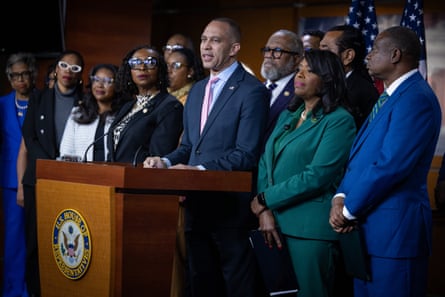
Beyond the immediate impact on current elections, civil rights advocates worry that this redistricting surge could have profound long-term consequences for minority political representation and influence throughout the South. The loss of districts where Black voters constitute a voting majority removes opportunities for Black candidates to achieve electoral success and eliminates voice and representation in Congress for decades to come. Additionally, the demonstration effect of aggressive redistricting in these southern states may embolden similar efforts in other regions of the country, potentially triggering a nationwide wave of map redraws specifically designed to minimize Democratic and minority voting power.
The scope and speed of the current redistricting efforts also raises procedural and constitutional concerns beyond voting rights issues. Some legal scholars have questioned whether states are violating their own constitutional requirements by rushing through redistricting processes without adequate public input, transparent deliberation, or adherence to normal legislative timelines. The fact that primary elections are already underway in some states while legislatures simultaneously move to redraw district boundaries suggests that the redistricting process may be operating outside normal procedural safeguards designed to ensure fairness and democratic legitimacy.
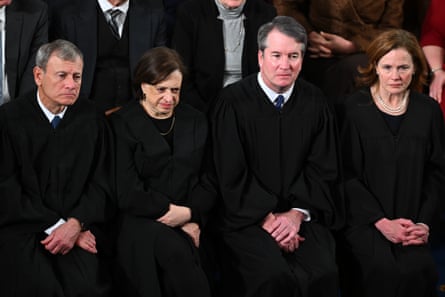
Congressional Democrats and voting rights organizations have called for federal intervention and legislative action to restore robust protections for minority voters. Some have proposed amendments to the Voting Rights Act that would restore the preclearance requirement, which previously required jurisdictions with histories of discrimination to obtain federal approval before implementing voting changes. Others have advocated for broader legislation that would establish national standards for redistricting, limit partisan gerrymandering, and provide additional protections for minority voting rights regardless of state boundaries. However, with Republicans controlling the House and the Senate lacking the votes to overcome a potential filibuster, the prospects for federal legislative action appear limited in the current political environment.
The current moment represents a critical juncture for voting rights in America, with the decisions made by state legislatures over the next several months potentially shaping electoral outcomes and minority representation for the next decade. As southern states continue their redistricting initiatives, voting rights advocates face the challenging task of mounting legal challenges under substantially weakened voting rights protections while simultaneously mobilizing political pressure to prevent the most egregious instances of voting dilution. The ultimate outcome of this struggle will likely determine not only the composition of Congress in the coming years but also the broader trajectory of voting rights protection and minority political influence in American democracy.

