
Space Powers Race: US, China, Russia Spy Satellites in Orbit

The US, China, and Russia are deploying inspector satellites in geosynchronous orbit. Learn why GEO is crucial for space surveillance and military operations.
The competition for space dominance has intensified dramatically as the world's leading space powers engage in an unprecedented surveillance race in geosynchronous orbit. For over a decade, the United States military has maintained a sophisticated fleet of inspector satellites positioned strategically in this critical orbital zone, designed to approach other spacecraft and gather detailed intelligence. China entered this competitive arena in 2018 with its own satellite reconnaissance program, establishing itself as a serious challenger in space surveillance capabilities. Now, Russia has recently joined this high-stakes competition by deploying what analysts believe is its own inspector satellite or potential attack satellite into geosynchronous orbit, marking a significant escalation in space power dynamics.
The implications of this three-way competition cannot be overstated, as each nation seeks to monitor the activities and capabilities of its rivals in one of the most strategically important regions of space. The US Space Force is responding to these developments by preparing orders for additional reconnaissance satellites to maintain its technological and numerical advantage in geosynchronous orbit. This arms race reflects broader tensions between these superpowers and their determination to control critical orbital infrastructure. The situation underscores how space has become a genuine domain of military and strategic competition, much like land, sea, and air.
Geosynchronous orbit, commonly referred to as GEO, represents a unique and extraordinarily valuable region of space due to its distinctive orbital characteristics and practical applications. Located approximately 22,000 miles, or 36,000 kilometers, directly above the Earth's equator, satellites in GEO orbit travel at the same angular velocity as the planet's rotation. This remarkable synchronization means that satellites remain stationary relative to a fixed point on Earth's surface, appearing to hover over the same geographic location continuously throughout their operational lifetime.
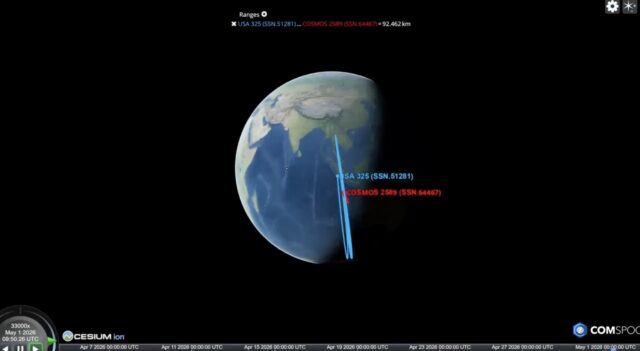
The practical advantages of geosynchronous satellites make them indispensable for modern civilization and military operations worldwide. Commercial communications satellites, weather monitoring platforms, and military command-and-control systems all depend on the permanence and reliability that GEO orbit provides. Unlike lower orbital regions where satellites move rapidly across the sky, GEO satellites can maintain continuous coverage of specific regions, making them ideal for broadcasting, telecommunications, and surveillance operations. A single satellite in geosynchronous orbit can serve an entire continent, providing uninterrupted service to millions of users simultaneously.
Military and commercial organizations typically maintain their geosynchronous satellites in the same orbital "slot" for extended periods, sometimes spanning many years or even decades. These slots represent valuable real estate in space, with countries and companies investing billions of dollars to establish and maintain their presence in these coveted positions. The static nature of geosynchronous satellites makes them particularly vulnerable to interference, surveillance, and potentially hostile action by other spacefaring nations. This vulnerability has driven the development of inspector satellite technology, as military powers seek to understand what their rivals are doing in this critical orbital region.
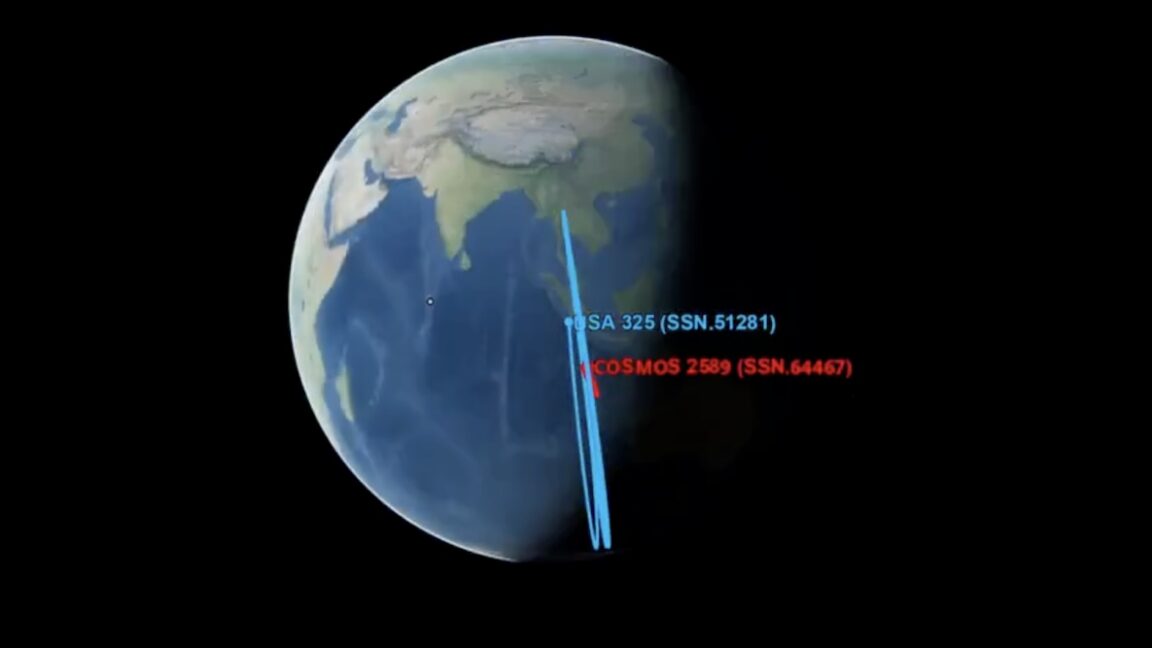
The United States has maintained a significant advantage in space surveillance technology for many years, with its military inspector satellites equipped with advanced imaging systems capable of capturing high-resolution photographs of distant objects in space. These American systems can maneuver in orbit, approach other satellites closely, and gather detailed intelligence about their design, capabilities, and activities. The program has operated with relative secrecy for over a decade, allowing the US to maintain technological superiority in this domain. However, the emergence of Chinese and Russian capabilities has eroded this advantage and forced the Pentagon to pursue more aggressive expansion of its own reconnaissance capabilities.
China's entry into satellite inspection operations beginning in 2018 demonstrated that Beijing had successfully developed comparable or complementary technologies for monitoring other spacecraft in geosynchronous orbit. Chinese inspector satellites have reportedly conducted several close approaches to international and other nations' satellites, gathering intelligence and demonstrating Beijing's capability to operate effectively at these extreme altitudes. The Chinese program likely serves multiple purposes, including technical intelligence collection, capability demonstration, and potential preparation for anti-satellite operations. This development prompted serious concerns within the US military about maintaining its strategic advantage in space.

Russia's recent deployment of what Western intelligence analysts believe to be an inspector or attack satellite represents perhaps the most concerning development for space security strategists. This move suggests that Moscow has achieved the technical capability to operate sophisticated spacecraft in geosynchronous orbit, an altitude that had previously been dominated almost exclusively by American and Chinese systems. Russian involvement in this competition adds a third major player to what had been a bilateral struggle between the US and China, creating a more complex and unpredictable strategic environment. The potential for unintended escalation or miscalculation increases substantially when three competing powers operate inspector satellites in the same orbital region.
The recent developments in geosynchronous orbit have prompted the US Space Force to accelerate its own plans for expanding its reconnaissance satellite fleet significantly. Military planners argue that maintaining superiority in space requires deploying more inspector satellites to monitor and counter Russian and Chinese activities. The planned expansion would likely include both improved satellite designs incorporating newer technology and more numerous platforms distributed across different orbital positions. This response reflects the Pentagon's determination to prevent any other nation from achieving dominance or parity in this strategically crucial orbital zone.
The expansion of inspector satellite operations by all three powers raises important questions about the future of space security and stability. As more nations develop these capabilities, the risks of accidental collision, miscalculation, or deliberate hostile action increase substantially. International agreements governing behavior in space remain limited, and there is no established protocol for safe conduct of inspector satellite operations near other nations' spacecraft. The lack of clear rules and communication channels increases the potential for misunderstandings or escalatory incidents. Space experts and military strategists are increasingly calling for international negotiations to establish norms and guidelines for responsible behavior in geosynchronous orbit.
The competition among the US, China, and Russia in geosynchronous orbit exemplifies how space has evolved from a frontier of scientific exploration to a contested domain of strategic competition. Each nation views superiority in space as essential to national security and global influence, driving investments in advanced satellite technology and operational capabilities. The race to monitor, inspect, and potentially defend or attack satellites in geosynchronous orbit represents a new frontier in military competition. As these three powers continue to expand their activities and capabilities, the stakes will only grow higher, making the need for dialogue, transparency, and international agreements increasingly urgent for maintaining long-term stability in this critical region of space.
Source: Ars Technica


