
Spiky Dragon Fruit Revolutionizing Indian Agriculture

Indian farmers are finding newfound success growing dragon fruit, a profitable alternative to traditional crops like mangoes and coffee.
In the picturesque rolling hills of southern India, a quiet agricultural revolution is taking place. Farmers, once reliant on the finicky cultivation of mangoes and coffee, are now turning their attention to a new cash crop: the vibrant, spiky dragon fruit.
Dragon fruit, with its striking pink exterior and white flesh studded with tiny black seeds, is quickly becoming a lucrative alternative for Indian growers struggling with the challenges of traditional farming. Unlike mangoes and coffee, which require precise growing conditions and meticulous care, dragon fruit is a hardy, resilient plant that can thrive in a variety of climates and soil types.
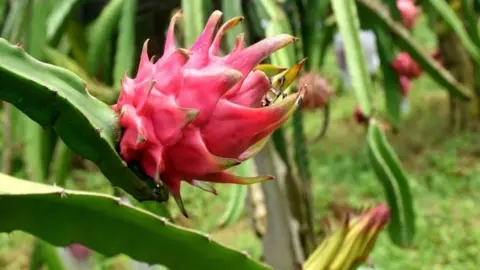
"Dragon fruit is a game-changer for us," says Raj Kumar, a farmer in the state of Karnataka. "It requires far less water and pest control than what we needed for our mango orchards. And the market demand is steadily increasing, both domestically and for export."
Indeed, the rise of dragon fruit cultivation in India coincides with a growing global appetite for the unique, nutrient-dense fruit. Once considered a exotic rarity, dragon fruit is now appearing on menus and store shelves worldwide, fueled by its purported health benefits and distinctive visual appeal.
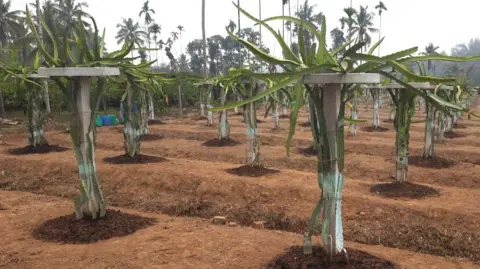
For Indian farmers, this surge in popularity has translated to significantly higher profit margins. While mangoes and coffee fetch relatively low prices, dragon fruit can sell for as much as five times more per kilogram. This influx of income is not only transforming the livelihoods of individual growers, but also revitalizing entire rural communities.
"The money we make from dragon fruit has allowed us to invest in better irrigation, hire more workers, and even send our children to better schools," says Priya Desai, a farmer in the state of Tamil Nadu. "It's been life-changing."

As word of dragon fruit's success spreads, more and more Indian farmers are converting their land to cultivate the vibrant crop. Government programs and agricultural extension services are also playing a key role, providing training, seedlings, and other resources to support the transition.
"We're seeing a real surge of interest and enthusiasm for dragon fruit," says Dr. Anika Sharma, an agricultural scientist at the Indian Council of Agricultural Research. "It's an incredibly exciting time for Indian agriculture."
With its hardy nature, lucrative market potential, and transformative impact on rural communities, the humble dragon fruit is poised to become a staple of the Indian agricultural landscape for years to come.
Source: BBC News


