
Spirit Airlines Shuts Down: Passengers Stranded, Political Blame Game Erupts

Spirit Airlines ceases operations leaving thousands stranded. Republicans blame Biden, Democrats cite fuel costs. Secretary Duffy warns passengers not to show up at airports.
In a dramatic turn of events that has sent shockwaves through the aviation industry, Spirit Airlines abruptly halted all operations, leaving thousands of passengers scrambling to find alternative flights and raising urgent questions about the future of budget air travel in America. The unexpected collapse of the Florida-based discount carrier has triggered an immediate crisis response from government agencies and airlines alike, while also igniting a fierce political blame game between Republicans and Democrats over who bears responsibility for the carrier's demise.
US Transportation Secretary Sean Duffy held a press conference to address the emergency situation, delivering a stark warning to the traveling public. "If you have a flight scheduled with Spirit Airlines, don't show up at the airport; there will be no one here to assist you," Duffy cautioned, emphasizing the severity of the situation and urging passengers to seek alternatives immediately. The secretary outlined comprehensive measures designed to protect consumers, including refund options and discounted fares on competing airlines for those who had bookings with Spirit.
The abrupt cessation of operations has created a cascading effect throughout the aviation sector, with stranded employees and confused passengers facing unprecedented disruption. Airlines and government officials mobilized quickly to implement emergency protocols and coordinate relief efforts, recognizing the potential for widespread economic and social consequences from this sudden market exit. The situation underscores the fragile nature of the budget airline business model and raises fundamental questions about industry sustainability.
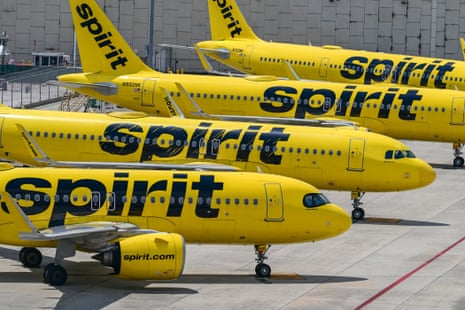
The political response to Spirit's collapse has been swift and sharply divided along partisan lines. Republicans have wasted no time pointing fingers at the Biden administration, specifically citing the government's intervention to block a proposed merger between Spirit and JetBlue Airways. Conservative lawmakers argue that the failed JetBlue deal, which they contend would have strengthened Spirit's financial position and competitive standing, was directly responsible for the airline's inability to survive market pressures. They contend that the DOJ's antitrust enforcement action ultimately sealed Spirit's fate by preventing a lifeline merger that could have transformed the carrier's business prospects.
Democrats, conversely, have presented an alternative explanation for Spirit's downfall, pointing to broader macroeconomic factors beyond any single policy decision. Democratic officials emphasize the role of fuel price volatility and geopolitical tensions, particularly referencing the escalating Iran conflict as a significant contributor to elevated aviation fuel costs. They argue that fuel surges, driven by international instability, have squeezed profit margins across the industry, particularly impacting budget carriers that operate on razor-thin margins and cannot easily pass costs to price-sensitive customers.
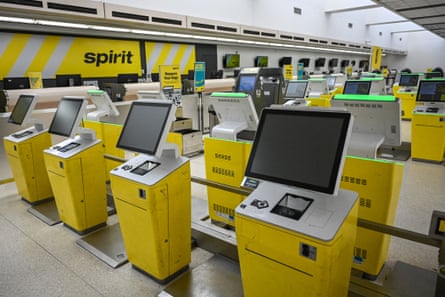
The collapse of Spirit Airlines represents a significant turning point for the low-cost carrier segment of the aviation market. Once positioned as a symbol of budget air travel's growth potential, Spirit's sudden exit raises concerns about market consolidation and the viability of ultra-discount business models. The carrier's failure to navigate recent financial challenges has investors and industry analysts reassessing the competitive dynamics of budget aviation and questioning whether smaller discount carriers can survive in an increasingly volatile operating environment.
The human impact of Spirit's shutdown extends far beyond quarterly earnings reports and market analysis. Thousands of employees face job loss, with many having little advance notice or severance protections, while passengers holding valid tickets confront the immediate challenge of rebooking travel plans often at premium prices. Families with upcoming vacations, business travelers with critical meetings, and connecting passengers have all been thrown into uncertainty, creating a humanitarian dimension to what might otherwise appear as a purely business story.
Industry observers note that the failure of the JetBlue merger, while framed by Republicans as a critical mistake, was pursued by the Department of Justice based on antitrust concerns about reduced competition in certain regional markets. The regulatory reasoning behind blocking the deal centered on protecting consumer interests from potential price increases and reduced service quality that might result from consolidation. This regulatory tension—between protecting existing market structures and allowing industry consolidation necessary for survival—sits at the heart of the current debate over responsibility for Spirit's collapse.
The aviation sector response has focused on practical measures to minimize passenger disruption. Competing airlines have worked with the Department of Transportation to identify available seats on their networks, offering discounted fares to displaced Spirit passengers. Major carriers including Southwest, Frontier, and Allegiant have adjusted schedules to accommodate some of the stranded travelers, though the sheer volume of disrupted passengers has strained the system's capacity to absorb demand completely.
Secretary Duffy's government-coordinated response demonstrates recognition that major airline failures carry broader economic implications affecting tourism, business travel, and consumer confidence in aviation as a transportation mode. The federal government has activated emergency protocols typically reserved for natural disasters and major service disruptions, underlining the significance of Spirit's operational cessation for the traveling public and the broader economy. Refund processing systems have been activated, and the Department of Transportation is actively monitoring the situation to ensure airlines comply with consumer protection requirements during this transition period.
The underlying fuel cost argument advanced by Democrats reflects genuine industry challenges that have affected carriers across the market. Oil prices and geopolitical risk premiums have created significant headwinds for aviation operators, particularly those with limited financial reserves and less ability to hedge fuel costs through derivative contracts. For ultra-low-cost carriers operating with minimal profit margins, such macroeconomic shocks can prove existential, and advocates for this perspective argue that expecting regulatory decisions to insulate the industry from global energy markets is unrealistic.
Looking forward, the Spirit Airlines failure will likely reshape discussions about airline industry regulation, consolidation policy, and the future viability of the budget airline business model in modern aviation. Policymakers will face difficult questions about whether current regulatory frameworks adequately account for industry fragility and whether alternative approaches to merger review might better balance competition with market stability. The incident serves as a case study in the complex tradeoffs between short-term consumer protection and long-term industry sustainability.
The political dimensions of this aviation crisis illustrate how complex industry failures inevitably become entangled with partisan politics, even when underlying causes involve global commodity markets and regulatory decisions made under genuine uncertainty about outcomes. Both Republican and Democratic explanations contain elements of truth, yet each narrative conveniently emphasizes factors that align with existing political positions. The truth likely encompasses multiple contributing factors—regulatory decisions, fuel costs, competitive pressures, and the structural vulnerabilities of ultra-low-cost business models all played roles in Spirit's inability to continue operations.


