
Starmer's Power Grip Weakens: Labour Crisis Deepens

UK Prime Minister Keir Starmer faces mounting pressure as Labour party fractures. Political insiders question how much longer he can maintain control amid widespread resignations.
Good morning, and welcome to today's comprehensive political briefing. The United Kingdom finds itself once again ensnared in a cycle of political turmoil that has become all too familiar in recent years. Keir Starmer, the sitting Prime Minister, faces an unprecedented leadership crisis that threatens to define the remainder of his tenure in office. What began as tragedy in the form of successive government failures has evolved into farce, with each passing day bringing fresh speculation about whether the Prime Minister can survive the week.
The pattern has become distressingly routine: a deeply unpopular premier desperately clings to power while cabinet members abandon ship like rats fleeing a sinking vessel. The Labour party currently stands divided, with backbenchers openly questioning their leader's ability to govern effectively. The question on everyone's lips in Westminster is not whether Starmer will face further challenges, but rather when the next bombshell resignation will land and whether it will finally prove to be the last straw.
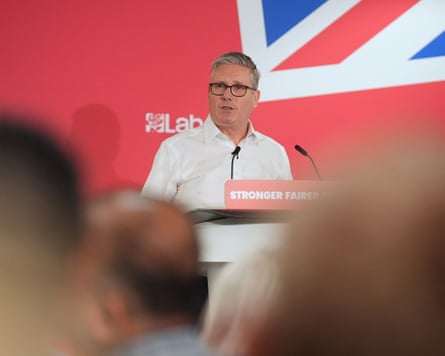
Starmer's position received a temporary reprieve last night when Wes Streeting, a senior figure within the party, failed to mount the anticipated leadership challenge. The Prime Minister has consistently insisted that he is not leaving Number 10, framing himself as the serious leader this serious nation requires. Yet beneath the public bravado lies a concerning reality: his authority with Labour MPs remains fragile at best, with many questioning whether he possesses the mandate to continue implementing his agenda.

Each new resignation that emerges represents another attempt to systematically undermine Starmer's position and erode what little credibility he has managed to retain. For now, the Prime Minister continues in his role by default rather than by any display of genuine confidence from his party colleagues. The absence of a serious challenger willing to step forward suggests that while MPs may be unhappy with current leadership, there is no consensus around a viable alternative. This uncertain status quo—where Starmer remains in place not through strength but through weakness—defines the current political moment.
In a significant attempt to regain political initiative, the government has timed today's legislative announcement strategically. The Prime Minister will present a substantial package of 35 bills to Parliament, encompassing a wide range of policy areas from housing reform to immigration control. This announcement represents a calculated effort to shift the narrative away from internal party drama and toward substantive governance. Officials hope that demonstrating legislative ambition will remind wavering MPs and the public that the government still has a clear policy agenda worth pursuing.
The breadth of the proposed legislation spans multiple government departments and policy domains. Housing reform has emerged as a priority for the government, reflecting widespread public concern about the ongoing crisis in affordability and availability. Immigration policy continues to dominate public discourse, and the government's willingness to include immigration measures in this parliamentary package signals its intent to address one of the most contentious issues facing British society today. These legislative proposals are designed to provide substance to Starmer's claims that despite internal difficulties, the government remains focused on delivering for the British people.
Meanwhile, on the international stage, developments continue to unfold that demand British attention and diplomatic resources. Donald Trump, the American President, is scheduled to arrive in Beijing on Wednesday evening for what represents the first visit to China by a sitting US president in nearly a decade. This diplomatic mission carries significant weight, as Trump seeks to restore American power and prestige that has been diminished by the ongoing conflict in Iran. The geopolitical implications of this meeting extend well beyond US-China relations and will inevitably impact British foreign policy considerations.
The timing of Trump's Beijing visit coincides with a critical moment in global power dynamics. The United States has faced considerable challenges in maintaining its strategic position in the Middle East, with the Iran situation continuing to consume considerable diplomatic and military resources. Trump's initiative to re-engage directly with China suggests a potential recalibration of American foreign policy priorities, with the administration seeking to divide its attention between managing Middle Eastern complications and competing with China for regional and global influence. For Britain, which maintains complex relationships with both the United States and China, this diplomatic development carries implications for future trade negotiations and security partnerships.
Back in Westminster, the ongoing political crisis shows no signs of abating despite these international developments demanding attention. The Labour government must now manage simultaneous challenges: maintaining internal party cohesion, governing effectively at a time of significant public discontent, and navigating complex international relationships during a period of global uncertainty. This multilayered crisis represents one of the most significant tests that Starmer has faced since assuming office. The convergence of domestic political turmoil and international complications creates a precarious situation where one misstep could prove fatal to his remaining political capital.
The coming hours and days will prove critical in determining whether Starmer can stabilize his position or whether he will become the latest in a long line of short-lived prime ministers. His ability to command the parliamentary session, secure legislative victories, and demonstrate confident leadership will all be tested simultaneously. The presentation of the 35-bill package represents both an opportunity to demonstrate governmental competence and a risk that any perceived failure could trigger fresh calls for his resignation. As Westminster watches and waits, the Prime Minister must navigate treacherous political waters while maintaining public confidence in his government's ability to lead the nation through uncertain times.

Source: The Guardian


