
Starmer's Sir Humphrey Moment: Civil Service Politics

Keir Starmer faces classic Whitehall tactics as Olly Robbins delivers a masterclass in civil servant evasion, echoing Yes Minister's satirical warnings about power dynamics.
In a week that could have been ripped straight from the pages of BBC's legendary political satire Yes Minister, Prime Minister Keir Starmer encountered the full force of Whitehall's most sophisticated defensive maneuver when senior civil servant Olly Robbins delivered what can only be described as a textbook performance in bureaucratic obfuscation. The encounter highlighted enduring tensions between elected politicians and the permanent civil service—tensions that the 1980s comedy series brilliantly satirized and which continue to shape British governance decades later.
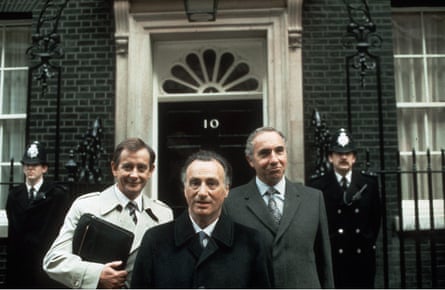
The fictional world created by Antony Jay and Jonathan Lynn in Yes Minister resonated so powerfully with Margaret Thatcher during her time as Prime Minister that the show became her stated favorite television program. Thatcher, never one to miss the sharp observations embedded in the show's script, recognized the uncomfortable truths lurking beneath its comedic surface. The program's central character, Sir Humphrey Appleby—portrayed with magnificent precision by Nigel Hawthorne—embodied a particular archetype of the British civil service: supremely intelligent, masterfully evasive, and possessed of an almost preternatural ability to transform straightforward questions into labyrinthine discussions of procedure, precedent, and unintended consequences.
At the heart of the show's formula lay a recurring pattern that proved remarkably prescient about how Whitehall politics actually operate. When faced with a problem or policy directive from his minister, Sir Humphrey would deploy what the script called his arsenal of tactics: carefully chosen words that technically answered the question without providing clarity, citations of obscure regulations that suddenly made action impossible, and elaborate explanations of why the obvious solution would inevitably produce catastrophic unforeseen results. Jim Hacker, the well-meaning but often hapless minister played by the late Paul Eddington, would enter each episode with genuine policy ambitions, only to find himself gradually worn down by the subtle resistance and clever argumentation of his senior officials.

What made Yes Minister distinctive as political commentary was its refusal to portray either side as entirely villainous. Sir Humphrey wasn't evil—he genuinely believed he was protecting the public interest and the institutional integrity of the civil service. Meanwhile, Hacker wasn't incompetent so much as insufficiently prepared for the sophisticated resistance he would encounter. The show's genius lay in depicting how institutional interests, procedural requirements, and personal advancement could create a system where straightforward decision-making became nearly impossible. The politics of civil service resistance operated according to unwritten rules that the newly elected politician had yet to master.
Fast forward to the present day, and Keir Starmer's recent encounter with Olly Robbins suggests that the dynamics immortalized in the satirical series remain remarkably relevant. Robbins, a long-serving senior civil servant with deep roots in the machinery of government, provided what observers described as a masterclass in the very techniques Sir Humphrey might have deployed. The situation unfolded with an almost scripted quality: a direct question, followed by an extended explanation that seemed to address the query while somehow leaving its essential answer obscured beneath layers of qualification, context, and procedural consideration.
The historical record provides several instructive examples of how prime ministers have successfully navigated these treacherous waters. Margaret Thatcher herself, despite loving the satirical portrayal of civil service obstruction, proved remarkably adept at cutting through Whitehall's defensive tactics. She accomplished this partly through sheer force of personality and conviction, but also through the careful selection of civil servants who shared her ideological commitment to radical reform. Thatcher understood that managing the civil service required not merely negotiation but a willingness to reshape the institutional landscape itself. She brought in sympathetic figures at key positions and created parallel power structures when the traditional bureaucracy proved insufficiently responsive to her agenda.
Tony Blair adopted a different strategy during his time in Number 10, one that depended heavily on creating a powerful Prime Minister's office that could operate somewhat independently of traditional civil service hierarchies. Blair surrounded himself with politically appointed advisers who shared his policy vision and could serve as a counterweight to cautious permanent officials. This approach created its own problems—including accusations of excessive spin and the politicization of advice—but it did allow Blair to push through significant reforms that a more deferential approach to civil service guidance might have prevented. The lesson from Blair's experience, however, was that such structures required constant management and could create tensions between elected politicians and permanent officials.
For Starmer, the current moment presents a defining test of his ability to exercise prime ministerial authority effectively. The encounter with Robbins illuminates a fundamental challenge facing any newly elected government: the civil service possesses institutional memory, procedural knowledge, and established relationships that newly elected politicians cannot easily replicate. At the same time, ministers bring democratic legitimacy and a mandate for change that civil servants, by definition, cannot claim. How these competing sources of authority are balanced often determines whether a government can successfully implement its agenda or becomes gradually absorbed into existing institutional patterns and priorities.
The dynamics revealed in the Starmer-Robbins interaction also reflect broader questions about accountability and transparency in government. When senior civil servants deploy sophisticated rhetorical techniques to avoid direct answers, it creates a democratic deficit of sorts. Elected representatives and the public they serve are prevented from understanding precisely where responsibility lies and what considerations are driving particular decisions. The yes-and-no answers that might come from a direct response are replaced by nuanced explanations that diffuse responsibility and obscure decision-making processes. While such sophistication might protect institutional interests in the short term, it can ultimately undermine public trust in government institutions.

The revival of Yes Minister themes in contemporary political analysis suggests that structural issues in the relationship between elected politicians and the permanent bureaucracy remain fundamentally unresolved. The civil service continues to operate according to conventions and procedures established over decades, while individual ministers arrive with ambitious agendas and limited time to implement them. The asymmetry of information and institutional knowledge remains stark. New ministers often lack detailed understanding of how their department actually functions, while career civil servants have spent years mastering its complexities. This disparity creates natural advantages for those seeking to slow or redirect policy implementation.
Looking forward, Starmer and his government will need to develop clear strategies for ensuring that ministerial direction translates into actual institutional change. This might involve bringing in sympathetic civil servants to key positions, establishing clear lines of accountability for policy implementation, and creating mechanisms to verify that instructions are being followed rather than merely acknowledged. It will require the kind of sustained attention and institutional focus that governing demands. The week of Starmer's own Sir Humphrey moment serves as a reminder that controlling the machinery of government remains one of the most difficult challenges any prime minister faces, and that sophisticated resistance from those who manage that machinery can prove remarkably effective without ever crossing into overt insubordination.
Source: The Guardian


