
Starmer Urges Nation to 'See Jewish Pain' After Attack

PM makes strongest antisemitism remarks yet following Golders Green terror incident, condemning those marching with Hamas supporters.
Prime Minister Keir Starmer has issued an urgent call for the British public to recognize and acknowledge Jewish pain following the devastating terror attack in Golders Green, delivering what observers are calling his most forceful statements on antisemitism to date. During a significant visit to the affected area, Starmer met with emergency responders and local community leaders, using the platform to articulate his deepest concerns about rising hostility toward Jewish communities across the nation.
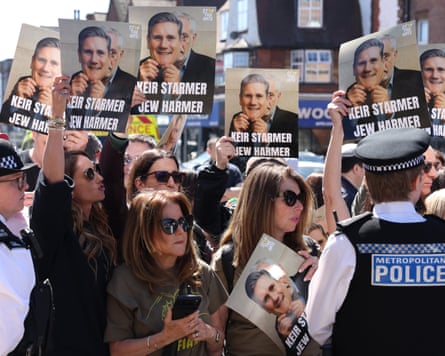
In particularly pointed remarks, the prime minister condemned those who participate in demonstrations while standing alongside Hamas supporters, describing such actions as effectively "venerating the murder of Jews." His statement represented an escalation in his rhetoric regarding the intersection of pro-Palestinian activism and antisemitic sentiment, marking a watershed moment in his public commentary on the issue. The prime minister's language was unambiguous, leaving no room for interpretation regarding his position on the matter.
The Golders Green terror attack has sent shockwaves through Jewish communities across London and the broader United Kingdom, prompting urgent discussions about community safety and the responsibilities of political leaders to address hate crimes. Emergency services responded swiftly to the incident, and investigations into the attack have become a priority for law enforcement agencies. The incident has reignited broader conversations about the security environment facing religious and ethnic minority communities in Britain.

Starmer's visit to Golders Green represented more than a standard political appearance; it was a deliberate effort to demonstrate governmental solidarity with affected residents and to underscore the seriousness with which his administration treats hate crime prevention. By meeting directly with those on the front lines—both the emergency personnel who responded to the crisis and the community leaders navigating its aftermath—the prime minister positioned himself as actively engaged with the lived experiences of those impacted. His comments reflected not merely political positioning but a substantive engagement with the depth of communal trauma.
The prime minister's remarks about demonstrators marching alongside Hamas supporters strike at a contentious debate that has intensified significantly in recent years. He argued that such participation inherently constitutes a form of endorsement or tacit approval of violence against Jewish people, given Hamas's stated objectives and historical actions. This assertion has become increasingly central to discussions about how democratic societies balance legitimate political protest with accountability for the messages amplified through such gatherings.
Jewish community organizations have previously raised concerns about the visibility of Hamas rhetoric and symbolism at certain demonstrations, arguing that such displays create hostile environments and send dangerous signals about the acceptability of antisemitic narratives. These organizations have consistently called for political leaders to make clear moral distinctions between criticism of Israeli government policies and expressions of support for organizations designated as terrorist entities by multiple Western governments. Starmer's statements appear responsive to these long-standing concerns.

The incident in Golders Green has prompted broader discussions about security measures for vulnerable communities and the adequacy of police resources dedicated to hate crime prevention and investigation. Local Jewish institutions, schools, and community centers have undertaken security reviews, while police have increased visible presence in predominantly Jewish neighborhoods. These practical responses run parallel to the political rhetoric emanating from government leaders, reflecting a multi-layered response to the security challenge.
Starmer's strongest-ever remarks on antisemitism come at a time when data from various monitoring organizations has documented concerning trends in hate incidents targeting Jewish people. The prime minister's willingness to use unequivocal language represents a shift in emphasis within his public communications, suggesting either a response to mounting pressure from affected communities or a genuine evolution in his assessment of the situation's urgency. Either interpretation underscores the gravity with which he appears to be treating the matter.
The call to "open their eyes to Jewish pain" carries particular rhetorical weight, employing language that emphasizes empathy and emotional recognition rather than purely political or legal frameworks. By framing the issue in terms of pain—a universal human experience—Starmer attempted to transcend partisan divides and appeal to broader public compassion. This rhetorical choice suggests a strategy of mobilizing public sentiment as a tool for combating antisemitism, not merely through institutional mechanisms but through cultural shifts in how communities regard and support one another.
The prime minister's condemnation of those marching alongside Hamas supporters raises important questions about responsibility, association, and the boundaries of acceptable political speech in democratic societies. His framing suggests that individuals who choose to participate in such demonstrations must bear some accountability for the overall message conveyed by the gathering, regardless of their stated personal intentions. This perspective has generated debate among civil liberties advocates and political commentators regarding where lines should be drawn between individual expression and collective responsibility.
Looking forward, Starmer's remarks may influence how government institutions approach the intersection of counterterrorism policy, hate crime prevention, and community relations work. The statements could signal prioritized attention to ensuring that security services and law enforcement agencies maintain appropriate focus on threats to Jewish communities, as well as encouraging coordination between government and community organizations on safety initiatives. The symbolic weight of a prime ministerial visit to affected areas, combined with forceful rhetoric, can serve to galvanize institutional responses.
The Golders Green attack and the subsequent political response highlight the ongoing challenges facing multicultural democracies in balancing security, freedom of expression, and community protection. As investigations into the incident continue, both law enforcement and political leadership will face scrutiny regarding their effectiveness in preventing such incidents and their adequacy in supporting affected communities. Starmer's intervention suggests that political leadership intends to remain actively engaged with these questions rather than delegating responsibility entirely to security services or community organizations.
The prime minister's visit and statements represent an important moment in Britain's ongoing navigation of communal tensions and security challenges. By elevating his rhetoric and visiting the affected area in person, Starmer has signaled that addressing antisemitism and protecting vulnerable communities ranks among his administration's priorities. Whether these statements translate into substantive policy changes or meaningful reductions in hate incidents targeting Jewish people will ultimately determine their significance and impact on community safety and cohesion across the nation.
Source: The Guardian


