
Strait of Hormuz Crisis Game Shows No Winners

Bottleneck game simulates catastrophic energy crisis from blocked shipping. Players navigate impossible choices with real data and economic consequences.
The prospect of navigating a global energy crisis triggered by conflict in one of the world's most strategically vital waterways has become the subject of a thought-provoking interactive experience. A newly launched browser-based game called Bottleneck invites players to confront the harsh realities of what happens when international shipping grinds to a halt through the Strait of Hormuz, one of the world's most critical petroleum transit chokepoints. The game presents a sobering simulation of how quickly economic and humanitarian crises can cascade across the globe when vital supply routes are disrupted, making it both an educational tool and a cautionary tale about geopolitical fragility.
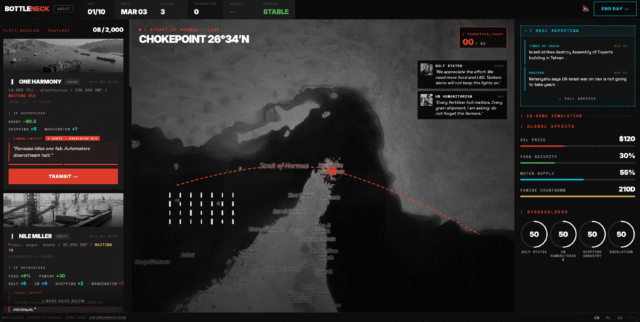
Rather than offering an escapist experience, Bottleneck forces players into uncomfortable decision-making scenarios where nearly every choice carries significant consequences. The free online game tasks players with assuming the role of a fictional maritime coordinator responsible for determining which vessels from among approximately 2,000 ships trapped in and around the strait are permitted passage each day. This daily selection process becomes increasingly complex as players must weigh competing interests: paying tolls demanded by Iranian authorities who assert control over the waterway, avoiding actions that might provoke either Iran or the United States, and preventing escalation that could expand the regional conflict into a wider war with even more devastating global implications.
The development of this simulation reflects growing concerns about the vulnerability of global supply chains to geopolitical disruption. Players quickly discover that every decision entails painful trade-offs with no genuinely favorable outcomes. Selecting certain shipments might prevent immediate oil price spikes but could anger one geopolitical faction, while prioritizing food shipments to prevent famine might trigger water security crises elsewhere. The game's mechanics deliberately avoid presenting any strategy that fully resolves the crisis, instead emphasizing the interconnected nature of modern economics and the ripple effects of regional conflicts on populations far removed from the actual conflict zone.
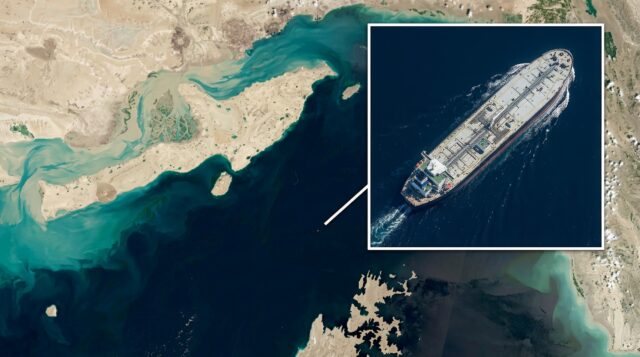
According to Jakub Gornicki, the journalist and artist who created the simulation, the game's fundamental purpose differs significantly from traditional puzzle games. "The game does not ask whether you are smart enough to solve the crisis," Gornicki explained in announcing the project. Rather, the game's design philosophy centers on demonstrating that some situations present no genuinely winning solutions—only choices that determine which populations suffer most acutely and which crises take priority over others.
The game integrates real maritime transit data alongside actual news reports documenting the unfolding crisis, creating a hybrid experience that blurs the line between simulation and documentary. This design choice anchors the gameplay experience in factual information about shipping patterns, trade flows, and real-world economic indicators. Players encounter authentic reporting about how the blockade affects oil prices, food availability, and water security across different regions, transforming abstract economic concepts into concrete human consequences. The use of real data ensures that players are not simply engaging in fictional speculation but rather grappling with actual impacts and realistic scenarios.
The economic ramifications portrayed in the game reflect genuine concerns among analysts about what an extended blockade of the Strait of Hormuz would mean for global markets. Approximately one-third of all traded petroleum passes through this narrow waterway, and disruption to this flow creates immediate pressure on oil prices worldwide. Beyond energy markets, the game emphasizes how petroleum-dependent economies quickly experience cascading failures across food production and distribution systems, water treatment and desalination facilities, and transportation networks. The game's countdown mechanics—triggering individual crises involving specific commodities—force players to confront not just theoretical economics but the actual humanitarian consequences of supply chain disruption.
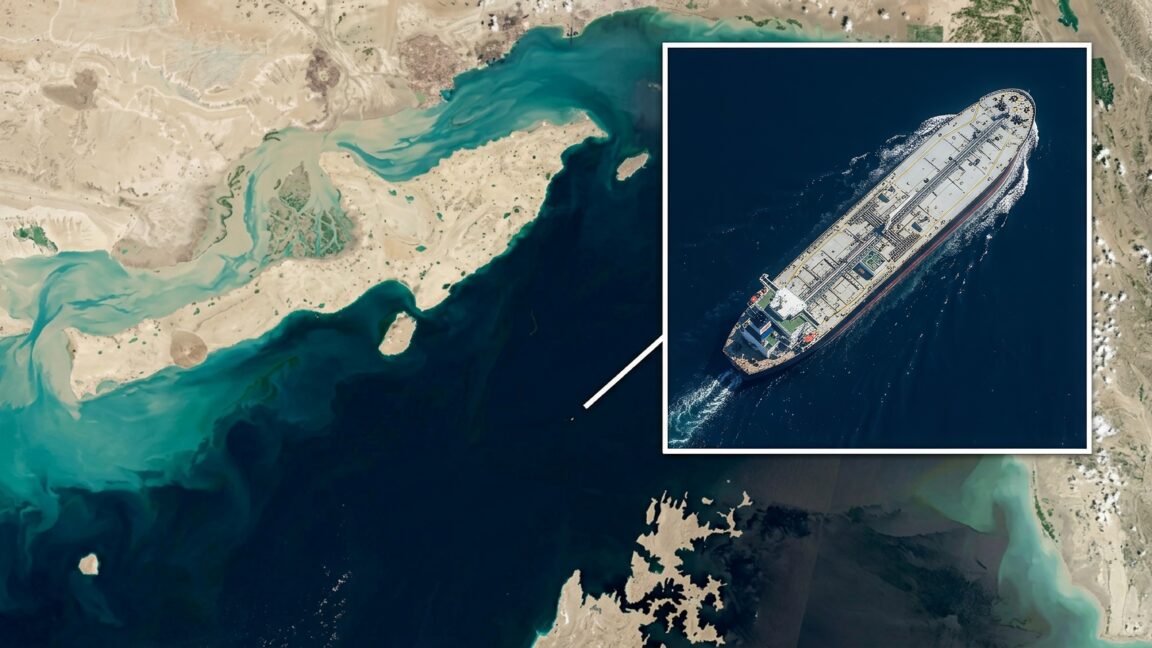
Different players approaching Bottleneck will find themselves making fundamentally different value judgments about which populations deserve priority when resources become desperately scarce. Some may prioritize keeping oil flowing to prevent economic collapse in developed nations, while others might focus exclusively on food shipments to prevent famine. Still others may attempt to balance competing interests, accepting that they cannot prevent all crises and instead trying to minimize overall human suffering. The game never validates any particular approach as optimal, instead revealing how each strategy generates its own set of catastrophic outcomes.
The creation of this game comes during a period of heightened awareness about geopolitical risks to global infrastructure and supply networks. Rising tensions in the Middle East, competition between major powers, and growing recognition of how interdependent modern economies have become all contribute to increased interest in understanding what happens when critical infrastructure becomes contested. Gornicki's simulation provides a safe space for exploring these scenarios and developing intuition about how global systems respond to serious disruption.
For educators, policymakers, and anyone concerned with global supply chain resilience, Bottleneck offers valuable insights into the complexity of crisis management at international scales. The game demonstrates why simple solutions rarely exist for multifaceted problems and why addressing one crisis often inadvertently creates others. By making these dynamics interactive and personal—forcing individual players to make actual decisions rather than merely observing—the game creates stronger comprehension of these challenging realities.
The browser-based format ensures accessibility to the broadest possible audience, requiring only an internet connection and avoiding expensive software or hardware requirements. This democratization of serious simulation games reflects a broader trend toward using interactive media as a tool for public understanding of complex geopolitical and economic issues. Players from diverse backgrounds can engage with the material, explore different strategic approaches, and develop their own perspectives on how nations and international institutions should respond to such crises.
Ultimately, Bottleneck succeeds most powerfully not in offering solutions but in conveying the genuine difficulty of managing global crises when competing interests collide and resources are insufficient. By making every decision carry visible consequences and by refusing to allow players to "win" in any meaningful sense, the game reinforces an important truth: serious geopolitical and economic crises don't have clean resolutions. Instead, they require ongoing difficult choices, accepting that perfect outcomes are impossible, and developing resilience to absorb the inevitable consequences of disruption. For anyone seeking to understand why experts worry about the Strait of Hormuz and how global systems might respond to serious disruption, this simulation provides an engaging and illuminating experience.
Source: Ars Technica


