
Sudan Militia Leaders' £17.7M Dubai Property Empire Exposed

Investigation reveals RSF leadership amassed luxury property portfolio in UAE while accused of genocide. Details on paramilitary wealth network.
A comprehensive investigation has uncovered a staggering property acquisition scheme linked to the leadership of Sudan's Rapid Support Forces (RSF), a militia organization facing serious allegations of committing genocide. The RSF leadership, operating through family members and sanctioned intermediaries, has strategically accumulated an extensive portfolio of luxury properties in Dubai, utilizing the United Arab Emirates as a protected haven for personal wealth and family members seeking refuge from international scrutiny.
According to detailed findings from the Sentry, a prominent US-based investigative organization specializing in tracking illicit financial networks, individuals connected to Mohamed Hamdan Dagalo—commonly known as Hemedti—have successfully acquired more than 20 exclusive properties across the UAE valued at approximately £17.7 million. These acquisitions represent a sophisticated component of what investigators characterize as a sprawling "paramilitary-industrial complex" that extends across multiple African nations and the Middle East region. The property purchases demonstrate how conflict leaders leverage international real estate markets to legitimize and conceal wealth accumulated through military and paramilitary operations.
The investigation provides compelling evidence of how the RSF organization has transformed military revenues into diversified international asset holdings. This pattern of wealth accumulation reflects a broader strategy employed by conflict leaders globally, who utilize friendly jurisdictions and opaque financial mechanisms to protect their economic interests from international sanctions and legal accountability. The UAE's historically lenient approach to financial transparency and its position as a global real estate hub have made it an attractive destination for individuals seeking to establish legitimate-appearing property portfolios.

The Sentry's investigation represents one of the most detailed examinations to date of how paramilitary financing operates within the modern global economy. By carefully tracing property ownership records, corporate filings, and financial connections, researchers have constructed a comprehensive map of how wealth flows from conflict zones into secure international markets. The organizations and individuals identified in the investigation include both direct family members of RSF leadership and carefully constructed corporate entities designed to obscure the ultimate beneficial owners of these valuable assets.
Sudan's conflict, which has devastated the nation and displaced millions of civilians, has been substantially funded through these kinds of international financial networks. The RSF, which has expanded from a paramilitary force into a significant military actor, has leveraged its control of territory and resources to generate enormous revenues. These proceeds have been systematically invested in international property markets, creating a form of wealth that transcends the ongoing conflict and provides insurance for leadership and their families regardless of military outcomes.
The Dubai property acquisitions are particularly significant because the UAE has historically maintained business relationships with various African and Middle Eastern actors despite international concerns about their conduct. Property investments in Dubai offer several advantages to individuals seeking to launder wealth or establish legitimate cover for illicitly obtained funds: the market values discretion, maintains relatively opaque ownership structures, and provides access to international financial systems. The prestigious nature of Dubai real estate also conveys legitimacy and respectability that can help shield assets from legal scrutiny.
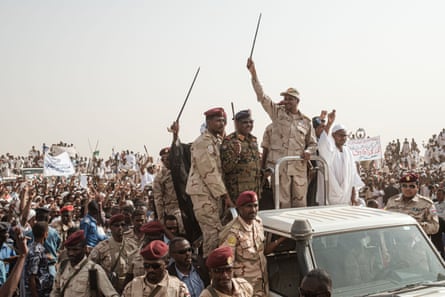
Hemedti, identified as the central figure in this property acquisition network, has become one of the most powerful military commanders in Sudan's ongoing conflict. Originally emerging as a wealthy businessman with mining interests, he transformed the RSF from a primarily mercenary force focused on gold mining security into a major military organization. His ascent to prominence coincided with increasing international isolation of Sudan, creating conditions where individuals with access to capital could establish significant military and economic power bases relatively free from external constraints.
The investigation highlights critical gaps in international sanctions enforcement and financial monitoring systems. Despite international condemnation of the RSF and efforts to sanction key leadership figures, sanctions evasion techniques have proven remarkably effective. By utilizing family members, complex corporate structures, and intermediaries without direct sanctioned status, RSF-linked entities have maintained access to international property markets and banking systems. These methods exemplify how determined actors can circumvent financial controls designed to restrict their activities.
The property portfolio identified by the Sentry serves multiple strategic purposes for RSF leadership beyond simple wealth accumulation. Properties in Dubai provide physical locations for family members to reside outside Sudan, offering both safety and a lifestyle that reflects the economic power derived from military control. Additionally, property ownership establishes banking relationships, creates legitimate sources of documented income, and provides collateral for loans that can fund other activities or investments. The real estate holdings essentially transform conflict revenues into a permanent asset base that generates ongoing returns.
International responses to these revelations face significant constraints. While the investigation provides detailed documentation of property ownership patterns, formal legal action remains complicated by jurisdictional issues and the involvement of family members and corporate entities that may not be directly sanctioned. The UAE, while a US ally in many respects, has not historically prioritized aggressive enforcement against international actors seeking to establish legitimate-appearing property portfolios. Coordinated international action would be necessary to significantly impact the financial networks sustaining conflict financing in Sudan and beyond.
The investigation also raises broader questions about the role of international real estate markets in perpetuating conflict financing. Luxury property markets in global financial hubs often operate with minimal transparency regarding beneficial ownership, creating ideal conditions for individuals seeking to establish international assets. Reform efforts addressing real estate transparency, particularly regarding foreign ownership and beneficial ownership disclosure, have gained momentum in recent years but remain inconsistently implemented across jurisdictions.
Human rights organizations and conflict monitoring groups have consistently documented serious allegations against the RSF, including systematic violence against civilian populations, sexual assault as a weapon of war, and forced displacement. The accumulation of wealth during periods when such conduct is occurring adds an additional layer of concern regarding how military actors profit from civilian suffering. The property acquisitions represent tangible evidence that conflict profiteering has translated into sustained wealth that persists despite ongoing humanitarian crises.
The Sentry's findings contribute to growing evidence demonstrating how modern conflicts generate complex financial structures that extend far beyond the territories where fighting occurs. Understanding these networks is essential for policymakers seeking to develop more effective strategies for addressing conflict financing. As Sudan's humanitarian crisis continues to deepen, international attention to how military actors like the RSF sustain their operations and accumulate wealth becomes increasingly critical for developing comprehensive approaches to conflict resolution and accountability.
Source: The Guardian


