
Supermarkets Reject UK Government Price Cap Plan

UK retailers dismiss voluntary price freeze proposal on essentials, citing rising operational costs and concerns about broader price impacts for consumers.
The UK government has made a formal request to major supermarket chains to implement voluntary price caps on essential food items, aiming to shield consumers from the escalating inflationary pressures linked to geopolitical tensions in the Middle East. This initiative represents an attempt to provide relief to households struggling with the rising cost of living while avoiding the need for mandatory regulatory intervention.
However, retail industry sources have swiftly and forcefully rejected the government's proposal, labeling it as "unjustified" and counterproductive to consumer welfare. Supermarket representatives argue that implementing such price freeze measures would place unsustainable burdens on their operations, ultimately harming rather than helping shoppers in the long run.
The retailers point to a convergence of financial pressures currently impacting their bottom lines, including substantial increases in corporate taxation, volatile fuel costs, and surging energy expenses required to operate their store networks. These operational challenges, they contend, leave little room for absorbing the costs associated with artificially suppressed prices on key food categories.
Industry analysts suggest that price control mechanisms, even voluntary ones, could create unintended market distortions. If supermarkets are forced to absorb losses on price-capped essentials, they may compensate by raising prices on non-essential items or reducing their service offerings, ultimately pushing costs up across the broader product range rather than achieving genuine consumer savings.
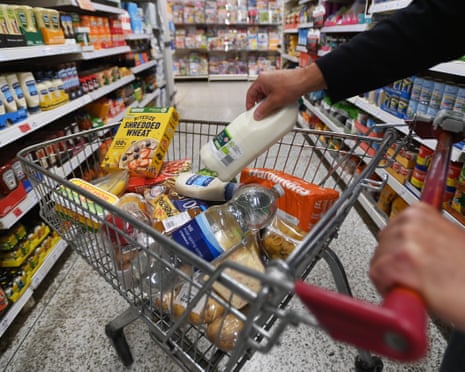
The rejection from the retail sector reflects a broader philosophical disagreement about the best approach to tackling food inflation. While government officials believe that visible price relief on staple items like bread, milk, and vegetables could provide immediate psychological and financial comfort to struggling families, retailers maintain that such measures ignore the complex economic realities of modern grocery distribution.
The Middle East conflict mentioned in the government's rationale has indeed contributed to global inflationary pressures by disrupting energy markets and supply chains. Oil price volatility has cascading effects throughout the food production and distribution system, from farm equipment operation to refrigeration in stores. Supermarket chains assert that temporary price fixes cannot address these systemic, global economic forces.
This disagreement between government policymakers and retail businesses highlights a fundamental tension in economic policy during inflationary periods. On one side stands the political imperative to be seen as taking action to protect vulnerable consumers; on the other lies the business reality that sustainable solutions require addressing root causes rather than implementing surface-level price controls.
The food inflation crisis has become a critical political issue across the United Kingdom, with consumer groups and opposition politicians demanding government intervention to protect households that have already absorbed significant price increases over the past year. Grocery items that were affordable staples have become budgetary concerns for many families, forcing difficult choices between purchasing nutritious food and meeting other essential expenses.
Major UK supermarket chains, including some of the nation's largest retail operations, have collectively made clear that they cannot commit to maintaining artificially low prices without government subsidization. They suggest that if the government believes price protection is necessary, it should be willing to directly compensate retailers for the margin losses incurred by participating in a price cap program.
The retailers' position reflects their understanding that voluntary price controls represent an unsustainable middle ground. Either price controls must be universal and mandatory, with government support, or they should not be implemented at all, as partial measures create competitive disadvantages for participating retailers while ultimately failing to achieve meaningful cost relief.
This standoff between government and retail industry representatives comes at a time when consumers are increasingly vocal about their economic hardships. Food banks have seen record usage, and grocery shopping has become a source of stress for many households trying to maintain adequate nutrition while staying within increasingly tight budgets.
Consumer advocates have sided somewhat with retailers on this particular issue, noting that without genuine structural solutions—such as addressing supply chain inefficiencies, supporting domestic agricultural production, or managing energy costs—temporary price caps will accomplish little beyond creating the illusion of action while potentially destabilizing the retail sector.
The government's proposal, while well-intentioned from a political standpoint, appears unlikely to move forward given the united opposition from the retail sector. This outcome suggests that policymakers may need to reconsider their approach and explore alternative strategies for addressing food cost inflation that don't rely on asking businesses to absorb unsustainable losses.
Looking ahead, the debate surrounding food affordability will likely continue to shape UK economic policy discussions. Whether through direct consumer subsidies, agricultural support measures, supply chain reforms, or other innovative approaches, the government will face mounting pressure to demonstrate meaningful progress on this critical quality-of-life issue that affects millions of citizens across the country.
Source: The Guardian


