
Supreme Court Backs Michigan in Pipeline Shutdown Battle

US Supreme Court rules Michigan can pursue its lawsuit to shut down the aging Line 5 pipeline in state court. Unanimous decision favors the state over Enbridge Energy.
In a significant legal victory for environmental and energy policy regulation, the United States Supreme Court has sided with Michigan in its ongoing dispute over the future of the aging Line 5 pipeline that runs beneath the Straits of Mackinac in the Great Lakes. The decision, delivered on Wednesday, represents a major development in what has become an increasingly complex and contentious legal battle over pipeline infrastructure and state regulatory authority.
The case centers on Michigan's effort to compel the shutdown of a critical section of the Line 5 energy pipeline, which traverses beneath one of North America's most important freshwater channels. This infrastructure has become the subject of intense scrutiny due to environmental concerns and aging infrastructure risks. The Supreme Court's ruling affirms Michigan's right to pursue its lawsuit in state court rather than having the case transferred to federal jurisdiction, a procedural decision that could significantly influence the outcome of the broader dispute.
Justice Sonia Sotomayor, writing on behalf of a unanimous court, determined that Enbridge Energy Company, the pipeline's operator, had waited too long to attempt moving the case to federal court. This timing issue proved dispositive in the court's decision, demonstrating that procedural matters can sometimes be as consequential as substantive legal arguments in high-stakes infrastructure litigation. The ruling underscores the importance of timely legal filings and adherence to procedural deadlines in federal court systems.
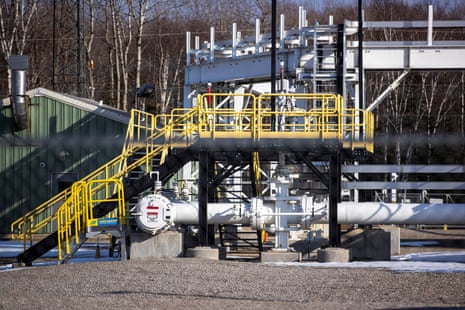
The Enbridge pipeline dispute has generated considerable controversy among environmental advocates, energy industry stakeholders, and government officials. Michigan Governor Gretchen Whitmer has consistently advocated for the pipeline's closure, citing environmental protection concerns and the infrastructure's age. The state argues that the pipeline poses an unacceptable risk to the Great Lakes ecosystem, one of the world's largest reservoirs of fresh water that supports millions of people across multiple states and provinces.
The Great Lakes water protection has emerged as a paramount concern in this dispute. Environmental groups have warned that a catastrophic pipeline failure could result in an environmental disaster of unprecedented proportions in the region. The pipeline's location beneath the Straits of Mackinac, a geologically sensitive area with significant underwater currents and challenging conditions, has amplified these concerns among scientists and environmental organizations.
By keeping the case in state court, Michigan maintains greater leverage in pursuing its regulatory agenda regarding the pipeline. State courts may be more responsive to local environmental and public health concerns, as opposed to federal courts that might weigh competing national energy interests more heavily. This jurisdictional victory could influence the substantive outcome of Michigan's effort to shut down the pipeline segment entirely.
The energy infrastructure regulation debate reflects broader tensions in American environmental and energy policy. On one side, energy companies argue that pipelines are essential for meeting the nation's energy needs and supporting economic growth. On the other hand, environmental advocates contend that aging infrastructure poses unacceptable risks and that transitioning away from fossil fuels should be a priority for government policy.
Enbridge Energy, one of North America's largest energy infrastructure operators, has consistently maintained that the Line 5 pipeline operates safely and represents a critical component of energy supply chains serving multiple states and Canadian provinces. The company has invested substantially in pipeline maintenance and monitoring systems. However, critics argue that the pipeline's age and location make it inherently risky, regardless of current operational practices.
The Supreme Court ruling on pipeline jurisdiction sets an important precedent for how state and federal courts will handle disputes over energy infrastructure regulation. The decision affirms states' rights to pursue their own environmental protection objectives through state court systems, even when those objectives conflict with federal energy policy priorities. This balance between state and federal authority in energy regulation remains a contentious issue in American jurisprudence.
Michigan's legal position has been strengthened considerably by this procedural victory. The state can now proceed with its case in Michigan state court, where local concerns about the Great Lakes and regional environmental protection may receive greater consideration. State courts are often more attuned to the preferences and values of their local constituencies, which in Michigan clearly favor environmental protection measures.
The broader implications of this decision extend beyond the immediate dispute over Line 5. The ruling suggests that state environmental enforcement authority will be protected even when federal energy interests are at stake. This could embolden other states to pursue similar regulatory actions against pipeline operators and other energy infrastructure companies.
Legal experts anticipate that the case will continue through the state court system, potentially reaching Michigan's Supreme Court before any final resolution. The substance of Michigan's claims regarding the pipeline's necessity and safety will ultimately be decided by state judges who must balance energy industry interests against environmental protection obligations. This process could extend for years and may involve extensive technical and scientific testimony.
The unanimous nature of the Supreme Court's decision is noteworthy, demonstrating that even justices with differing environmental and energy policy views could agree on the procedural issue. This consensus suggests that the court's interpretation of federal procedural rules regarding timely removal of cases to federal court enjoys broad support across the ideological spectrum of the bench.
Moving forward, the case will serve as an important test of state power to regulate energy infrastructure within its borders. Michigan's victory at the Supreme Court level provides a foundation for pursuing its substantive claims about the pipeline's risks and the necessity for its closure. The decision represents a significant moment in the ongoing struggle between environmental protection and energy industry interests in the United States.
Source: The Guardian


