
Supreme Court Deals Major Blow to Trump's Tariff Plans

Supreme Court ruling significantly weakens Trump's ability to implement tariff policies, creating major obstacles for his second-term economic agenda.
The Supreme Court's recent ruling represents a significant setback for former President Donald Trump's ambitious second-term agenda, particularly his plans to implement sweeping tariff policies. According to political analyst Anthony Zurcher, this decision has fundamentally altered the dynamics of how Trump would approach international trade negotiations and economic diplomacy if he were to return to office. The ruling essentially strips away crucial executive powers that Trump had previously relied upon to impose unilateral trade measures against foreign nations.
The implications of this tariff ruling extend far beyond mere economic policy, touching on constitutional questions about the separation of powers and the extent of presidential authority in matters of international commerce. Legal experts suggest that this decision could reshape how future administrations approach trade policy, requiring more congressional involvement and limiting the executive branch's ability to act swiftly in response to perceived economic threats from other countries. The Court's interpretation appears to favor a more collaborative approach between branches of government when it comes to implementing significant trade measures.
Trump's previous presidency was marked by an aggressive use of tariff policies as both economic tools and diplomatic weapons. His administration imposed tariffs on billions of dollars worth of goods from China, Mexico, Canada, and European Union countries, often citing national security concerns or unfair trade practices. These measures were central to his "America First" economic philosophy and were popular among his base of supporters who viewed them as protecting American jobs and industries from foreign competition.
The Supreme Court decision now creates substantial legal hurdles for any future Trump administration attempting to replicate or expand upon these trade policies. Constitutional law scholars note that the ruling appears to require more rigorous justification for tariff implementation and may necessitate clearer congressional authorization for broad-based trade measures. This shift in legal precedent could force Trump to work more closely with Congress, potentially slowing down his ability to respond quickly to international trade disputes.
The weakening of Trump's negotiating position with international partners represents perhaps the most immediate practical consequence of this ruling. During his first term, the threat of sudden tariff implementation gave Trump considerable leverage in trade negotiations with countries like China and members of the North American Free Trade Agreement. Foreign governments knew that Trump could quickly impose economic penalties without lengthy legislative processes, making them more willing to negotiate favorable terms for American interests.
Now, with the Court's ruling in place, international negotiators may feel more confident in taking harder stances against American demands, knowing that Trump's tariff threats may be more difficult to execute. This could lead to longer, more protracted trade negotiations and potentially less favorable outcomes for American exporters and manufacturers who had benefited from Trump's previous hardball tactics. The ruling essentially removes one of Trump's most potent diplomatic tools from his arsenal.
Economic analysts are already speculating about how this development might affect Trump's broader second-term agenda should he win the 2024 presidential election. His campaign has heavily emphasized plans to renegotiate trade deals, impose new tariffs on Chinese goods, and use economic pressure to achieve foreign policy objectives. The Supreme Court's decision forces a fundamental recalibration of these promises and may require Trump's team to develop alternative strategies for achieving similar economic outcomes.
The business community has shown mixed reactions to the ruling, with some sectors expressing relief at the prospect of more predictable trade policies, while others worry about America's ability to respond quickly to unfair foreign trade practices. Manufacturing associations that had supported Trump's previous tariff policies are particularly concerned about the long-term implications for American competitiveness in global markets. They argue that the ability to impose quick retaliatory measures was crucial for protecting domestic industries from foreign dumping and subsidization.
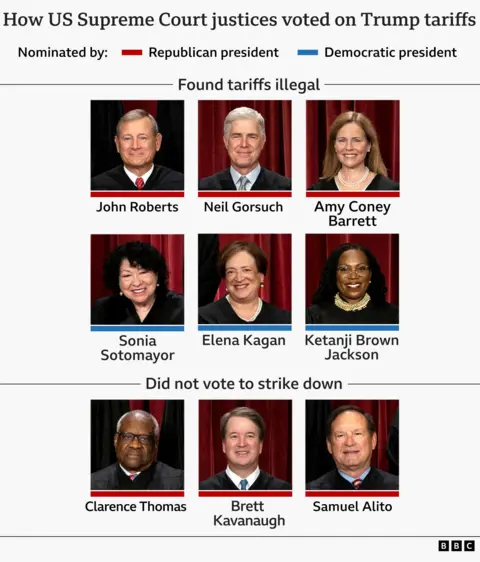
Legal experts emphasize that the Court's interpretation reflects broader concerns about executive overreach and the need to maintain constitutional balance between different branches of government. The ruling appears to be part of a larger judicial trend toward limiting unilateral presidential powers in various policy areas, from immigration to environmental regulation. This constitutional rebalancing could have far-reaching implications beyond trade policy, affecting how future presidents approach executive authority in general.
Congressional Republicans now face the challenge of determining how to support Trump's trade agenda within the new legal framework established by the Supreme Court. Some GOP lawmakers have indicated they would be willing to pass legislation granting the president broader tariff authority, while others prefer the increased congressional oversight that the ruling appears to mandate. This internal party debate could complicate Trump's ability to build the legislative coalition necessary to implement his preferred trade policies.
Democrats, meanwhile, have largely praised the ruling as a necessary check on presidential power, though some acknowledge concerns about America's ability to respond effectively to unfair foreign trade practices. Progressive economists argue that the decision could lead to more thoughtful, comprehensive trade policies that consider broader economic impacts rather than relying on impulsive tariff implementation. However, labor unions that had supported some of Trump's protectionist measures express worry about losing tools to protect American workers from international competition.
The international implications of this tariff ruling are already becoming apparent in diplomatic circles, where foreign trade representatives are reassessing their strategies for dealing with potential future Trump administration. Countries that had previously made concessions under the threat of American tariffs may now feel emboldened to take more aggressive positions in trade disputes, potentially leading to increased global trade tensions and uncertainty in international markets.
Trump's response to the ruling has been characteristically combative, with his campaign suggesting that they will find alternative methods to achieve similar policy objectives. Legal advisors to the former president are reportedly exploring other executive powers that might be used to influence international trade, though constitutional experts suggest that most alternatives would face similar judicial scrutiny under the precedent established by this ruling.
The timing of this Supreme Court decision adds another layer of complexity to the 2024 presidential campaign, forcing Trump to adjust his economic messaging and potentially making his trade promises seem less achievable to voters who supported his protectionist agenda. Campaign strategists acknowledge that this ruling requires a significant recalibration of Trump's appeal to working-class voters who viewed his tariff policies as direct protection of their economic interests.
Looking forward, the ruling is likely to influence how all future presidents approach international economic policy, creating a new framework that emphasizes legislative cooperation and judicial oversight in trade matters. This shift toward institutional checks and balances may lead to more stable, predictable trade policies but could also limit America's ability to respond rapidly to emerging economic challenges from international competitors. The long-term consequences of this constitutional rebalancing will likely shape American trade policy for decades to come, regardless of which party controls the presidency.
Source: BBC News


