
Supreme Court VRA Ruling Fuels GOP Gerrymander Plot

Black lawmaker Bennie Thompson warns Supreme Court's Voting Rights Act gutting has become 'red meat' for Republicans targeting his Mississippi district through redistricting.
Mississippi's political landscape has become increasingly contentious following a landmark Supreme Court decision, with voting rights advocates raising alarm bells about the implications for minority representation in Congress. US House Representative Bennie Thompson, who serves as Mississippi's sole Democratic voice in the nation's capital and the state's only Black congressional representative, has become the focal point of renewed partisan tensions surrounding electoral boundaries and constitutional protections.
The Supreme Court's controversial decision to effectively dismantle key provisions of the Voting Rights Act has emboldened conservative lawmakers across the South to pursue aggressive redistricting strategies that threaten the political viability of Democratic strongholds. According to Thompson, the ruling was essentially "red meat to the Republican legislators of the south," a characterization that underscores the immediate and tangible consequences of the court's interpretation of voting protections. The decision has removed federal oversight requirements that previously mandated certain jurisdictions obtain approval before making changes to electoral districts, a safeguard that had protected minority voting communities for decades.
Thompson's district, encompassing Mississippi's second congressional district, has become the primary target of Republican redistricting efforts that explicitly aim to dilute Democratic voting power. Gerrymandering has long been a political tool used by both parties, but voting rights advocates argue that without the Voting Rights Act protections that previously governed such changes, the risks to minority representation have intensified dramatically. Conservative politicians in the state have made little effort to disguise their intentions, openly discussing plans to redraw the district in ways that would disadvantage Thompson and his constituents.

Bennie Thompson has represented Mississippi in Congress since 1993, making him one of the longest-serving African American representatives from the Deep South. His tenure has been marked by steadfast advocacy for voting rights, civil rights protections, and policies benefiting his predominantly rural and economically disadvantaged district. Thompson's legislative record demonstrates consistent commitment to issues affecting Black communities and working families throughout Mississippi, despite facing a traditionally conservative state electorate.
The implications of potential redistricting extend beyond Thompson's individual political future, representing a broader threat to minority voting power across the region. Civil rights organizations warn that the weakening of Voting Rights Act enforcement opens the door for strategic manipulation of district boundaries to pack minority voters into fewer districts or to dilute their influence across multiple districts where they cannot form a decisive voting bloc. This practice, known as "packing and cracking," has been documented extensively throughout American electoral history, particularly in the South where voting patterns remain heavily influenced by racial demographics.
The Supreme Court's ruling reflects a fundamental shift in constitutional interpretation regarding federal oversight of state and local elections. Conservative justices argued that the original Voting Rights Act provisions had become outdated and that modern civil rights protections rendered the aggressive federal monitoring unnecessary. However, voting rights advocates counter that discrimination in voting remains a persistent problem in many jurisdictions, and that the removal of preclearance requirements has already resulted in demonstrable harm to minority voting power in multiple states.
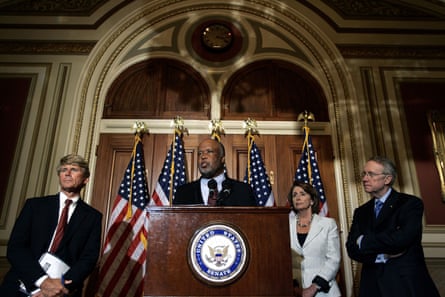
Thompson's situation exemplifies the real-world consequences of scaling back federal voting protections. As a Black Democrat representing a state with a lengthy history of racial discrimination in voting, he embodies the very constituency the original Voting Rights Act was designed to protect. The threat of targeted redistricting against him sends a clear signal to other minority representatives and communities about the vulnerability of hard-won electoral gains in the post-Voting Rights Act era.
Mississippi's Republican legislators have justified their redistricting efforts using conventional arguments about partisan realignment and demographic shifts. However, voting rights experts note that the explicit targeting of Thompson's district differs from standard redistricting rationales. The open acknowledgment that the goal is to disadvantage a specific minority representative raises legal and constitutional questions about the permissibility of such openly discriminatory motivations, even in an environment with weakened federal oversight.
The political maneuvering surrounding Thompson's district has attracted national attention from civil rights organizations, voting rights advocates, and Democratic leadership. Legal challenges to any proposed redistricting plans are anticipated, though the legal landscape for such challenges has become more difficult to navigate following the Supreme Court's weakening of the Voting Rights Act framework. Courts have become more deferential to state legislatures in redistricting matters, making it harder for plaintiffs to prove impermissible racial discrimination.

Thompson himself has been vocal about the connection between the Supreme Court decision and the subsequent targeting of his district, framing the issue as part of a broader assault on voting rights protections across the country. His warnings about the consequences of gutting the Voting Rights Act reflect concerns shared by many voting rights advocates who predicted exactly these scenarios when the Supreme Court first signaled its intention to weaken federal voting protections. The Mississippi situation serves as an early and concrete example of those predictions coming to fruition.
Looking forward, the battle over Thompson's district will likely become a test case for voting rights litigation in the post-Voting Rights Act era. The combination of explicit partisan motivation and apparent racial dimension to the proposed redistricting may provide grounds for legal challenge, but the outcome remains uncertain given the current conservative composition of federal courts. Whatever the result, the situation underscores the precarious position of minority representation in American electoral politics when federal voting protections are diminished.
Source: The Guardian


