
Swinney Defends Food Price Policy Ahead of FM Vote

Scottish politician defends price-cap policy on basic foodstuffs as aid for struggling households, clarifying it's not confrontational with Westminster.
John Swinney has publicly defended Scotland's contentious food prices policy, positioning it as a compassionate measure designed to support struggling Scottish families rather than as a deliberate provocation toward the UK government. With his first minister vote on the horizon, the politician has been keen to address mounting concerns and misconceptions surrounding the proposed price-cap policy on basic foodstuffs, emphasizing that the initiative stems from genuine concern for household budgets across the nation.
The food price-cap policy represents one of the most ambitious attempts in recent Scottish politics to directly intervene in the cost of living crisis affecting ordinary citizens. Speaking to journalists and community representatives, Swinney articulated his vision for how the policy would function in practice, stressing that the government's primary objective is alleviating financial hardship for families already stretched thin by inflation and rising utility costs. He underscored that the policy framework has been carefully developed to ensure it targets essential items that form the backbone of household grocery budgets.
In addressing critics who have suggested the policy represents a confrontational approach toward Westminster, Swinney was categorical in his denials. He emphasized that Scotland's pursuit of independent economic policies does not constitute an act of aggression or defiance against the UK government, but rather reflects the democratic mandate given to Scottish elected representatives to act in their constituents' best interests. This clarification appears designed to neutralize political opponents who might attempt to frame the initiative as unnecessarily divisive or destabilizing to the broader UK economic framework.
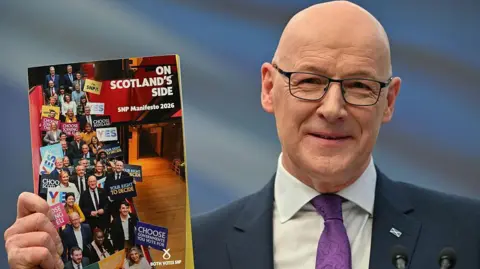
The timing of Swinney's defense of the food prices policy is particularly significant given that he is currently seeking election as Scotland's next first minister. His willingness to publicly champion this politically nuanced position suggests confidence in both the policy's merits and public support for intervention in food costs. The upcoming vote represents a critical juncture for Swinney's political career, and his defense of this flagship policy demonstrates his commitment to addressing economic inequality and supporting vulnerable populations.
Analysts have noted that price regulation on essential groceries remains a contentious issue across the political spectrum, with concerns about unintended economic consequences competing with sympathy for families struggling to afford basic nutrition. Swinney's messaging appears calibrated to acknowledge these complexities while maintaining that the potential benefits to struggling households outweigh theoretical risks. He has consistently reiterated that the policy underwent rigorous economic analysis before being proposed to the Scottish Parliament.
The broader context of Scottish politics reveals deep public anxiety about cost of living pressures, particularly in communities facing industrial decline or limited economic opportunities. Swinney's willingness to champion food price interventions reflects a recognition that voters are increasingly demanding concrete action on household finances rather than abstract economic principles. By framing the policy as an act of solidarity with struggling Scots, rather than as radical economic intervention, he appears to be strategically positioning himself as a pragmatic leader focused on tangible results.
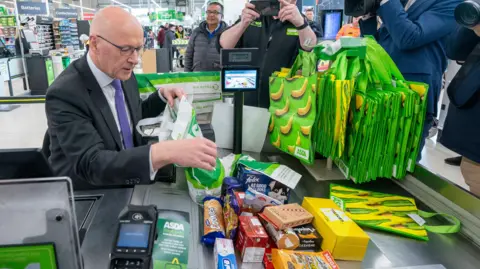
Throughout his recent public appearances, Swinney has emphasized the moral imperative to assist struggling families as justification for the policy's implementation. He has spoken movingly about households forced to choose between heating and eating, and argued that government action to stabilize food prices represents a reasonable intervention in light of such hardship. These emotional appeals are clearly designed to build public sympathy for the policy and create political pressure on potential opponents to justify resistance to measures that would directly benefit constituents.
Critics from UK government circles have raised concerns that Scottish price-capping mechanisms could create market distortions or prove fiscally unsustainable in the long term. Swinney has countered these arguments by pointing to successful price regulation models in other European countries, suggesting that Scotland possesses both the economic capacity and political will to implement similar measures without catastrophic consequences. His responses indicate careful preparation for the inevitable scrutiny that accompanies such ambitious policy proposals.
The first minister election process is expected to involve detailed questioning about the financing and implementation mechanisms of the food prices policy. Swinney has begun laying groundwork for these discussions by highlighting the policy's targeted nature—focusing on a carefully selected basket of essential items rather than attempting to regulate all grocery products. This selectivity, he argues, keeps the policy fiscally manageable while ensuring maximum impact on household food security.
Looking forward, Swinney's defense of the food prices policy is likely to remain a central element of his political platform and public messaging. The policy has become emblematic of his broader approach to governance: pragmatic, focused on tangible outcomes, and explicitly concerned with reducing inequality. As the first minister vote approaches, this positioning may prove decisive in securing support from legislators and constituents alike who prioritize economic intervention to address household financial distress.
The Scottish political landscape continues to shift in response to cost-of-living challenges, and Swinney's willingness to defend bold economic interventions suggests that public opinion is increasingly receptive to government action on food prices and household finances. His careful framing of the policy—not as radical or confrontational, but as a necessary response to genuine hardship—appears designed to build the broadest possible coalition of support. Whether this strategy will prove successful during the first minister election remains to be seen, but Swinney's passionate defense of the measure demonstrates his conviction in both its merits and its political viability.
Source: BBC News


