
Taiwan President Vows to Defend Sovereignty

Taiwan's president Lai Ching-te responds to Trump-Xi meeting, pledging not to provoke conflict while maintaining firm stance on independence and territorial integrity.
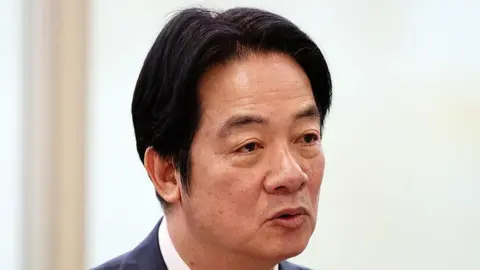
Taiwan's President Lai Ching-te has delivered a carefully calibrated response to the recent high-level meeting between United States President Donald Trump and Chinese President Xi Jinping, where discussions centered on the contentious issue of Taiwan's independence. In his first direct statement addressing the bilateral engagement between Washington and Beijing, Lai articulated a delicate diplomatic position that reflects Taiwan's complex geopolitical situation in the Asia-Pacific region.
The Taiwanese leader emphasized that his administration remains committed to avoiding any actions that could escalate tensions across the Taiwan Strait, while simultaneously reaffirming the nation's unwavering commitment to Taiwan sovereignty and territorial integrity. This dual messaging represents a strategic effort to signal restraint to concerned regional partners while maintaining domestic political credibility among Taiwan's population, which widely supports the preservation of its distinct democratic system and independent governance.
During his statement, Lai noted that Taiwan does not seek confrontation with any nation, but rather pursues peaceful coexistence within the framework of existing international law and established diplomatic protocols. The president's remarks come at a particularly sensitive moment in cross-strait relations, as Beijing continues to assert its claims over Taiwan while the international community grapples with determining the appropriate balance between respecting China's stated preferences and acknowledging Taiwan's de facto independence and thriving democratic institutions.
The Trump-Xi meeting that prompted Lai's response took place amid growing global uncertainty about the future of US-China relations and America's commitment to its traditional security alliances in the Indo-Pacific region. Observers noted that the discussion between the two leaders highlighted divergent perspectives on Taiwan's status, with China continuing to view the island as a renegade province that must eventually be reunified with the mainland, while the United States maintains a more ambiguous stance rooted in decades-old diplomatic agreements and strategic interests in maintaining stability in one of the world's most economically vital regions.
Lai's statement reflects the persistent challenge facing Taiwan's government: maintaining a credible commitment to defending its territory and democratic values while avoiding actions that might trigger military confrontation with the People's Republic of China. The president stressed that Taiwan's approach is fundamentally defensive in nature, focused on preserving the status quo rather than pursuing aggressive territorial or political objectives that could alarm either Beijing or Washington.
In recent months, tensions across the Taiwan Strait have periodically escalated due to military exercises conducted by the Chinese military, which has significantly expanded its capabilities and modernized its forces specifically designed for potential Taiwan military operations. These developments have raised concerns among Taiwan's allies about the sustainability of the current security arrangement and whether existing defense systems would prove adequate in the event of a serious military confrontation.
The president's careful diplomatic positioning also addresses domestic political considerations in Taiwan, where public opinion remains divided on issues related to cross-strait relations and defense spending. While a significant portion of Taiwan's population supports maintaining the current arrangement, there are also voices advocating for either closer engagement with mainland China or, conversely, more explicit assertions of Taiwan's independent status through constitutional reforms or other formal mechanisms.
Lai's administration has emphasized that Taiwan's defense strategy relies on a combination of military modernization, diplomatic engagement with like-minded democracies, and economic resilience. The government has pursued defense budgets that aim to enhance Taiwan's deterrent capabilities without presenting itself as a military aggressor or posing a direct challenge to Chinese security interests, though Beijing has consistently interpreted any Taiwanese defense measures as inherently provocative.
International analysts have noted that Taiwan faces an increasingly complex security environment characterized by expanding Chinese military capabilities, evolving international attitudes toward Taiwan's status, and uncertainties about the nature and durability of American security commitments. The Trump-Xi meeting underscored these uncertainties, as observers sought to determine whether discussions between the two leaders might portend shifts in the long-standing framework governing Taiwan-related diplomacy.
The president's response also carries implications for Taiwan's relationships with other regional partners, including Japan, South Korea, and members of ASEAN, all of whom maintain stakes in preserving regional stability and preventing any destabilizing conflict in the Taiwan Strait. Japan in particular has expressed concern about potential military actions that could disrupt critical shipping lanes and threaten its own security interests in the western Pacific Ocean.
Lai's statement emphasized that Taiwan remains willing to engage in dialogue with Beijing through existing official and unofficial channels, provided such communications respect Taiwan's dignity and democratic values. However, the president also made clear that Taiwan would not compromise on fundamental principles regarding its sovereignty and the right of its people to determine their own political future through democratic processes.
Looking forward, Taiwan's government faces the challenge of maintaining its careful diplomatic balancing act while preparing for potential scenarios involving military escalation. The administration has focused on strengthening Taiwan defense capabilities through procurement of advanced military equipment from the United States and other suppliers, while simultaneously working to improve economic resilience and international partnerships that might deter Chinese aggression by raising its potential costs.
The president's carefully worded response to the Trump-Xi meeting ultimately reflects Taiwan's fundamental dilemma: the island must signal strength and resolve to maintain its independence while simultaneously avoiding provocative actions that might provide Beijing with justification for military intervention. This balancing act has become increasingly difficult as regional military capabilities have shifted and as international attention to Taiwan's status has intensified due to broader geopolitical tensions.
As Taiwan continues navigating this complex landscape, the government remains committed to its stated principles of peace, democracy, and prosperity for its citizens. Lai's response to the Trump-Xi discussion serves as a reminder of Taiwan's determination to preserve its distinct way of life and political system while working constructively within the international order, even as the fundamental question of Taiwan's ultimate political status remains unresolved and contested by major powers with competing strategic interests in the region.
Source: BBC News


