
Taiwan Reaffirms Independence Status Following Trump Warning

Taiwan doubles down on sovereignty claims after US President Trump cautions against formal independence declaration following Beijing summit discussions.
Taiwan has reasserted its commitment to independence and self-governance in the aftermath of recent diplomatic warnings from United States President Donald Trump. The statement comes as a direct response to cautionary remarks made by the American leader following his high-level summit meetings in Beijing, where discussions concerning cross-strait relations and Taiwan's political status took center stage in bilateral negotiations.
The Taiwanese government has made clear its position that the island operates as an independent, self-governing democracy with its own elected government, military, and functioning institutions. Officials in Taipei have emphasized that Taiwan already exists as an independent state in practice, pointing to decades of democratic governance and the will of its 23 million citizens who have consistently demonstrated support for maintaining their distinct political identity separate from mainland China.
This latest assertion represents a significant moment in the ongoing tensions surrounding Taiwan's international status and its relationship with both the United States and the People's Republic of China. The Taiwan independence debate has long been a sensitive issue in East Asian geopolitics, with Beijing maintaining its position that Taiwan is a breakaway province that must eventually reunify with the mainland, while Taipei and its supporters internationally argue for the island's right to self-determination.
Trump's warning against a formal declaration of independence has raised concerns among some observers who view such statements as potentially undermining Taiwan's sovereignty. The president's remarks during his Beijing summit suggest ongoing efforts by the Trump administration to balance its relationships with both Beijing and Taipei, seeking to manage the delicate equilibrium that has defined American foreign policy in the region for decades.
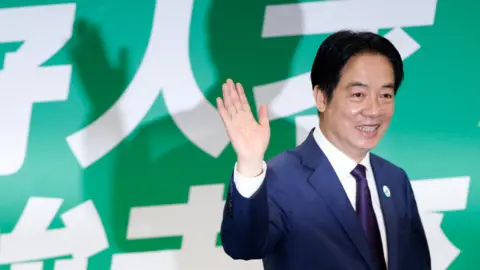
The timing of Taiwan's reaffirmation is particularly significant given the strategic importance of the island in global geopolitics and economics. Taiwan sits at the intersection of major shipping lanes and is home to critical semiconductor manufacturing facilities that supply the world's technology industry. Any shift in Taiwan's political status or sovereignty could have far-reaching implications for regional stability, international commerce, and the balance of power in the Indo-Pacific region.
Analysts have noted that US-Taiwan relations remain complex and multifaceted, shaped by decades of diplomatic history and the ambiguous legal frameworks that govern American engagement with both Taiwan and mainland China. The United States maintains a long-standing policy of strategic ambiguity regarding its military commitments to Taiwan, while simultaneously serving as the island's primary source of defensive weapons and security cooperation.
Taiwan's government has consistently argued that it does not seek confrontation with Beijing but rather seeks peaceful coexistence based on mutual respect and recognition of its democratic status. The island has emphasized its commitment to the status quo, which has allowed for economic prosperity and relative stability across the Taiwan Strait. Taiwanese officials have repeatedly stated that any changes to the current political arrangement should come through dialogue and consensus rather than coercion or military pressure.
The Taiwan strait tensions have escalated periodically in recent years, with increased military activities by the People's Liberation Army near the island drawing international concern and prompting responses from both Taiwan's defense establishment and its allies. These incidents have underscored the precarious nature of the current arrangement and the potential for miscalculation or unexpected events to destabilize the region.
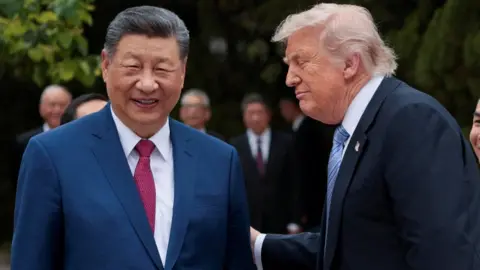
Beijing has consistently maintained that Taiwan reunification remains a core national interest and that the "one China" principle is non-negotiable in its foreign policy framework. The mainland government has shown little flexibility on this issue while simultaneously pursuing economic integration and people-to-people exchanges with the island. However, Taiwan's democratic government has rejected the "one country, two systems" framework proposed by Beijing as insufficient guarantee of the island's autonomy and freedoms.
International observers and policy experts have expressed concern about the implications of Trump's statement and what it might signal regarding American commitment to its long-standing security partnerships in the region. Some analysts worry that such statements could embolden Beijing to take a more aggressive stance toward Taiwan, while others interpret the remarks as part of broader diplomatic negotiations aimed at achieving broader geopolitical objectives in Asia.
The political status of Taiwan has been deliberately left ambiguous in international law and diplomatic practice, a situation that has persisted since 1949 when the Republic of China government retreated to the island following the Chinese Communist Party's victory on the mainland. This ambiguity, while sometimes frustrating to various parties, has also paradoxically helped maintain a degree of stability by avoiding the need for formal resolution of the sovereignty question.
Taiwan's response to Trump's warning reflects the island's determination to maintain control over its own political future and resist external pressure from any direction. The government has made clear that questions regarding Taiwan's future status are matters for the Taiwanese people to decide through democratic processes, not for external powers to dictate. This position has broad support across Taiwan's political spectrum, even among opposition parties that have traditionally favored closer ties with the mainland.
The economic dimensions of the Taiwan geopolitical situation cannot be overlooked, as the island's advanced manufacturing capabilities and technological prowess make it crucial to global supply chains and international competitiveness. Any disruption to Taiwan's stability or political status could have cascading effects on economies worldwide, particularly in the semiconductor and electronics industries that depend heavily on Taiwanese production.
Regional players including Japan, South Korea, and other Southeast Asian nations have expressed quiet concern about the potential for instability in the Taiwan Strait. These countries depend on freedom of navigation and regional stability for their own prosperity and security, making Taiwan's status a matter of broader regional interest beyond the immediate parties involved in the dispute.
Moving forward, the situation appears likely to remain a focal point of international attention and diplomatic negotiation. Taiwan's reaffirmation of its independence comes at a moment of heightened great power competition between the United States and China, with the island occupying an increasingly central position in discussions about regional order, technological competition, and the future balance of power in Asia. The comments from both Trump and Taiwan's response underscore the persistent tensions and complex dynamics that continue to characterize cross-strait relations and international engagement with this critical region.
Source: BBC News


