
Tamil Nadu Shaken: Film Star Vijay's Political Insurgency Reshapes State Elections

Actor Vijay's surprising electoral dominance in Tamil Nadu challenges established political parties and signals a dramatic shift in the state's political landscape.
In a stunning political upset that has reverberated across the southern Indian state of Tamil Nadu, celebrated film star Vijay has mounted an unexpectedly formidable challenge to the state's traditional political establishment. The actor's foray into electoral politics has defied widespread skepticism and predictions of failure, instead delivering a performance that has fundamentally altered the political calculus in one of India's most politically significant states. What many observers dismissed as an ambitious celebrity vanity project has instead transformed into a genuine political movement with the potential to reshape Tamil Nadu's political future.
Vijay, whose massive popularity across Tamil-speaking audiences transcends his film career, entered the political arena at a critical juncture when voter dissatisfaction with incumbent parties was reaching a crescendo. His political party capitalized on widespread frustration among constituencies feeling marginalized by traditional power structures, leveraging his enormous cultural influence to build grassroots support networks that established parties struggled to counter. The actor's decision to enter politics came after years of hints and coded messages in his films, which resonated deeply with audiences who saw in him a voice willing to challenge the status quo that had dominated Tamil Nadu politics for decades.
The election results demonstrated that Vijay's appeal extended far beyond his cinema fanbase, attracting voters across demographic segments who were seeking alternatives to the familiar faces that have controlled Tamil Nadu politics. His campaign strategy emphasized populist messaging, promising reforms and addressing bread-and-butter issues that affected ordinary citizens struggling with economic pressures and governance failures. The electoral victory margins in several constituencies exceeded expectations, suggesting that Vijay had successfully converted his celebrity capital into genuine political momentum and voter confidence.
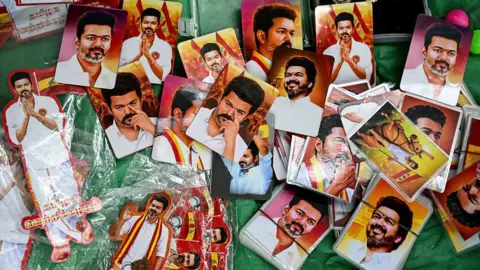
Political analysts attribute much of Vijay's success to his carefully cultivated public image as an outsider unburdened by the baggage of traditional politics. Unlike established political leaders entrenched in decades of factional disputes and corruption allegations, Vijay presented himself as a fresh alternative capable of implementing genuine change in the state administration. His films had consistently portrayed him as a champion of the common man, standing against injustice and systemic corruption, an image he seamlessly transferred to his political messaging and public appearances during the campaign season.
The state politics establishment received a jolt from Vijay's emergence as a serious contender, forcing traditional parties to acknowledge that their long-held assumptions about voter preferences and political loyalty could no longer be taken for granted. Seasoned political observers noted that Vijay's campaign demonstrated sophisticated understanding of modern electoral dynamics, effectively utilizing social media platforms and grassroots mobilization techniques that younger voters found more authentic and engaging than conventional political theater. His ability to frame complex policy issues in language accessible to diverse voter groups gave him significant advantage in communicating with constituents across urban and rural areas.
The implications of Vijay's political breakthrough extend beyond immediate electoral calculations, potentially signaling broader shifts in how Indian voters evaluate political candidates and parties. In an era when trust in traditional political institutions continues declining, the emergence of alternative leaders with outsider status and strong cultural credentials has become increasingly common across the country. Tamil Nadu, with its distinctive political culture and history of ideological movements transforming into mainstream political forces, provides a particularly fertile ground for such transformative political moments.
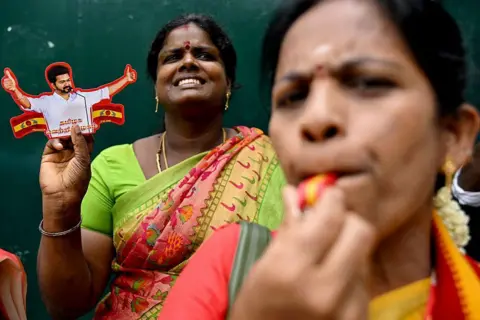
Vijay's political message resonated particularly strongly in constituencies where incumbent administration had failed to deliver basic services, where unemployment remained stubbornly high, and where citizens felt their voices were ignored by politicians preoccupied with factional struggles. His campaign promises included comprehensive administrative reforms, targeted welfare schemes for marginalized communities, and anti-corruption measures that addressed long-standing grievances articulated repeatedly in public opinion surveys. The campaign strategy effectively countered attempts by rival parties to dismiss him as inexperienced, instead framing his outsider status as an advantage that would enable him to implement radical reforms without being constrained by traditional political compromises.
The established political parties confronting Vijay's rise face the challenge of adapting to a fundamentally altered political environment where their traditional appeals to party loyalty and ideological positioning no longer guarantee voter support. Several analysts suggest that the election results may prompt serious introspection within these parties regarding their organizational capacity, leadership renewal, and responsiveness to evolving voter preferences. The shock of losing significant ground to Vijay's movement has reportedly triggered internal discussions about potential alliance strategies and repositioning for future electoral contests.
Media coverage of Vijay's political emergence has been extensive and often polarized, with some outlets celebrating him as a harbinger of welcome political change while others express skepticism about whether his movement possesses the institutional depth and ideological coherence necessary for sustainable governance. Film industry observers note that Vijay's entry into politics represents a significant departure from how Tamil cinema celebrities have traditionally navigated the intersection of cinema and politics, typically maintaining ambiguity about their true political commitments while leveraging their popularity for strategic advantage.
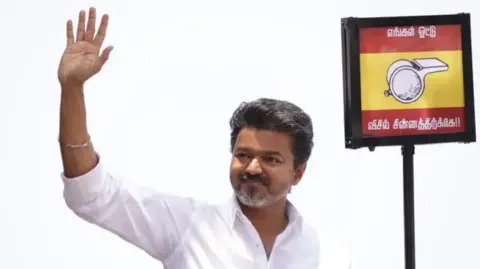
The political transformation triggered by Vijay's electoral success has implications for understanding how Indian elections are evolving in response to social media proliferation, declining faith in traditional institutions, and changing voter demographics. Younger voters particularly demonstrated enthusiasm for Vijay's candidacy, viewing him as more attuned to their aspirations and concerns than politicians representing establishments they viewed as dated and disconnected. His campaign's emphasis on technological modernization, transparent governance, and responsive administration appealed especially to urban voters frustrated by persistent bureaucratic inefficiency.
Moving forward, observers will be closely watching how Vijay's movement translates electoral success into concrete administrative performance, a transition that has historically challenged many political newcomers who discover that governance requires capabilities distinct from campaign appeal. The coming months will test whether his political organization can develop the institutional capacity, technical expertise, and administrative machinery necessary to implement promised reforms and maintain voter confidence. Success or failure in this critical transition period will significantly influence whether Vijay represents a temporary electoral phenomenon or the beginning of sustained political transformation in Tamil Nadu.
The broader significance of Vijay's political breakthrough lies in demonstrating that electoral politics in India's major states remains fundamentally unpredictable and responsive to cultural currents and voter sentiment that traditional political analysis sometimes underestimates. His emergence as a serious political force challenges assumptions about the inevitability of established party dominance and highlights the continuing potential for outsiders to mobilize electoral support when they effectively articulate voter grievances and offer compelling visions for political change. As Tamil Nadu enters this new political era with Vijay as a central figure, the state is poised to become a critical testing ground for understanding how Indian democracy evolves and adapts to generational and institutional changes reshaping the political landscape.
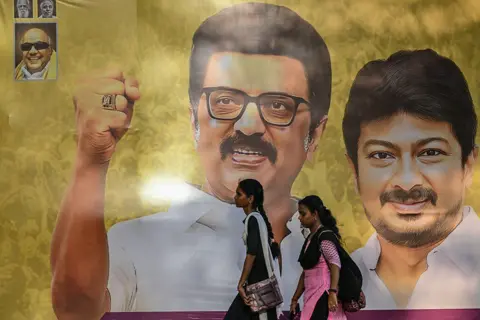
Source: BBC News


