
Tech Billionaires Downplaying AI Job Crisis

Elon Musk and other billionaires are minimizing AI's threat to workers. Here's why we need stronger protections now.
Artificial intelligence threatens millions of jobs worldwide, yet tech billionaires are working overtime to minimize public concern about the technology's societal impact. From Elon Musk to other Silicon Valley titans, these influential figures are crafting a narrative designed to quell growing anxiety and prevent regulatory backlash that could slow their technological ambitions. Their messaging strategy appears calculated to ease public fears while maintaining momentum for AI development and deployment across industries.
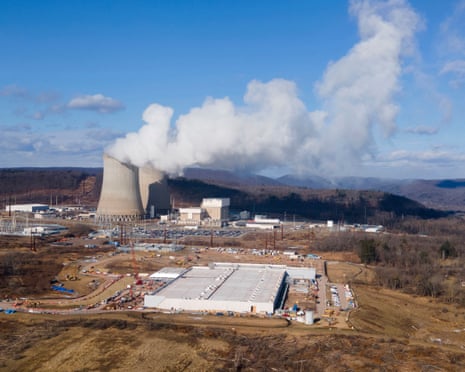
The timing of this reassurance campaign is telling, coinciding with mounting resistance to data centers in communities across America. Local governments and environmental advocates are increasingly questioning whether the infrastructure required to power advanced AI systems—with its enormous energy consumption and resource demands—justifies the promised benefits. As opposition builds at the grassroots level, tech leaders are stepping forward with optimistic rhetoric about AI's potential to enhance rather than replace human workers.
Even Elon Musk, who recently engineered a strategic merger between his space exploration company SpaceX and his artificial intelligence venture xAI, has become a vocal proponent of the "don't worry" narrative. In a recent social media post, Musk suggested that universal basic income, distributed through government checks to all citizens, would solve the displacement problem created by AI-driven job losses. This proposal reflects a broader pattern among billionaire entrepreneurs who advocate for technological transformation while delegating the responsibility for managing human consequences to government intervention.
The billionaire-led reassurance campaign fundamentally misrepresents the scale and immediacy of the challenge facing American workers. While Musk frames universal income as a simple solution, implementing such a system would require unprecedented political will and congressional action at a moment when the country faces significant partisan divisions. More troublingly, this approach treats economic displacement as an acceptable byproduct of progress rather than a problem requiring proactive solutions before job losses accelerate.
Throughout history, technological transitions have created winners and losers, with the burden of adjustment falling disproportionately on workers lacking political power or financial resources. The Industrial Revolution displaced artisans and craftspeople; automation in manufacturing devastated communities across the Midwest; and digital transformation eliminated entire categories of administrative and clerical positions. In each case, optimistic predictions about new opportunities emerging to replace lost jobs proved only partially true for displaced workers.
The current AI job displacement threat differs from previous technological shifts in its speed and scope. Unlike earlier innovations that affected specific industries or skill categories, advanced AI systems are capable of automating cognitive work across virtually every sector of the economy. From software engineers to radiologists, paralegals to accountants, no professional category appears immune to potential displacement. This broad-based threat makes the "don't worry" messaging particularly problematic, as it downplays a structural challenge that could reshape the labor market within a single decade.

Steven Greenhouse, a veteran journalist and author specializing in labor issues and workplace economics, has extensively documented how corporate messaging about technological change frequently diverges from workers' lived experiences. His analysis highlights a consistent pattern: business leaders promise that disruption will create opportunity, while the actual historical record shows that adjustment periods are painful, lengthy, and incomplete for most affected workers. Companies that implement labor-displacing technologies rarely bear the social costs of transition.
The resistance to data centers gaining momentum in communities nationwide reflects legitimate concerns about infrastructure costs and environmental impact. As AI companies expand their computational capacity, they're constructing massive facilities that consume enormous quantities of electricity and water. Local residents increasingly question whether their communities should bear these environmental burdens while billionaire investors and technology executives capture the profits. This tension explains why tech leaders are now engaged in a public relations offensive to reshape perceptions of AI development.
Musk's proposal for universal high-income government checks represents a particular flavor of billionaire paternalism: acknowledging that problems might emerge while simultaneously insisting that no preemptive action is necessary. Rather than support retraining programs, wage insurance, or sectoral transition assistance during workers' careers, this approach postpones all adjustment costs until after displacement occurs, creating a reactive rather than proactive framework for managing technological change.
A more responsible approach to AI workforce integration would include mandatory corporate investment in transition assistance, sectoral workforce development partnerships, and robust social safety nets designed before massive job displacement occurs. Rather than relying on hypothetical government payments distributed at an unspecified future date, policymakers should require companies benefiting from AI automation to contribute to concrete programs supporting affected workers. This would align corporate incentives with societal welfare and ensure that transition assistance reaches people when they need it most.
The billionaire class possesses both economic resources and political influence to shape how artificial intelligence regulation develops. By framing the technology's benefits in rosiest possible terms while minimizing legitimate concerns about employment and inequality, they're attempting to foreclose policy discussions that might impose costs on their enterprises. This strategy has proven effective in previous technological debates, where optimistic industry messaging often prevailed over workers' cautionary voices during policy formation.
American policymakers must resist the soothing narrative emanating from tech billionaires and instead implement protections addressing AI's genuine risks to workers and communities. These protections should include mandatory corporate transition assistance, sectoral workforce development funding, updated labor standards for the AI era, and serious investment in education and retraining infrastructure. Without such measures, the United States faces the prospect of significant economic inequality expansion and social disruption driven by technologies that generate enormous wealth for a small segment of the population.
The conversation about artificial intelligence's societal impact requires intellectual honesty about both benefits and costs. Yes, AI systems will create some new opportunities and enhance productivity in certain sectors. However, the net employment effects, particularly in the medium term, could be significantly negative for workers lacking advanced technical skills or financial resources. Acknowledging this reality doesn't require rejecting AI development; it simply means being serious about managing the transition responsibly.
Tech billionaires like Elon Musk are entitled to their optimism about AI's potential to solve humanity's challenges. However, their reassurances should not preempt serious policy discussions about protecting workers from technological displacement. History demonstrates that markets alone rarely produce equitable outcomes during technological transitions. Without deliberate government action and corporate responsibility, millions of Americans will experience significant economic hardship as AI reshapes the labor market. The time to establish protections is now, before disruption accelerates further.
Source: The Guardian


