
Ted Turner's CNN Revolution: How 24-Hour News Changed Broadcasting

Discover how Ted Turner's CNN transformed television news forever, challenging established broadcasters with groundbreaking 24-hour coverage that revolutionized the industry.
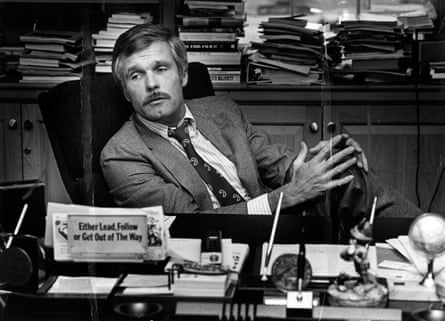
In February 1982, the media landscape stood on the precipice of a transformative moment that few could have predicted. A relatively young cable news channel called CNN, not yet in its second year of operation, was hemorrhaging approximately $2 million each month as it struggled to establish itself in a fiercely competitive broadcasting environment. The venture seemed destined for failure, yet its visionary owner refused to surrender his ambitious dream. Ted Turner, the brash and unconventional entrepreneur famously known as the "mouth of the south" for his audacious public persona and unpredictable behavior, was forced to take extraordinary measures to keep his fledgling network afloat.
Turner's resourcefulness during this precarious financial period became legendary in media circles. To help meet payroll obligations and keep operations running, the determined mogul resorted to selling krugerrands—South African gold coins—that he had carefully accumulated and stored in his private safe. Beyond this creative financing, Turner also relied on revenue from his other business interests, particularly concession sales generated by the Atlanta Braves baseball team, which he owned. These unconventional funding sources revealed both the severity of CNN's financial crisis and Turner's unwavering commitment to his vision for 24-hour news broadcasting.
The timing of CNN's struggle could not have been worse. Just as Turner was scrounging for resources to keep his network operational, ABC, one of the triumvirate of dominant broadcast networks that Turner had boldly declared he would drive out of business, announced its own ambitious plans to launch a competing all-news service. This announcement sent shockwaves through the industry and posed an existential threat to CNN's survival. ABC's entry into the all-news market brought with it not only a massive existing viewer base inherited from its established broadcast network operations, but also substantially greater financial resources and industry credibility that would make it a formidable competitor.

The competitive pressure became so intense during this period that Turner found himself considering previously unthinkable options to ensure CNN's viability. Despite his aggressive competitive nature and public disdain for other networks, he began exploring the possibility of forging a strategic alliance with CBS, another major broadcast network. In characteristic fashion, Turner's private dismissal of CBS as a "cheap whorehouse" reflected both his contempt for traditional broadcasting establishments and his desperate willingness to consider unusual partnerships if they could save his struggling venture. This potential collaboration represented a striking departure from his earlier declarations of independence and dominance.
What made Turner's vision for CNN so revolutionary was fundamentally different from anything the television news industry had previously attempted. The concept of round-the-clock news coverage, operating continuously throughout the day and night without interruption, directly challenged the established model of scheduled news broadcasts at fixed times. Traditional broadcast networks aired their news programs during specific time slots—morning, evening, and late night—leaving vast stretches of the day without dedicated news coverage. Turner recognized an untapped market opportunity and the potential to fundamentally reshape how Americans consumed news.
The "mouth of the south" had earned his nickname through years of controversial statements, bold predictions, and a willingness to challenge industry norms that established broadcasters considered sacred. His public persona was intentionally provocative, designed to generate attention and publicity for his ventures. Critics dismissed him as an unprincipled businessman who relied on shock value rather than genuine innovation. However, beneath the controversial exterior lay a strategic thinker who understood emerging trends in media consumption and audience preferences better than his more established competitors.
The structural challenges facing CNN in its early years extended far beyond Turner's personal finances. The network had to build an entirely new infrastructure for 24-hour news operations, including recruiting and training journalists, establishing news bureaus around the world, and developing technological systems to support continuous broadcasting. Every innovation required capital investment that the struggling network could scarcely afford. Meanwhile, the three dominant broadcast networks—ABC, CBS, and NBC—possessed decades of experience, established news departments with thousands of employees, and viewing audiences numbering in the millions who automatically tuned to their evening news broadcasts.
Turner's competitors in the broadcast industry initially dismissed CNN as an amateurish venture that would inevitably collapse under its own weight. The idea that people would want to watch news continuously throughout the day and night seemed preposterous to industry veterans who believed viewers only sought news updates at traditional times. This fundamental disagreement about audience behavior would ultimately prove prophetic. Turner's instincts about changing media consumption patterns would be vindicated, but only after years of financial struggle and organizational challenges that threatened the network's survival on multiple occasions.
The financial crisis of 1982 represented merely the first of many existential challenges that CNN would overcome during its formative years. Turner's willingness to risk personal assets, his refusal to accept conventional wisdom about the television news market, and his ability to inspire loyalty among employees who believed in his vision despite mounting losses, all contributed to CNN's eventual breakthrough. The network that seemed doomed to failure would eventually transform the entire television news industry and establish itself as a global news powerhouse that fundamentally changed how people around the world accessed and consumed current events information.

Looking back at this critical moment in 1982, the stakes could scarcely have been higher. Every month that CNN continued burning through cash without achieving profitability pushed Turner closer to the point where he would no longer be able to sustain the operation. The announcement of ABC's competing all-news service added urgency to an already desperate situation. Yet despite these overwhelming odds, Turner maintained his conviction that 24-hour news was the future of television broadcasting and refused to abandon his vision even when conventional business logic suggested capitulation.
The eventual success of CNN vindicated Turner's bold gamble and his unconventional approach to challenging established industry players. His willingness to embrace new technologies, his understanding of audience behavior, and his persistence through years of financial losses ultimately created a news organization that would revolutionize the entire industry. The "mouth of the south" had proven that bold vision, combined with relentless determination, could indeed transform an entire industry and reshape how millions of people received news and information about the world.
Source: The Guardian


