
Tehran Activist Reveals War Fears Amid Repression

An Iranian dissident shares harrowing account of psychological trauma, compounded by escalating conflict anxieties and government repression in Tehran.
An Iranian activist living under the shadow of government scrutiny has opened up to the BBC about the profound psychological toll of facing dual threats: ongoing state repression and the looming specter of renewed military conflict. The dissident, whose identity is being protected for safety reasons, described a deeply distressing existence marked by constant vigilance, pervasive fear, and mounting despair as geopolitical tensions continue to escalate in the volatile Middle Eastern region.
The activist's account provides a sobering glimpse into the lived experience of those who have chosen to challenge the Iranian government's policies and restrictions. Living in Tehran, the nation's capital, she articulated how the combination of government repression and fears of renewed war creates an environment of relentless psychological pressure that leaves her feeling utterly powerless. The intersection of these two crises—one rooted in institutional oppression and the other in international conflict—creates a uniquely devastating situation for dissidents and vulnerable populations throughout the country.
According to the activist's candid testimony, the psychological impact of government surveillance and control mechanisms has intensified significantly in recent months. She described constantly looking over her shoulder, monitoring her communications, and self-censoring to avoid drawing unwanted attention from authorities. This state of hypervigilance, which has become normalized for many Iranian activists, takes an immeasurable toll on mental health and personal relationships, fragmenting the social fabric of families and communities.
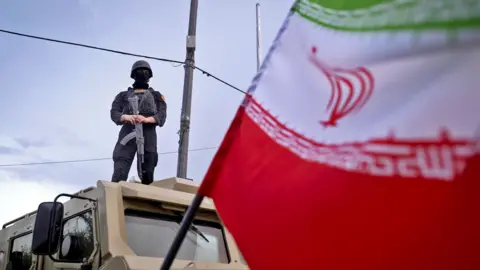
The fear of renewed warfare adds another devastating layer to an already precarious existence. The activist explained how news of escalating military tensions causes her profound anxiety and sleeplessness, reopening wounds from previous conflicts and reinforcing her sense of vulnerability. For those engaged in dissent and activism, the prospect of war means not only the physical dangers that all civilians face, but also the likelihood of further government crackdowns on opposition movements and increased surveillance of potential critics.
Human rights organizations have documented extensively how authoritarian regimes often use periods of external threat or military conflict to justify increased domestic repression and surveillance. The activist's concerns reflect patterns observed throughout the region, where genuine security threats are sometimes weaponized to suppress legitimate political expression and civil liberties. This creates a vicious cycle in which citizens face simultaneous dangers from their own government and from external military threats, leaving them with nowhere to turn for safety or protection.
The psychological manifestations of living under such extreme duress are numerous and severe. The activist described experiencing persistent anxiety, difficulty concentrating, troubled sleep, and a pervasive sense of hopelessness about the future. These symptoms align with clinical descriptions of complex trauma, a condition that develops when individuals are subjected to prolonged exposure to stressful or dangerous circumstances, particularly those involving threats from authority figures or institutions.
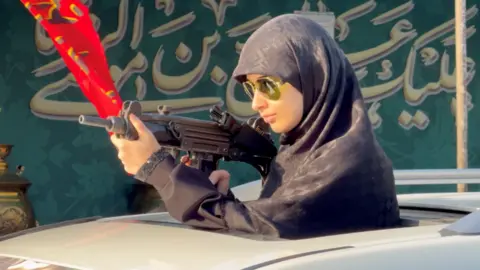
Compounding these individual psychological challenges are broader questions about the sustainability of activist work under such oppressive conditions. The activist questioned whether she can continue her advocacy efforts while managing the crushing weight of fear and trauma. Many fellow dissidents have faced similar dilemmas, with some choosing exile and others deciding to abandon their activist work altogether to reduce their risk profiles and pursue more stable, less dangerous existences.
The role of international media attention in these situations cannot be overstated. By giving voice to activists like the woman who spoke to the BBC, international news organizations help amplify the experiences of those suffering under repression and create international awareness of human rights violations. However, such media exposure also carries risks, as it may increase surveillance and scrutiny from Iranian authorities who view foreign press engagement as evidence of suspicious or subversive activities.
The activist's plea, implicit in her testimony, is for the international community to recognize the dire circumstances facing dissidents and vulnerable populations in Iran. She emphasized that those fighting for basic human rights and freedoms should not be forced to choose between silencing themselves and risking their safety. Her account underscores the urgent need for human rights protection mechanisms and international support for persecuted activists.
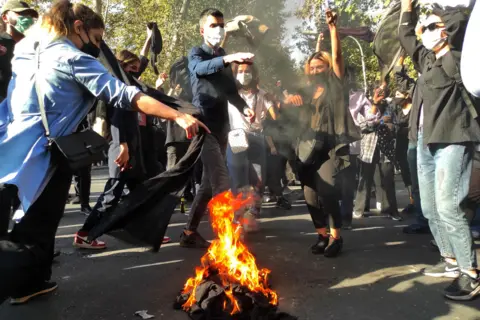
Mental health support for activists and dissidents operating in hostile environments remains critically underfunded and difficult to access. The activist noted that seeking psychological counseling from a therapist could itself be dangerous, as it might create records that could be used against her by security forces. This creates a tragic situation where those who need mental health support the most are least able to access it safely, perpetuating cycles of untreated trauma and psychological deterioration.
The broader context of Iranian political tensions and international relations adds complexity to individual activist experiences. The country's ongoing disputes with various international actors, sanctions regimes, and military posturing all contribute to an atmosphere of instability that affects everyone living within Iran's borders. For activists already marginalized by their political stances, these broader geopolitical factors feel even more threatening and destabilizing.
Looking toward the future, the activist expressed uncertainty about what lies ahead for herself and her fellow dissidents. She hopes that increased international attention to conditions in Iran might provide some measure of protection, though she acknowledged the limitations of such hope. The interview with the BBC represents both a moment of catharsis for sharing her experiences and a continuation of her activist work, as speaking out itself constitutes an act of resistance and courage against forces that seek to silence her.
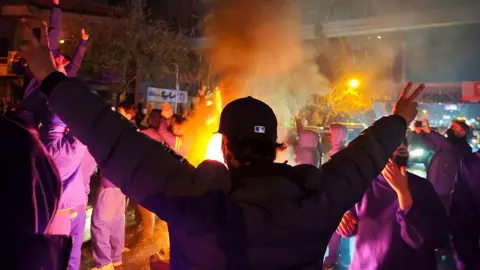
Her testimony serves as a powerful reminder that the struggle for human rights and political freedom in Iran is not an abstract political issue, but a lived reality that imposes severe personal and psychological costs on those who choose to resist. The activist's courage in speaking out, despite the risks, reflects the determination of many Iranians who continue to push for reform and accountability even as they grapple with trauma, fear, and uncertainty about their futures.
Source: BBC News


