
Tennis Legend Billie Jean King Graduates College at 82

Billie Jean King completes her college degree 61 years after leaving Cal State Los Angeles to pursue her tennis career. She graduated at 82 years old.
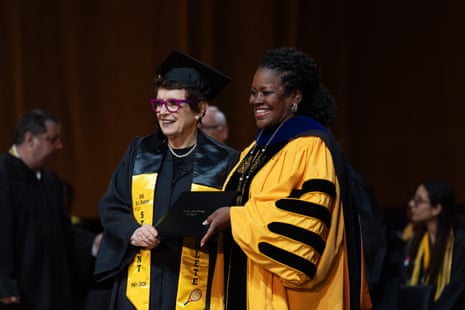
Billie Jean King, one of the most influential athletes and activists in sports history, achieved a remarkable milestone by graduating from college at the age of 82. After leaving Cal State Los Angeles in 1964 to pursue her groundbreaking tennis career, King returned decades later to complete the history degree she had started more than six decades ago. Her commencement ceremony on Monday marked the culmination of an extraordinary personal journey that paralleled her legendary athletic accomplishments and unwavering commitment to social change.
King's decision to leave college in 1964 proved to be one of the most consequential choices of her life. While her peers continued their academic pursuits, she embarked on a professional tennis career that would fundamentally transform the sport and forever alter the landscape of women's athletics. Within just a few years of leaving Cal State Los Angeles, King had ascended to the summit of professional tennis, earning the prestigious ranking as the world's top-ranked tennis professional. Her early success demonstrated not only her exceptional athletic talent but also her fierce determination to excel at the highest levels of competition.
Throughout her trailblazing career, King accumulated an astonishing collection of accolades that cemented her legacy as one of sports' greatest champions. She captured an extraordinary 39 major championships across singles, doubles, and mixed doubles competitions, showcasing her versatility and dominance across multiple formats of the game. Her list of achievements extends far beyond titles and trophies, however. King received the prestigious Presidential Medal of Freedom, one of the highest civilian honors in the United States, recognizing her contributions to American society. Additionally, she was honored with a congressional Medal of Honor, further testament to her profound impact on the nation.
What distinguished King among her contemporaries was not merely her athletic prowess but her unwavering advocacy for fundamental principles of equality and fairness. Throughout her career, she became a powerful voice for gender equality in sports, tirelessly fighting for equal pay, equal opportunities, and equal respect for female athletes. She publicly championed the cause of pay equity in professional tennis, challenging the sport's governing bodies and societal norms that undervalued women's athletics. Her activism extended beyond tennis, as she became a symbol of the broader women's rights movement, using her platform and influence to advance social justice causes.
The decision to return to college and complete her degree represents a deeply personal statement about the importance of education and the value of finishing what one starts. Even after achieving unprecedented success in her professional life, King recognized that her unfinished degree held meaning and significance. The pursuit of this academic goal in her later years demonstrates a commitment to personal growth and lifelong learning that has always characterized her approach to life and achievement. For King, completing her degree was not about job prospects or career advancement but about honoring the journey she had begun more than six decades earlier.
King's return to Cal State Los Angeles and her eventual graduation sent a powerful message to students and aspiring athletes around the world. Her story illustrates that it is never too late to pursue educational goals or to seek closure on unfinished chapters of life. At an age when many people are enjoying retirement, King was sitting in classrooms, engaging with professors, and completing coursework to earn her degree in history. This decision reflected her belief in the transformative power of education and her desire to set an example for others who might have similarly abandoned educational pursuits in favor of other opportunities.
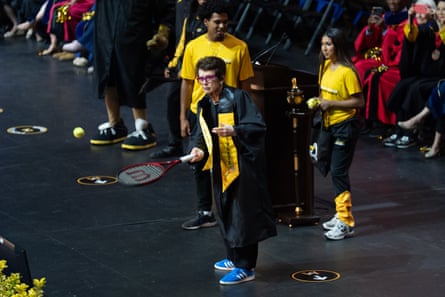
The field of history that King chose to study holds particular resonance given her own role as a historical figure who has shaped the course of sports and social justice. By earning her degree in history, she became a living embodiment of the very subject she studied, having personally witnessed and contributed to pivotal moments in American sporting history and the broader struggle for gender equality. Her academic focus allowed her to engage more deeply with the historical context of her own era and to understand the larger forces that shaped her experiences as a woman athlete breaking barriers in a male-dominated world.
The timing of her graduation also reflects broader conversations about education, opportunity, and the diverse pathways to success that characterize contemporary society. King's example challenges traditional notions of when and how educational achievement should occur, demonstrating that a person can achieve extraordinary success without holding a college diploma and can later choose to complete their degree when it serves their personal or intellectual goals. Her journey from leaving college to pursue tennis, then returning decades later to earn her degree, illustrates the complexity of modern educational pathways and the evolving definition of student success.
King's accomplishments have consistently positioned her at the intersection of sports excellence and social activism. Her willingness to take public stands on controversial issues, including her famous 1973 "Battle of the Sexes" match against Bobby Riggs, transformed her into far more than an athlete. She became an ambassador for equality and a role model for athletes who choose to use their platforms for social good. The completion of her college degree at 82 represents another chapter in this extraordinary story of perseverance, principle, and an unwillingness to accept limitations.
As King walked across the stage to receive her diploma at 82 years old, she was not simply marking an academic achievement. She was demonstrating that the pursuit of knowledge and personal goals knows no age limit, and that unfinished business from six decades past could still matter deeply. Her graduation from Cal State Los Angeles served as an inspiration to countless individuals who may have deferred their educational dreams or abandoned their degrees in pursuit of other opportunities. King's actions reinforced the message that it is possible to have an extraordinary life and career while still honoring the educational goals we set for ourselves in our youth. The 61-year gap between her departure and her return only amplified the significance of her achievement and the inspiring message it conveyed to the world.
Source: The Guardian


