
Thai Train Driver Tested Positive for Drugs

A freight train collision with a bus in Bangkok killed 8 people and injured dozens. Police confirm the driver tested positive for drugs in the aftermath of the tragic incident.
A devastating collision between a freight train and a passenger bus in Bangkok has resulted in one of Thailand's most serious transportation accidents in recent memory, claiming eight lives and leaving dozens of passengers injured. Thai police have revealed that preliminary investigations indicate the train driver tested positive for drugs at the time of the crash, raising serious questions about safety protocols and driver supervision at Thailand's rail network.
The Bangkok train collision occurred when the heavy freight train struck the bus at a railway crossing in the capital city, creating a scene of chaos and destruction. Emergency responders rushed to the location within minutes, finding the bus severely damaged and multiple victims trapped in the wreckage. The sheer force of the impact left no doubt about the severity of the incident, with rescue teams working through the night to extract survivors and recover victims.
According to Thai police statements, the drug test results obtained from the train operator showed the presence of prohibited substances in his system. This discovery has sparked immediate concerns about the safety culture within Thailand's railway system and whether adequate screening measures are in place to prevent impaired operators from controlling massive vehicles like freight trains. Investigators are now examining whether substance impairment directly contributed to the driver's failure to stop at the railway crossing.
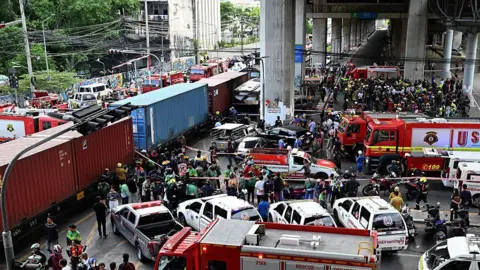
The eight fatalities were identified as passengers aboard the bus, many of whom were commuters traveling through Bangkok during what should have been a routine journey. The injured passengers numbered in the dozens, with hospitals in the area receiving an influx of casualties with varying degrees of trauma injuries. Medical facilities mobilized additional staff to handle the emergency, treating everyone from those with minor bruises to those requiring immediate surgical intervention for life-threatening injuries.
The freight train accident investigation is being conducted by Thai police in conjunction with railway authorities, who are examining multiple factors that may have contributed to the tragedy. Witnesses at the scene reported that the train did not appear to slow down as it approached the crossing, and some stated they heard no warning signals typical of approaching trains. The investigation team has collected testimony from survivors, reviewed security camera footage, and is analyzing the train's mechanical condition to determine if equipment failure played any role.
In Thailand's railway system, safety concerns have periodically surfaced in recent years, though this incident represents one of the most fatal collisions between rail and road vehicles. The train safety standards established by Thai authorities require regular maintenance checks and operator certifications, but questions remain about the consistency of enforcement. Railway officials have stated they will cooperate fully with investigators and implement additional safety measures if gaps are identified.
The positive drug test result has ignited public debate about employee wellness programs and substance abuse screening at Thailand's State Railway of Thailand (SRT). Critics argue that the operator's impairment represents a catastrophic failure of the system that should have prevented an unsafe individual from operating a vehicle carrying hundreds of tons of cargo. Some safety experts have called for mandatory random drug testing for all train operators and more stringent protocols before each shift.
Family members of the deceased have expressed grief and anger, with several demanding accountability from railway authorities. The tragedy has prompted online petitions calling for comprehensive reforms to Thailand's transportation safety regulations and better coordination between road and rail crossing management. Civil rights organizations have also weighed in, suggesting that this incident reveals systemic weaknesses in how Thailand monitors and regulates high-risk professions.
The collision has prompted railway authorities to review all similar crossings throughout Bangkok and surrounding provinces, examining whether safety equipment is functioning properly and visible to approaching vehicles. Barriers, warning lights, and crossing gates are being inspected at hundreds of locations where trains intersect with public roads. Preliminary findings suggest that some crossings may have outdated warning systems that do not meet current safety standards.
The Bangkok transportation incident has also raised broader questions about the regulation of impaired driving across all modes of transport in Thailand. While drunk driving laws are strictly enforced in the country, drug-impaired driving standards have been less consistently applied. Legal experts suggest that this case may serve as a catalyst for lawmakers to enact stricter measures regarding substance use by operators of public transportation and commercial vehicles.
In the immediate aftermath of the collision, the railway crossing was closed for investigation and evidence collection, disrupting freight and passenger service on that line for several days. Railway officials estimated that restoring full service would take approximately one week following repairs to the track infrastructure damaged in the impact. Alternative routes were established to minimize disruption to the supply chain, though some freight shipments experienced delays.
The incident has been referred to Thailand's railway courts for legal proceedings, and prosecutors are evaluating what charges may be brought against the train operator. Depending on the findings of the investigation, charges could range from negligent homicide to more serious criminal charges if impairment is definitively linked to the operator's negligence. The legal process is expected to take several months as evidence is compiled and expert testimony is gathered.
International transportation safety organizations have offered to assist with the investigation, as such incidents often reveal patterns that are relevant to rail safety globally. The train operator drug testing case has been noted by regulatory bodies in other Southeast Asian nations as a concerning trend that warrants attention. Safety experts from neighboring countries have suggested that Thailand may benefit from adopting best practices implemented in other jurisdictions with strong rail safety records.
As the investigation continues, this tragic event serves as a stark reminder of the critical importance of transportation safety and the human toll when systems fail. The eight lives lost and dozens injured represent families shattered and a community grieving. Thailand's railway authorities face mounting pressure to demonstrate that lessons will be learned and that concrete measures will be implemented to prevent similar tragedies in the future.
Source: BBC News


