
The Quest for Graceful Robots: Engineering Elegance

Robotics companies are revolutionizing motor technology to create more efficient, affordable, and graceful robotic movements for the future.
The pursuit of graceful robotics has become one of the most fascinating challenges in modern engineering, as companies worldwide race to develop machines that move with the fluid elegance of natural organisms. While robots have traditionally been associated with jerky, mechanical movements, a new generation of innovators is working to fundamentally transform how these machines interact with their environment through advanced motor technologies.
At the heart of this revolution lies the development of more sophisticated and efficient robot motors that can deliver precise, smooth movements while consuming less energy and costing significantly less to manufacture. These breakthrough technologies are not merely incremental improvements but represent a paradigmatic shift in how we conceive robotic motion and control systems.
The concept of grace in robotics extends far beyond mere aesthetics. When engineers speak of graceful movement, they're referring to a complex interplay of factors including energy efficiency, precision control, adaptive response to environmental changes, and the ability to perform delicate tasks without causing damage. This level of sophistication requires motors that can provide instantaneous feedback, variable torque control, and seamless integration with advanced sensor systems.
Leading technology firms are investing billions of dollars in research and development to create next-generation actuators that can bridge the gap between mechanical precision and organic fluidity. Companies like Boston Dynamics, Tesla, and numerous startups are pioneering new approaches to motor design that incorporate artificial intelligence, advanced materials science, and biomimetic principles.
One of the most promising developments in this field is the emergence of smart servo motors that can adapt their behavior in real-time based on environmental feedback. These intelligent systems use machine learning algorithms to continuously optimize their performance, learning from each interaction to improve future movements. The result is robotic motion that becomes increasingly refined and natural over time.
The economic implications of these technological advances are substantial. Traditional robotic systems often require expensive, high-precision motors that can cost thousands of dollars per unit. The new generation of cost-effective robotic motors promises to democratize robotics by making sophisticated movement capabilities accessible to smaller companies and even individual developers.
Manufacturing processes are being revolutionized through the integration of advanced materials such as rare-earth magnets, carbon fiber composites, and smart alloys that can change their properties in response to electrical signals. These materials enable the creation of motors that are simultaneously more powerful, more precise, and more energy-efficient than their predecessors.
The challenge of achieving graceful movement is particularly acute in humanoid robots, where the expectation for natural motion is highest. Human movement involves complex coordination between hundreds of muscles, sophisticated balance systems, and predictive control mechanisms that have evolved over millions of years. Replicating this level of sophistication requires advanced motion control systems that can coordinate multiple motors simultaneously while maintaining stability and efficiency.
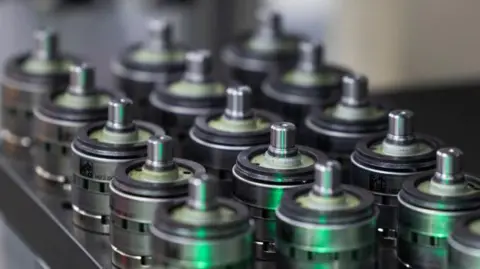
Energy efficiency has become a critical consideration in modern robotic design, as autonomous systems need to operate for extended periods without recharging. Traditional motors often waste significant amounts of energy through heat generation and mechanical friction. New energy-efficient actuator technologies are addressing these limitations through innovative designs that minimize energy loss while maximizing output performance.
The integration of artificial intelligence with motor control systems is creating unprecedented opportunities for graceful movement. Machine learning algorithms can analyze vast amounts of movement data to identify optimal control strategies for different situations. This approach allows robots to develop their own movement patterns that are specifically adapted to their intended tasks and environments.
Biomimetic research is providing valuable insights into how natural systems achieve graceful movement. Scientists are studying everything from the wing mechanics of hummingbirds to the locomotive patterns of cheetahs to understand the principles that enable efficient, elegant motion. These insights are being translated into engineering solutions that can be implemented in robotic systems.
The applications for graceful robotics extend across numerous industries. In healthcare, robots that move with natural grace can provide more comfortable and effective patient care. In manufacturing, graceful movement can improve precision and reduce wear on equipment. In service industries, robots that move naturally are more acceptable to human users and can operate more effectively in human-centered environments.
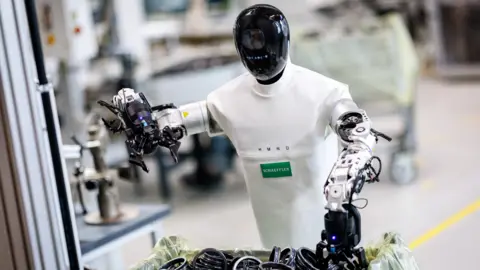
Quality control in motor manufacturing has become increasingly sophisticated, with companies employing advanced testing methodologies to ensure that each motor meets exacting standards for precision, reliability, and performance. This attention to detail is essential for achieving the level of consistency required for graceful robotic movement.
The software component of graceful robotics is equally important as the hardware. Advanced control algorithms must process sensor data in real-time, predict optimal movement trajectories, and coordinate multiple actuators to achieve smooth, coordinated motion. This requires significant computational power and sophisticated programming techniques.
Looking toward the future, researchers are exploring revolutionary approaches such as soft robotics, which uses flexible materials and pneumatic systems to achieve naturally graceful movement. These systems mimic biological organisms more closely than traditional rigid robots and may represent the next evolutionary step in robotic design.
The convergence of multiple technological advances - including artificial intelligence, advanced materials, precision manufacturing, and sophisticated control systems - is creating unprecedented opportunities for achieving truly graceful robotic movement. As these technologies continue to mature and costs continue to decrease, we can expect to see increasingly sophisticated robots that move with natural elegance while performing complex tasks across a wide range of applications.

Source: BBC News


