
Tim Smit's Chelsea Garden Revolution: Growing Food Over Asphalt

Eden Project founder Tim Smit calls on councils to build community gardens. His Chelsea Flower Show design showcases edible plants alongside traditional flowers.
The founder of the acclaimed Eden Project is making a bold call for urban transformation. Tim Smit, whose visionary biomes in Cornwall have inspired millions since their opening in 2000, is advocating for a fundamental shift in how local councils approach public spaces. Rather than maintaining endless stretches of grey asphalt, Smit argues that communities should reclaim these spaces for food production and environmental education. His message is clear: the time has come to prioritize growing food and building green spaces that serve both ecological and social purposes.
At the prestigious Chelsea Flower Show, Smit has unveiled an innovative concept that challenges traditional garden design conventions. Working alongside renowned landscape designers Harry Holding and Alex Michaelis, he has created what can only be described as an "edimental" garden—a space that seamlessly blends culinary plants with ornamental beauty. This groundbreaking approach demonstrates that vegetables like cabbages and fruits like strawberries possess their own aesthetic charm. Rather than relegating edible plants to hidden vegetable patches, Smit's design integrates them prominently alongside conventional bedding plants, creating a visually stunning yet deeply functional garden space.
The inspiration behind this design philosophy runs deep. Throughout his career, Smit has championed the idea that nature and sustainability should be at the forefront of community development. The Chelsea garden design serves as a physical manifestation of these principles, offering councils and communities a tangible blueprint for transformation. By showcasing how beautiful and productive spaces can coexist, Smit hopes to inspire local authorities to take action on environmental initiatives that have long been sidelined in favor of concrete expansion.

The concept of converting asphalt spaces into community gardens addresses multiple contemporary challenges simultaneously. Food security has become an increasingly pressing concern for many communities, particularly in urban areas where access to fresh, locally-grown produce remains limited. By encouraging councils to repurpose underutilized pavement spaces, Smit's proposal directly tackles this issue while simultaneously creating green spaces that improve air quality, reduce urban heat, and provide educational opportunities. Young people, in particular, stand to benefit enormously from hands-on experience growing their own food—a skill set that has become increasingly rare in modern society.
The potential scale of this initiative is staggering. Consider the vast stretches of asphalt that characterize most urban and suburban landscapes: parking lots, unused access roads, underutilized public spaces, and abandoned commercial areas. As Smit himself has noted, "you could dig up a lot of asphalt." This observation carries enormous significance when contemplated seriously. Across the UK alone, millions of square meters of asphalt exist that could potentially be transformed into productive gardens, green spaces, and community gathering areas. The logistics of such a transformation would be substantial, but the potential rewards—both environmental and social—are equally compelling.
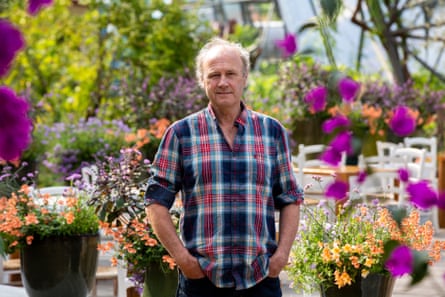
The Eden Project's legacy of transforming spaces provides compelling evidence that such ambitious visions can become reality. When Smit and his collaborators first proposed converting an abandoned clay pit in Cornwall into a world-class botanical attraction, many skeptics questioned the feasibility and utility of the project. Yet the Eden Project has gone on to become one of the UK's most visited attractions, drawing millions of visitors and establishing itself as a leading voice in environmental education and sustainability. The project has consistently demonstrated that engaging spaces combining nature, education, and community involvement can achieve remarkable success.
What makes Smit's current initiative particularly relevant is its accessibility and scalability. Unlike the Eden Project, which required substantial investment and infrastructure development, converting asphalt spaces into community gardens represents a more achievable goal for local authorities with limited budgets. The barriers are more often psychological and organizational than financial. By providing a compelling vision through the Chelsea garden design, Smit offers councils a concrete example of what's possible. The message is empowering: local authorities need not wait for top-down directives or massive funding initiatives to begin making meaningful changes in their communities.

The educational component of community gardens deserves particular emphasis. In an era when many young people have limited exposure to agriculture or food production, community gardens serve as outdoor classrooms where practical skills and ecological understanding can flourish. Students can learn about soil chemistry, plant biology, seasonal cycles, and sustainable farming practices through direct experience. These lessons prove far more memorable and impactful than classroom instruction alone could ever achieve. Furthermore, the sense of accomplishment that comes from nurturing plants through the growing season and harvesting the fruits of one's labor builds confidence, resilience, and a deeper connection to food systems.
The design philosophy underpinning the edimental garden concept also challenges outdated aesthetic assumptions about what constitutes beautiful landscaping. For generations, formal garden design has prioritized ornamental plants—flowers chosen primarily for color and form while serving no practical purpose. Meanwhile, vegetables have been consigned to utilitarian spaces, often hidden behind fences or relegated to the margins of properties. This artificial separation between beauty and utility has no practical justification. Smit's design elegantly deconstructs these assumptions by demonstrating that well-designed spaces can simultaneously nourish both the eye and the body. A kale plant with its sculptural leaves can stand proudly alongside a traditional peony. Strawberry plants dripping with fruit offer visual appeal while providing sustenance.
Beyond the immediate benefits to individual communities, widespread adoption of urban food gardens would carry significant implications for sustainability and climate resilience. Local food production reduces the carbon footprint associated with transporting produce across vast distances. It decreases dependence on industrial agricultural systems that rely heavily on synthetic inputs and fossil fuels. Most importantly, it builds community resilience by creating localized food systems that prove less vulnerable to supply chain disruptions. As climate change and other global challenges create increasing uncertainty, the ability of communities to produce at least some portion of their own food becomes increasingly valuable.
Tim Smit's call to action arrives at a crucial moment. Communities across the nation are grappling with the dual crises of environmental degradation and social disconnection. Young people, in particular, face unprecedented challenges related to climate anxiety, food security concerns, and limited engagement with the natural world. By channeling this energy into concrete, tangible projects that improve their immediate environments, communities can address these concerns while simultaneously creating spaces of beauty, learning, and sustenance. The message that Smit delivers through both his words and his Chelsea garden design is ultimately one of empowerment: communities need not accept the asphalt-covered status quo, and the tools for transformation may already exist within their reach.
Source: The Guardian


