
Trump: Being President Is 'Dangerous' After Shooting

President Trump reflects on security risks after shooting incident disrupts White House correspondents' dinner. Suspect identified and in custody.
Following a shooting incident that disrupted the prestigious White House correspondents' dinner, President Donald Trump addressed the gravity of the situation with reporters, adopting a notably serious demeanor as he reflected on the inherent risks associated with his office. Trump emphasized that serving as president of the United States constitutes a fundamentally dangerous role, with attempted violence against him representing an unfortunate reality he has come to accept as part of his responsibilities. The president's measured response came after the annual black-tie event, one of Washington's most anticipated social gatherings, was interrupted by gunfire that sent attendees and security personnel into high alert.
Throughout the evening, Trump and his wife remained physically unharmed, demonstrating the effectiveness of the extensive security apparatus surrounding the presidential office. White House officials and other dignitaries in attendance were swiftly evacuated from the venue following the sounds of gunfire, with security protocols activating immediately to protect those present. The rapid response from law enforcement and Secret Service personnel prevented any injuries among the approximately 2,600 guests who typically attend the annual event, which celebrates the free press and journalistic achievement.
The suspect, identified as Cole Tomas Allen, a 31-year-old resident of Torrance, California, was taken into custody at the scene following the incident. According to law enforcement officials cited by the Associated Press, Allen was being transported to and evaluated at a local hospital despite not appearing to have sustained any gunshot wounds during the confrontation. Security officials and federal agents worked methodically to gather evidence and conduct interviews with witnesses present at the prestigious dinner event.
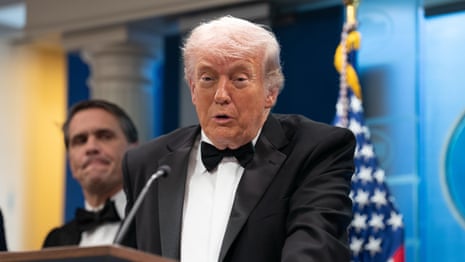
The White House security response demonstrated the multi-layered protection systems in place to safeguard the nation's highest executive officer and other government officials. The incident prompted immediate lockdowns and evacuations, with trained personnel efficiently moving guests away from the ballroom where the shooting occurred. Emergency services responded within minutes, cordoning off the area and beginning preliminary investigations into the circumstances surrounding the breach of security.
Trump's characterization of the presidency as a dangerous profession reflects the historical reality that sitting presidents and former presidents have faced assassination attempts and security threats throughout American history. His comments suggest a resignation to the reality that public service at the highest level comes with unique and significant personal risks that require constant vigilance and protection. The president's philosophical approach to the danger underscores his commitment to continuing his duties despite the threats posed to his personal safety.
The White House correspondents' dinner, held annually since 1921, represents a cornerstone of American democratic tradition, celebrating the relationship between the executive branch and the press corps. The event typically features remarks from the president, entertainment, and commentary on the state of journalism and government relations. This year's disruption marked a significant departure from the usual decorum and ceremonial nature of the occasion, raising questions about event security protocols and preventive measures.
Investigators with the Federal Bureau of Investigation and the Secret Service began a comprehensive inquiry into how an individual managed to enter the venue and discharge a firearm despite the stringent security measures typically enforced at such events. The incident sparked immediate discussions among security experts and government officials regarding vulnerability assessments and potential gaps in protective systems. Law enforcement officials emphasized their commitment to understanding the full scope of circumstances that led to the breach.
The hospitalization and evaluation of the suspect was being conducted to determine both his physical condition and mental state, as authorities sought to understand the motivations behind the alleged attack. Mental health professionals and investigators coordinated to develop a comprehensive profile of Allen and investigate whether he had previously flagged concerns from law enforcement or mental health institutions. Background checks and forensic analysis were being conducted simultaneously to establish a complete factual record.
Trump's statement regarding the danger inherent in public service resonated with broader conversations about the security challenges facing American political leaders. His perspective reflected a stoic acceptance of risk rather than an alarmist response, projecting stability and confidence in the security apparatus designed to protect him and his family. The president's measured tone may have been intended to reassure the public and prevent unnecessary panic or speculation about the incident's implications.
The incident would inevitably lead to comprehensive reviews of security protocols at major government events and diplomatic gatherings. Security agencies would examine every aspect of the evening, from credential verification to perimeter control to interior surveillance, seeking to identify weaknesses and implement enhanced preventive measures. The evaluation would likely inform security arrangements for future high-profile events, potentially establishing more rigorous screening and detection systems.
White House officials and the Secret Service released carefully worded statements acknowledging the incident while emphasizing their unwavering commitment to protecting the president, his family, and other government figures. Spokespersons noted that comprehensive investigations would be conducted in cooperation with federal, state, and local law enforcement agencies. The coordinated response reflected the seriousness with which protective agencies regard threats to national leadership.
The broader political ramifications of the incident remained uncertain, with analysts and commentators debating how such events might affect public discourse regarding security, leadership, and the nature of political violence in America. The president's resilience and his characterization of danger as an occupational hazard set a tone for how the administration would move forward following the disruption. Trump's willingness to address the matter directly with the press demonstrated his determination to maintain normal operations despite the extraordinary circumstances of the evening.
Source: The Guardian


