
Trump Brings Tech Giants to China for Strategic AI Talks

Donald Trump heads to China with Tim Cook, Elon Musk, and other major tech CEOs to discuss artificial intelligence and technology cooperation with Xi Jinping.
In a significant diplomatic move aimed at strengthening technological ties between the United States and China, President Donald Trump is embarking on a consequential visit to China this week that signals a potential shift in how the world's two largest economies approach innovation and artificial intelligence development. The composition of his delegation—featuring some of the most influential figures in the global technology sector—underscores the administration's commitment to elevating tech diplomacy as a cornerstone of international relations during this critical period.
The announcement of Trump's traveling companions has already sparked considerable interest in diplomatic and business circles. According to White House officials, the president will be accompanied by Tim Cook, the outgoing CEO of Apple, as well as Elon Musk, who leads both SpaceX and Tesla. These two executives represent the pinnacle of American technological achievement, with Cook overseeing the world's most valuable company and Musk commanding ventures at the forefront of space exploration and electric vehicle manufacturing. Their presence on this trip carries substantial symbolic weight, suggesting that the administration views technology and innovation as central themes in its engagement with Chinese leadership.
Beyond Cook and Musk, the delegation includes an impressive roster of other technology sector leaders who collectively represent vast swaths of the American tech industry. Dina Powell McCormick, who recently assumed the role of president at Meta, will participate in the discussions, bringing with her insights from the social media and artificial intelligence sectors. Additionally, Sanjay Mehrotra, who serves as CEO of Micron Technology—a major player in computer memory and semiconductor manufacturing—will be part of the group. Chuck Robbins, the chief executive of Cisco, the telecommunications giant that has shaped global networking infrastructure for decades, has also been invited. Rounding out the tech contingent is Cristiano Amon, the CEO of Qualcomm, a semiconductor manufacturer crucial to mobile computing and wireless communications.
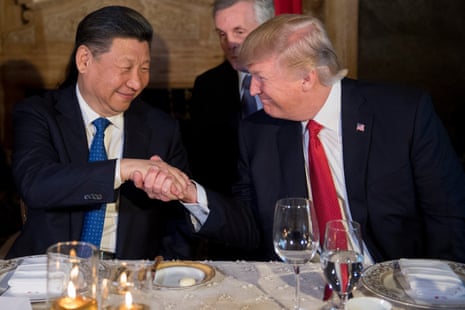
The strategic timing and composition of this delegation reveal much about the administration's priorities regarding American technological competitiveness on the global stage. Rather than focusing exclusively on traditional trade concerns or geopolitical tensions, the emphasis on technology sector leaders suggests that artificial intelligence and semiconductor manufacturing—two areas where US-China competition has intensified dramatically—will likely dominate the agenda. These industries represent not merely commercial interests but fundamental aspects of national security and technological sovereignty for both nations.
The inclusion of AI and innovation discussions in what appears to be a tech-focused diplomatic mission aligns with broader international trends. Both the United States and China have recognized that artificial intelligence capabilities will substantially determine technological leadership in the coming decades. By assembling leaders from companies involved in everything from semiconductor design and manufacturing to social media platforms that increasingly integrate AI technologies, Trump's team appears to be signaling that cooperation in these domains might be possible even amid broader geopolitical tensions.
Tim Cook's participation in this delegation carries particular significance given Apple's substantial business interests in China. The country represents one of Apple's largest markets and a critical component of its global supply chain. For decades, Cook has navigated the complex relationship between American technology companies and Chinese manufacturing and consumer markets. His presence suggests that the administration recognizes the interdependence of American and Chinese technology ecosystems and the importance of maintaining functional business relationships even as governments navigate strategic concerns.
Elon Musk's inclusion is equally noteworthy, though perhaps more complex. Musk has long advocated for pragmatic engagement with China while also pushing for American technological advancement and innovation. His companies—Tesla, which operates substantial manufacturing facilities in China, and SpaceX, which operates at the cutting edge of aerospace technology—exemplify both the competitive and cooperative dimensions of US-China technology relations. Musk's willingness to participate in this delegation may signal openness to dialogue on technology policy and innovation frameworks.
The presence of semiconductor and computing hardware leaders like Mehrotra from Micron, Amon from Qualcomm, and Robbins from Cisco points to another crucial dimension of these discussions. The semiconductor industry has become one of the most strategically important sectors in global technology competition. Both the United States and China have invested heavily in developing domestic semiconductor capabilities, recognizing that control over chip manufacturing represents control over future technological development. These executives likely bring detailed knowledge of supply chain dynamics, manufacturing capabilities, and technological innovation trajectories in one of the world's most critical industries.
The delegation's focus on technology companies rather than traditional defense or financial sectors suggests a deliberate strategy to emphasize innovation and commercial advancement over confrontation. This approach reflects a recognition that many American technology companies have complex relationships with China—serving both as competitors and as participants in shared global supply chains. The delegation's composition implies that the administration believes there may be room for constructive dialogue on technology policy, intellectual property protections, and the regulatory environment for technology companies operating across borders.
Understanding the context for this diplomatic mission requires recognizing the broader strategic landscape. Over the past several years, US-China technology competition has intensified across multiple fronts, from artificial intelligence research and development to semiconductor manufacturing capacity. Both nations have implemented increasingly stringent controls on the export of sensitive technologies, and both have accelerated efforts to develop domestic alternatives to foreign technology in critical sectors. Despite these tensions, significant portions of the global technology ecosystem remain interconnected, with American companies relying on Chinese manufacturing and market access, and Chinese companies dependent on American software, semiconductors, and design tools.
The presence of Meta's Powell McCormick introduces artificial intelligence and social media dynamics into the discussion. As global companies grapple with the governance, development, and deployment of advanced AI systems, conversations between American and Chinese technology leaders about responsible AI development could have implications far beyond bilateral relations. These discussions might touch on issues such as AI safety standards, data governance, algorithmic transparency, and the ethical dimensions of deploying artificial intelligence systems at scale.
For observers monitoring technology policy and international relations, this delegation signals potential shifts in how the United States intends to engage China on technology matters. Rather than pure confrontation or complete disengagement, the administration appears to be exploring whether dialogue and cooperation on specific technology sectors might be possible. Whether such discussions will yield concrete results remains uncertain, but the decision to bring together such a high-profile group of technology leaders suggests serious intent to engage substantively on these topics.
The geopolitical backdrop for this visit cannot be overlooked. Global tensions remain high across multiple dimensions, and the outcomes of these technology-focused discussions could have ramifications well beyond the tech sector. If the Trump administration can establish productive dialogue channels with Chinese leadership on technology issues, it could create precedents for cooperation in other areas. Conversely, if discussions reveal irreconcilable differences on key technology policy questions, it might accelerate further decoupling of American and Chinese technology ecosystems.
As Trump prepares for his discussions with Xi Jinping and other Chinese leadership, the composition of his delegation sends a clear message about American technological strength and innovation capacity. The collective market value and innovation output of the companies these executives lead represents a substantial portion of global technology development and deployment. By bringing these leaders to the negotiating table, the administration is demonstrating that American technology remains globally competitive and that American companies continue to drive much of the world's technological advancement.
The outcomes of this diplomatic mission may not be immediately apparent, but the decision to prioritize technology discussions with China through a high-level delegation of tech industry leaders represents a significant statement about how the Trump administration intends to approach technology policy and international relations. Whether this visit marks the beginning of a new era of technology cooperation, a reaffirmation of competitive dynamics, or something in between will likely become clearer in the weeks and months following the conclusion of these discussions.
Source: The Guardian


