
Trump Evacuated from Correspondents' Dinner Amid Loud Bangs

Donald and Melania Trump were evacuated from the White House Correspondents' Dinner after loud bangs disrupted the event. Secret Service responded swiftly to the incident.
The prestigious White House Correspondents' Dinner descended into chaos on Saturday evening when a series of loud bangs suddenly pierced through the elegant Washington Hilton ballroom, sending shockwaves through the assembled crowd of journalists, dignitaries, and distinguished guests. The unexpected disturbance immediately triggered a dramatic security response that would transform what was meant to be an evening of celebration and camaraderie into an emergency evacuation scenario.
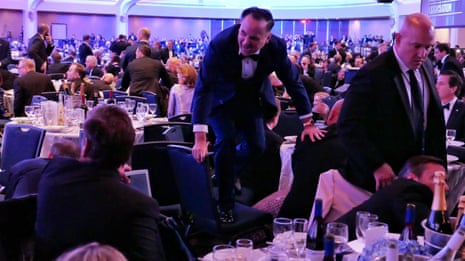
Donald Trump and Melania Trump were swiftly escorted from the event by security personnel as the situation unfolded with remarkable speed and precision. The sudden commotion caused widespread panic among attendees, with numerous journalists and their companions instinctively seeking shelter by ducking beneath tables throughout the grand ballroom. The coordinated response demonstrated the extensive security protocols in place for such high-profile events where members of the executive branch and media gather.
According to eyewitness reports emerging from the scene, Secret Service agents responded with heightened alert status, with multiple personnel drawing firearms as they navigated through the crowded venue. The security team rapidly mobilized to extract the former president and first lady from the premises while simultaneously managing the chaotic environment. Initial reports indicated that officers had mentioned "shots fired" during their communications, though the exact nature and source of the loud bangs remained unclear in the immediate aftermath.
The White House Correspondents' Dinner is one of Washington D.C.'s most notable annual events, traditionally serving as a significant gathering where members of the press corps, government officials, and entertainment personalities convene for an evening of speeches, comedy, and networking. The event has long been a cornerstone of the relationship between the executive branch and the media, despite occasional tensions between these two powerful institutions. The dinner's cultural significance made the disruption particularly noteworthy, as it highlighted the complex security challenges inherent in managing such high-profile gatherings.
As the situation continued to develop throughout the evening, authorities worked to establish the precise cause of the disturbance and determine whether any actual shots had been fired or if the sounds were from another source. The quick evacuation procedures ensured the safety of the former president and first lady, demonstrating the extensive preparation and training that Secret Service personnel undergo for emergency scenarios. Multiple security agencies likely coordinated their response to manage both the immediate threat assessment and the secondary concerns of crowd control and establishing scene safety.
The incident sparked immediate speculation and discussion among media outlets and social media platforms, with various theories emerging about what could have caused the loud bangs. Some attendees reported that the sounds were exceptionally loud and distinct, while others described the atmosphere shifting instantaneously from celebration to crisis mode. The evacuation procedures were executed with notable efficiency, suggesting that emergency protocols were well-rehearsed and that security personnel were adequately prepared for such contingencies.
The Washington Hilton, which has hosted the annual dinner for many years, found itself at the center of a significant security incident that would likely prompt reviews and assessments of the venue's safety measures and emergency response capabilities. Event organizers would subsequently need to address questions about how such a disruption occurred and what measures could be implemented to prevent similar incidents in the future. The hotel's management and the dinner's organizing committee faced the challenge of responding to concerns from attendees while cooperating with law enforcement investigations.
Following the evacuation, law enforcement authorities began a thorough investigation into the precise nature of the incident, examining the venue and interviewing witnesses who had been present in the ballroom. The coordination between multiple security agencies, including the Secret Service, D.C. police, and potentially federal law enforcement, would be essential in determining what actually transpired. Initial findings would gradually emerge as investigators analyzed available evidence and compiled comprehensive reports about the evening's events.
The disruption of such a high-profile event raised broader questions about security vulnerabilities at major gatherings and the ongoing challenges faced by protective services in managing large-scale events with significant numbers of attendees. The incident also underscored the inherent risks associated with public appearances and formal events, even in secured venues with substantial security presence. Moving forward, this occurrence would likely influence how similar events are planned and secured in the future.
As additional information emerged regarding the incident, the broader implications for future White House events and media-government relations began to take shape in public discourse. The dinner, traditionally symbolic of the complex relationship between the press and political leadership, had been interrupted in an unprecedented manner that would resonate throughout both journalistic and political circles. The response of attendees, security personnel, and event organizers would become part of the historical record of this notable Washington institution.
The evening would ultimately be remembered not for the speeches, comedy segments, or networking opportunities that typically characterize the annual gathering, but rather for the emergency situation that fundamentally altered the event's trajectory. Questions lingered about security preparedness, venue safety, and the vulnerability of even well-protected events to unexpected disruptions. The complete investigation findings would eventually provide clarity on what had actually occurred during those tense moments in the Washington Hilton ballroom on Saturday evening.
Source: The Guardian


