
Trump-Lula Private Meeting Reveals US-Brazil Tensions

Trump and Lula hold closed-door Oval Office talks without public appearance, exchanging diplomatic praise amid underlying bilateral strain.
In a carefully orchestrated diplomatic maneuver, US President Donald Trump and Brazilian President Luiz Inácio Lula da Silva held a private Oval Office meeting that underscored both the importance of maintaining strong bilateral relations and the underlying tensions that continue to characterize the relationship between Washington and Brasília. The two leaders deliberately avoided making a joint public appearance together, a notably unusual protocol choice that observers interpreted as a strategic effort to minimize potential friction points while still engaging in substantive dialogue.
The closed-door meeting between Trump and Lula took place away from the glare of international media scrutiny, allowing the presidents to discuss sensitive matters of mutual concern without the risk of miscommunication or public posturing. Both leaders subsequently released statements praising each other's commitment to strengthening bilateral ties, yet the absence of a traditional joint press conference or photo opportunity spoke volumes about the delicate nature of their relationship. This diplomatic approach reflects a broader pattern of recent US-Brazil interactions characterized by careful navigation and deliberate distance-management.
The Trump-Lula diplomatic engagement touched upon numerous critical issues affecting both nations, including trade relations, regional stability in South America, and strategic cooperation in the Western Hemisphere. Sources close to both delegations indicated that the discussions were substantive and professional, though specific details remained closely guarded. The calculated decision to keep the meeting private suggests that both administrations recognized the potential for public statements to create complications in an already complex relationship.
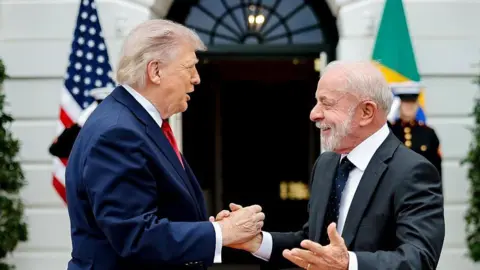
The relationship between the United States and Brazil has experienced notable fluctuations in recent years, influenced by differing approaches to regional policy, economic interests, and international positioning. The US-Brazil bilateral relations have been characterized by attempts to balance cooperative efforts with underlying disagreements on various geopolitical matters. Trump's previous tenure and his particular approach to Latin American affairs had created some friction with Brazilian leadership, and the current dynamic reflects ongoing efforts to rebuild confidence and establish common ground.
Both presidents issued statements following their meeting that emphasized their commitment to strengthening ties between the world's largest economy and the largest economy in Latin America. Trump highlighted Brazil's importance as a strategic partner in the Western Hemisphere, while Lula reiterated Brazil's interest in constructive engagement with the United States. These complementary statements and exchanges of diplomatic praise served to reinforce the message that despite any underlying tensions, both nations recognized the value of maintaining positive relations.
The decision to conduct the meeting privately rather than staging a traditional bilateral summit with full media coverage represents a shift in diplomatic protocol that carries its own meaning. Such approaches are occasionally employed when leaders wish to discuss sensitive matters without creating headlines that could complicate domestic politics or international relations in either country. The strategy of avoiding a public joint appearance while simultaneously exchanging positive remarks creates a nuanced message that acknowledges ongoing engagement without amplifying potential disagreements.
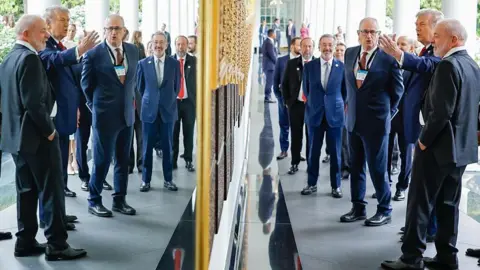
Analysts of Latin American politics and international relations noted that the meeting format reflected sophisticated diplomatic maneuvering aimed at preventing the kind of public tensions that could damage bilateral ties. The private nature of the discussion allowed both leaders to address contentious issues—whether related to trade, environmental policy, or regional security matters—without risking statements that could be seized upon by domestic political opponents or international adversaries. This approach prioritizes substantive dialogue over symbolic public displays.
The broader context of US-Brazil relations includes longstanding economic ties, shared democratic values, and occasional disagreements over regional strategy and international affairs. Trade relationships remain crucial for both nations, with millions of American jobs linked to commerce with Brazil and vice versa. The private meeting provided an opportunity for both presidents to explore ways to strengthen these economic partnerships while addressing any barriers to expanded cooperation.
The diplomatic strategy employed by both the Trump administration and the Brazilian government reflects mature statecraft that recognizes the importance of maintaining functional relationships even when public agreement is not always possible. By keeping the meeting private and exchanging compliments afterward, both sides signaled their commitment to the relationship while avoiding the kind of public discord that could undermine broader cooperation. This approach has become increasingly common in high-level diplomacy when dealing with complex bilateral relationships.
Looking forward, the private meeting between Trump and Lula appears to have established a foundation for continued engagement on issues of mutual interest. Both nations face significant challenges in the international arena, from economic pressures to regional security concerns, and cooperation between Washington and Brasília remains strategically important. The careful orchestration of their meeting suggests that both leaders recognize these realities and are committed to finding ways to work together effectively despite any underlying tensions.
The absence of a joint public appearance, combined with the exchange of mutual praise, ultimately demonstrates a sophisticated understanding of modern diplomatic requirements. Rather than attempting to project false unity through orchestrated public events, both the American and Brazilian administrations chose a more measured approach that acknowledges the complexity of their relationship. This strategy allows for honest dialogue behind closed doors while maintaining the formal courtesies necessary for international relations to function smoothly.
The private bilateral meeting between Trump and Lula will likely be remembered as a turning point in how the two nations choose to manage their relationship—emphasizing substantive engagement over symbolic gestures, and private negotiation over public posturing. As both nations navigate an increasingly complex international landscape, the ability to maintain functional working relationships while addressing legitimate concerns represents a critical achievement in diplomatic practice. The carefully calibrated approach taken by both sides suggests that despite evident strains, the relationship between the United States and Brazil remains one of strategic importance that both leaders are determined to preserve and strengthen over time.
Source: BBC News


