
Trump Meets Xi in Beijing: Taiwan Tensions Rise

President Trump meets Xi Jinping in Beijing as China warns of potential clashes over Taiwan. US-Israel tensions and trade disputes complicate diplomatic talks.
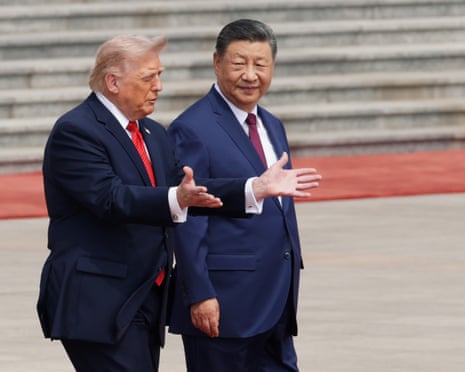
During a significant diplomatic engagement in the Chinese capital, President Trump has encountered both ceremonial warmth and stark geopolitical warnings as US-China relations face mounting pressures on multiple fronts. The visit to Beijing represents a critical moment in international relations, with Taiwan emerging as the most contentious issue threatening to overshadow broader discussions about trade, military posturing, and regional security.
China's leader Xi Jinping conveyed pointed concerns about the trajectory of bilateral relations during their two-hour meeting on Thursday morning, emphasizing that unresolved disputes could potentially spiral into direct confrontation. According to statements released by China's foreign ministry following the meeting, Xi articulated explicit warnings about the possibility of "clashes and even conflicts" emerging between Washington and Beijing if current tensions remain unaddressed. These sobering remarks underscore the fragility of US-China diplomatic efforts and the delicate balance both superpowers must maintain to prevent escalation.
The Taiwan issue has been positioned as the cornerstone of China-US relations, with Beijing making unmistakably clear that this matter takes precedence over virtually all other bilateral concerns. Xi's emphasis on Taiwan's centrality to the relationship signals Beijing's determination to place this dispute at the forefront of negotiations, regardless of other pressing international matters. The strategic island's status has long been a flashpoint in the relationship, representing competing visions of regional influence and sovereignty that show no signs of easy resolution.
However, the carefully orchestrated diplomatic agenda risks being derailed by competing crises and fundamental disagreements that continue to plague US-China interactions. The escalating tensions surrounding US-Israel relations and potential military actions regarding Iran introduce additional complications into an already strained diplomatic environment. These interconnected regional conflicts create a complex web of strategic interests that could easily undermine efforts to establish common ground or mutual understanding between the two global powers.
Trade disagreements represent another significant obstacle to productive dialogue, with both nations maintaining entrenched positions on tariffs, market access, and economic reciprocity. These commercial disputes have festered for years, creating deep resentment on both sides and generating domestic political pressures that make compromise politically difficult for both Trump and Xi. The economic dimensions of the relationship have become increasingly intertwined with security concerns, making it nearly impossible to address trade issues in isolation from broader geopolitical calculations.
The timing of Trump's Beijing visit carries substantial weight given the volatile international landscape and the administration's simultaneous engagement with Middle Eastern allies facing Iranian threats. Beijing's decision to host Trump amid these circumstances demonstrates China's commitment to maintaining communication channels, even as fundamental disagreements persist on critical issues. The meeting itself, regardless of its outcomes, serves as a reminder that despite profound disagreements, both nations recognize the necessity of direct dialogue to prevent miscalculation or unintended escalation.
Xi's warnings should be understood not merely as rhetorical posturing but as explicit expressions of Beijing's red lines and bottom lines in the relationship. The invocation of potential "clashes and conflicts" represents unusually direct language from the typically measured Chinese leadership, suggesting genuine concern about the trajectory of bilateral relations. This candor indicates that China believes the current path is unsustainable and that without serious efforts to address core issues, confrontation becomes an increasingly plausible scenario.
The broader context of this meeting reflects the structural tensions inherent in US-China competition for global influence and regional dominance. Both nations are navigating a complex international environment where they must simultaneously compete economically and militarily while maintaining just enough diplomatic engagement to prevent catastrophic miscalculation. This delicate balancing act requires sophisticated statecraft and genuine commitment to managing differences peacefully, qualities that have proven increasingly elusive in recent years.
As US politics continues to grapple with these international challenges, domestic constituencies are keenly interested in how the administration navigates these multiple crises. Trump's approach to China has consistently emphasized transactional relationships and the prioritization of American interests, sometimes at the expense of traditional alliance structures and diplomatic norms. His Beijing visit provides an opportunity to test whether this approach can yield results or whether fundamental differences in strategic outlook and values make productive engagement impossible.
The statements emerging from Thursday's meeting reveal the depth of concern Beijing harbors about its relationship with Washington and the potential for deterioration despite both sides' stated desire for stable ties. Xi's positioning of Taiwan as the most important issue signals that China will not accept indefinite status quo arrangements and views this matter as eventually requiring resolution on terms favorable to Beijing. For the United States, balancing commitments to Taiwan with efforts to manage great power competition with China represents an enduring strategic dilemma without easy solutions.
As developments unfold from this consequential meeting, observers across the globe will closely monitor whether any tangible progress emerges from the diplomatic engagement or whether entrenched positions continue to calcify. The next phase of US-China relations will likely be defined by how both nations respond to Xi's warnings and whether Trump's administration can develop strategies that address Beijing's core concerns while protecting American interests in the region. The stakes for regional stability and global peace remain extraordinarily high as these two superpowers navigate an increasingly complex and contested international environment.
Source: The Guardian


