
Trump Pessimistic on Jimmy Lai Freedom After Xi Talk

US President Donald Trump expressed limited optimism regarding Hong Kong democracy activist Jimmy Lai's release after discussing the case with Chinese leader Xi Jinping during Beijing summit.
In a significant diplomatic moment that has left supporters of imprisoned Hong Kong democracy activist Jimmy Lai searching for answers, US President Donald Trump revealed his candid assessment following high-level discussions with Chinese leader Xi Jinping. The 78-year-old British citizen, who has become a symbol of resistance against Beijing's crackdown on free speech and democratic freedoms in Hong Kong, remains detained on charges that international observers have heavily criticized as politically motivated. Trump's comments suggest that despite the geopolitical leverage the United States wields on the world stage, securing the release of the prominent pro-democracy campaigner may prove far more complicated than advocates had hoped.
During the closely watched summit held in Beijing, Trump made a deliberate effort to raise Jimmy Lai's case as part of broader discussions between the two superpowers. Family members and international human rights organizations had mounted a coordinated campaign leading up to the summit, urging the American president to use his direct access to Xi Jinping to advocate for Lai's freedom. The optimism surrounding these efforts reflected a broader hope that Trump's reputation as a skilled negotiator could break through diplomatic impasses where previous administrations had struggled. However, Trump's subsequent remarks revealed that Chinese officials had made clear their position on this matter remains unchanged and intractable.
Trump stated that Xi Jinping characterized the situation as "a tough one," indicating that Beijing views the Hong Kong activist case as far more complex than a simple matter of diplomatic goodwill. This characterization from the Chinese leader suggests that internal political considerations within China, concerns about maintaining control over Hong Kong's political landscape, and broader security implications all factor into the government's calculation regarding Lai's detention. The phrase "tough one" carries particular weight in diplomatic discourse, often signaling that a government considers an issue fundamental to its core interests and unlikely to be resolved through conventional negotiation channels.
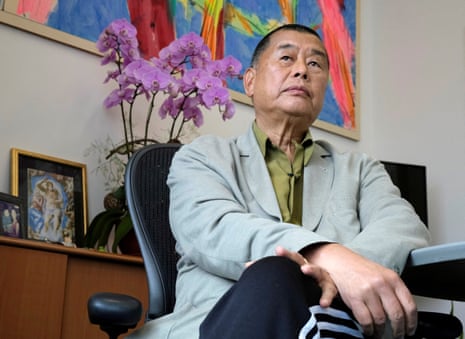
Jimmy Lai has long been a controversial figure within mainland China and Hong Kong administration circles due to his ownership of the Apple Daily newspaper, which became known for its critical editorial stance toward Beijing. The 78-year-old activist founded Lai International, a major Hong Kong textile business, before transitioning into media and politics as a vocal advocate for Hong Kong democracy rights. His publications consistently challenged government narratives and provided platforms for pro-democracy voices, making him a target for authorities who increasingly moved toward stricter control over media narratives in the special administrative region. This history made his arrest in 2020 virtually inevitable once Hong Kong's national security law—imposed by Beijing—came into effect.
The circumstances surrounding Lai's detention have drawn intense international scrutiny and criticism from Western governments, human rights organizations, and press freedom advocates worldwide. He was arrested under provisions of the National Security Law for Hong Kong, which Beijing implemented in June 2020 following the mass pro-democracy protests that shook the territory the previous year. Authorities charged him with sedition, money laundering, and collusion with foreign forces—allegations that Lai and his supporters vehemently deny. International observers have characterized his prosecution as part of a broader pattern of suppressing dissent and dismantling Hong Kong's once-vibrant independent media ecosystem.
Trump's pessimistic assessment marks a notable shift from the optimistic rhetoric that had surrounded the summit in advance. Prior to the Beijing meetings, supporters of Lai had presented Trump with detailed briefing materials outlining the case, highlighting Lai's British citizenship and his status as a prominent international business figure. The hope had been that these factors, combined with Trump's focus on transactional diplomacy and personal relationships, might create an opening for negotiations. Instead, Xi Jinping's characterization of the matter as a "tough one" appears to have convinced the American president that pushing harder on this particular issue might not yield positive results.
The Trump administration's stance on China-US diplomatic relations has been notably focused on trade negotiations, technology competition, and broader geopolitical positioning rather than human rights advocacy. Unlike some previous American administrations that prominently featured human rights concerns in bilateral discussions, Trump has generally prioritized what he views as America's direct strategic and economic interests. This approach has sometimes been criticized by human rights groups who argue that American presidents should consistently leverage their diplomatic power to advocate for the release of prisoners of conscience and victims of political repression.
Lai's case has attracted support from multiple countries and international bodies concerned with press freedom and democratic governance. The Committee to Protect Journalists, Amnesty International, and numerous government representatives from Western democracies have called for his immediate release, arguing that his prosecution violates international standards for justice and fair trial procedures. The British government, in particular, has maintained diplomatic pressure on China regarding Lai's case, as he retains British citizenship despite his decades-long residence in Hong Kong.
The broader implications of Trump's assessment extend beyond Lai's individual situation to questions about the effectiveness of US diplomatic leverage in addressing human rights concerns in authoritarian regimes. The fact that the American president felt compelled to raise the case demonstrates its international prominence, yet his subsequent pessimism suggests that even high-level presidential engagement may have limited impact on issues Chinese leaders deem central to their governance philosophy. This reality underscores the fundamental challenge facing Western democracies in balancing commercial and strategic relationships with authoritarian governments against their stated commitment to universal human rights principles.
For Jimmy Lai's family and the broader network of supporters advocating for his freedom, Trump's comments delivered disappointing news about prospects for near-term resolution. The 78-year-old activist remains incarcerated in Hong Kong, facing a legal process that critics argue falls short of international standards for due process and judicial independence. His continued detention stands as a stark reminder of the constraints placed on free expression and political dissent within Hong Kong's current political framework, particularly since the implementation of the National Security Law.
Looking forward, advocates for Lai's release may need to pursue alternative diplomatic channels and strategies beyond direct presidential engagement. This might include sustained pressure through legislative bodies, continued international advocacy campaigns, and engagement with diplomatic representatives at various levels. The challenge remains significant: convincing Beijing to reconsider a decision they clearly view as important to maintaining their preferred political order in Hong Kong. Trump's candid assessment, while disappointing to Lai's supporters, provides a realistic acknowledgment of the difficulty facing anyone attempting to secure his freedom through diplomatic means in the current geopolitical environment.
Source: The Guardian


