
Trump Raises Global Tariff Plan to 15% After Court Ruling

Former President Trump announces increased global tariffs of 15%, up from 10%, following Friday's court decision that outlawed most existing tariffs.
In a dramatic escalation of trade policy rhetoric, Donald Trump has announced his intention to implement sweeping global tariffs at 15%, marking a significant increase from his previously stated 10% rate. This announcement comes in direct response to Friday's court ruling that effectively outlawed the majority of his administration's existing tariff structure, creating a new battleground in America's ongoing trade policy debates.
The former president's latest tariff proposal represents one of the most aggressive trade policy positions taken in recent political discourse. Global tariffs of this magnitude would fundamentally reshape America's economic relationships with trading partners worldwide, potentially affecting everything from consumer goods to industrial materials. Economic analysts suggest that such comprehensive tariffs could have far-reaching implications for both domestic prices and international trade relationships.
Friday's court decision, which struck down most of Trump's previous tariff implementations, appears to have served as a catalyst for this more aggressive stance. Legal experts indicate that the ruling targeted the constitutional and procedural foundations of the existing tariff framework, forcing a complete reevaluation of trade policy mechanisms. The timing of Trump's response suggests a strategic pivot designed to maintain momentum on trade issues despite legal setbacks.
The 15% tariff rate would represent a substantial increase in the cost of imported goods across virtually all sectors of the American economy. Economists warn that such broad-based tariffs typically result in higher consumer prices, as importers generally pass increased costs onto consumers. However, supporters argue that comprehensive tariffs could protect American manufacturing jobs and reduce dependence on foreign supply chains.
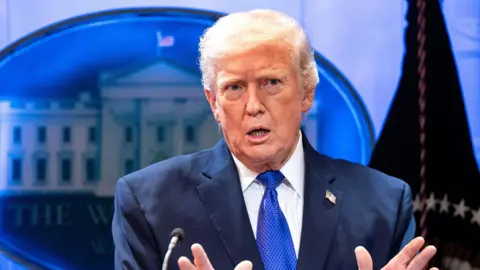
Trade policy experts are analyzing the potential economic ramifications of implementing such extensive tariffs. Historical precedent suggests that broad-based tariffs often trigger retaliatory measures from affected countries, potentially leading to trade wars that can disrupt global commerce. The proposed 15% rate would affect billions of dollars in annual trade volume, making it one of the most significant trade policy shifts in decades.
The announcement has already begun generating responses from various stakeholders across the political and economic spectrum. Business groups are expressing concern about the potential impact on supply chains and consumer costs, while labor organizations are weighing the potential benefits for American workers against broader economic risks. International trade partners are likely monitoring developments closely, preparing potential responses to what could become a major shift in U.S. trade policy.
Constitutional scholars are examining the legal framework that would be necessary to implement such comprehensive tariffs. The Friday court ruling that invalidated previous tariffs has created questions about the executive branch's authority to unilaterally impose such measures. Tariff implementation typically requires careful consideration of existing trade agreements, World Trade Organization rules, and congressional oversight, making the legal pathway for such sweeping changes complex and potentially contentious.
The political implications of this tariff announcement extend beyond immediate trade policy considerations. As Trump trade policy continues to evolve, this latest development signals a commitment to protectionist measures that could become a central theme in future political campaigns. The timing and magnitude of the announcement suggest strategic positioning on economic nationalism issues that have proven popular with certain voter demographics.
Industry analysts are beginning to assess sector-specific impacts of the proposed tariffs. Manufacturing industries that rely heavily on imported raw materials could face significant cost increases, while domestic producers of competing goods might benefit from reduced foreign competition. The automotive, technology, and retail sectors are among those that would likely experience substantial effects from comprehensive global tariffs at the proposed rate.
International relations experts suggest that the tariff announcement could complicate diplomatic relationships with key allies and trading partners. Many countries maintain carefully negotiated trade agreements with the United States that could be affected by broad-based tariff implementations. The European Union, Canada, Mexico, and Asian trading partners would likely need to reassess their economic relationships with America if such policies were implemented.
The economic modeling of 15% global tariffs indicates potential impacts across multiple sectors of the American economy. Consumer goods pricing could see immediate effects, while longer-term implications might include shifts in manufacturing locations, supply chain restructuring, and changes in international competitiveness. Trade economists are developing scenarios to understand both the immediate and long-term consequences of such comprehensive tariff policies.
Legal challenges to any future implementation of these proposed tariffs appear likely, given the recent court ruling that struck down previous measures. Constitutional law experts are examining the precedents that might apply to such broad-based trade restrictions, particularly in light of congressional authority over international commerce regulation. The legal framework for implementing comprehensive tariffs remains complex and potentially subject to judicial review.
The announcement represents a significant escalation in protectionist trade policy rhetoric, moving beyond sector-specific measures to economy-wide interventions. This approach marks a departure from traditional American trade policy, which has generally favored targeted measures over comprehensive tariff systems. The breadth and scale of the proposed tariffs would represent one of the most significant shifts in American trade policy since the early 20th century.
As political and economic stakeholders continue to analyze the implications of this announcement, the debate over American trade policy is likely to intensify. The proposed 15% global tariffs have already begun reshaping discussions about economic nationalism, international competitiveness, and the role of government in regulating international commerce. Whether these proposals will translate into actual policy remains to be seen, but their announcement has certainly energized ongoing debates about America's economic future and its relationship with the global economy.
Source: BBC News


