
Trump's $1B White House Ballroom Security Plan

President Trump seeks $1 billion for White House ballroom upgrades including drone-proof roofing and military drone port. Details on the militarized reconstruction project revealed.
President Donald Trump has unveiled an ambitious and controversial plan to fortify the White House ballroom with $1 billion in taxpayer funding, featuring cutting-edge security measures designed to protect against modern aerial threats. The proposal, unveiled during a May 19 tour of the construction site, represents one of the most extensive security overhauls of the historic presidential residence in recent memory, incorporating military-grade defenses that extend far beyond traditional White House security protocols.
The centerpiece of Trump's security vision involves transforming the ballroom's rooftop into a sophisticated drone defense system capable of housing and operating military unmanned aircraft. According to the president's remarks to reporters, the installation would feature a dedicated drone port designed to accommodate an unlimited number of drones operated by the US military, effectively converting the White House ballroom into an operational military facility. Trump characterized this drone base as a critical component that would "protect all of Washington," suggesting a broader security mandate beyond the immediate presidential residence.
The architectural specifications for the renovated ballroom include what Trump described as an impenetrable steel roofing system engineered specifically to withstand drone strikes and other airborne threats. The president emphasized that the roof would be constructed from specialized steel materials designed to be completely "drone-proof," representing a significant departure from the traditional aesthetic and structural considerations that have historically guided White House renovations. This hardened defensive infrastructure underscores the administration's assessment of evolving security threats in the modern era.
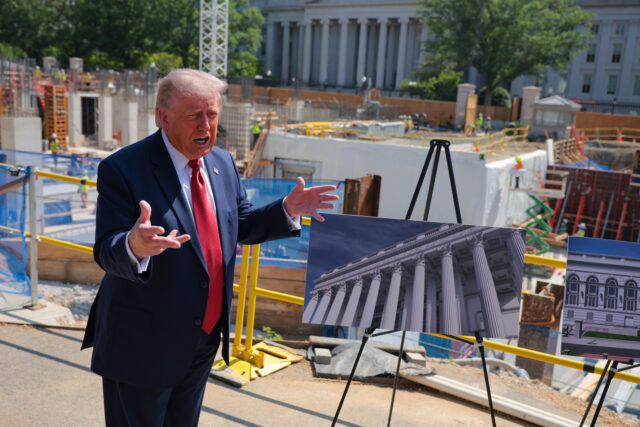
The ballroom project has already necessitated significant changes to the White House complex, including the demolition of portions of the East Wing that stood for decades. This extensive reconstruction effort has drawn considerable attention and scrutiny from both Capitol Hill and the broader public, who have questioned both the necessity and the cost-effectiveness of such dramatic modifications to the historic structure. The demolition phase alone represented one of the most visible alterations to the White House footprint in modern history, signaling the scope and scale of Trump's envisioned transformation.
To finance this ambitious security upgrade, Trump has been actively lobbying Republican lawmakers in Congress to allocate the substantial $1 billion package through the legislative budget process. The president has framed the investment as essential to national security, emphasizing the sophisticated nature of contemporary threats to the executive branch and the need for proactive defensive measures. Congressional Republican leadership has faced pressure from both the administration and their constituents regarding the appropriateness and justification for such significant expenditures on a single facility renovation.
The proposal has generated debate among security experts and members of Congress who question whether the drone defense capabilities truly represent necessary security measures or represent an overreach in militarizing the presidential residence. Some critics have suggested that the project reflects a broader trend of expanding executive authority and security infrastructure beyond what traditional security protocols would suggest is required. The $1 billion figure itself has become a focal point for fiscal accountability discussions, with lawmakers questioning whether alternative security solutions might achieve similar objectives at significantly lower costs.
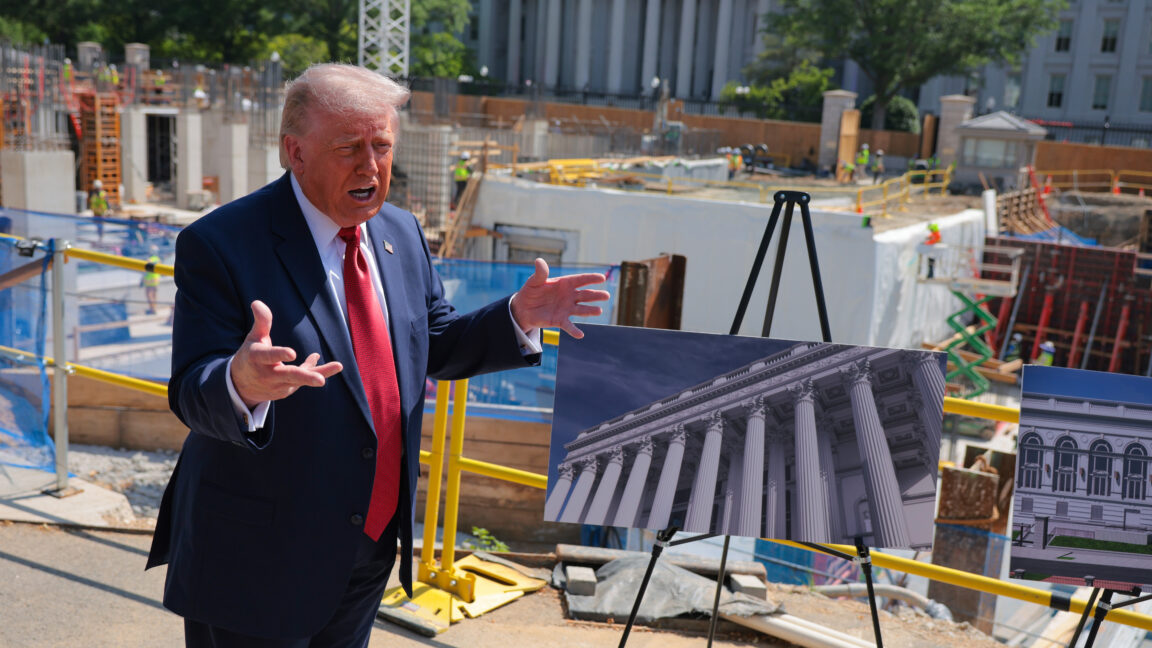
The East Wing demolition that preceded these ballroom renovations was presented to the public as a necessary step to accommodate the modernized security features and expanded drone operations facility. However, historians and preservation advocates expressed concern about the removal of architectural elements that represented significant periods in White House history. The decision to demolish rather than preserve or repurpose existing structures has added another layer of controversy to the overall renovation project, with questions raised about whether such irreversible changes were truly warranted.
Trump's statements regarding the drone port's capabilities suggest that the facility could function as more than simply a reactive security measure, potentially serving as an offensive or intelligence-gathering platform as well. The emphasis on accommodating "unlimited numbers of drones" indicates that the administration views this installation as a strategic military asset rather than purely a defensive security feature. This characterization has raised questions among analysts about the appropriate relationship between residential and military facilities within the nation's capital.
The legislative battle over funding for this project has involved multiple rounds of negotiations between the Trump administration and Congressional Republicans. Senate parliamentarians have previously questioned the appropriateness of including such substantial funding allocations in certain legislative vehicles, creating procedural obstacles to swift approval. These procedural challenges have extended the timeline for implementation and increased the visibility of the project's costs and scope among the broader public and media outlets.
The $1 billion proposal extends beyond the drone-related security infrastructure to encompass a comprehensive suite of protective measures designed to address multiple categories of potential threats. Trump has indicated that the package includes funding for additional defensive systems, monitoring technologies, and operational capabilities that would establish new security standards for the presidential residence. The breadth of the security upgrade suggests a fundamental reconceptualization of how the White House should be protected in an era of advancing technological threats.
Military officials have been consulted throughout the planning process, providing technical assessments regarding the feasibility and effectiveness of the proposed drone defense and port infrastructure. The US military involvement in the project underscores the serious nature of the security concerns being addressed, though military experts have occasionally expressed reservations about the militarization of civilian presidential spaces. The collaboration between civilian executive branch officials and military personnel has shaped the technical specifications and operational parameters of the proposed systems.
Looking forward, the completion of this White House ballroom renovation and security upgrade will likely establish a new precedent for the extent to which modern security concerns can justify alterations to historic government structures. Whether Congress ultimately approves the full $1 billion funding request remains uncertain, though the Trump administration has indicated that the investment is necessary and appropriate given current threat assessments. The outcome of this legislative battle will potentially influence how future administrations approach security modernization at other federal facilities and historic sites.
The controversy surrounding Trump's White House ballroom security initiative reflects broader national conversations about the balance between security imperatives and fiscal responsibility, historical preservation, and appropriate uses of federal facilities. As technological threats continue to evolve, policymakers will face ongoing pressure to invest in increasingly sophisticated defensive measures, raising fundamental questions about how far such investments should extend. The ballroom project thus represents not merely a single facility upgrade, but rather a test case for how the nation's capital and its most important institutions will adapt to contemporary security challenges in the coming decades.
Source: Ars Technica


