
Trump's Move on Maduro: Has Venezuela Really Changed?

Explore how Trump's actions against Maduro have impacted Venezuela's political landscape and whether real change is coming for ordinary citizens.
As geopolitical tensions escalate in Latin America, many Venezuelans are questioning whether recent international interventions targeting Nicolas Maduro's regime will truly deliver the transformative change their nation desperately needs. The situation on the ground reveals a complex reality: while some citizens harbor cautious optimism about potential shifts in power dynamics, the vast majority continues to navigate the familiar struggles that have defined life under the Maduro regime and the socialist movement initiated by Hugo Chávez decades ago.
The uncertainty became all too real for Ángel Linares on what should have been a routine day. When he heard a peculiar buzzing sound followed by a thunderous explosion near his residence on Venezuela's northern coast, his initial instinct was that neighbors were celebrating the approaching new year with fireworks—a common tradition in Venezuelan communities. However, what unfolded next would shatter both his sense of security and the physical structure around him.
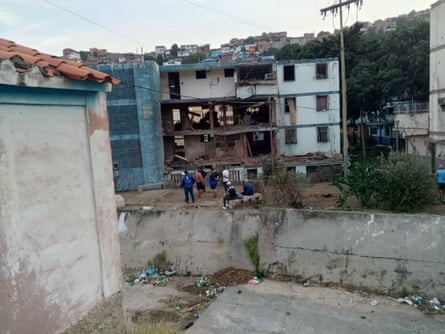
Within moments, the windows of his apartment burst inward with violent force, and the entire building began to shake violently. The external facade of the structure was torn away by the blast, leaving nothing but devastation in its wake. Linares was thrown to the ground as his home transformed into a scene of complete destruction, reduced to little more than rubble and twisted debris. The experience was terrifying not only for him but for his elderly mother, Jesucita, who is 85 years old.
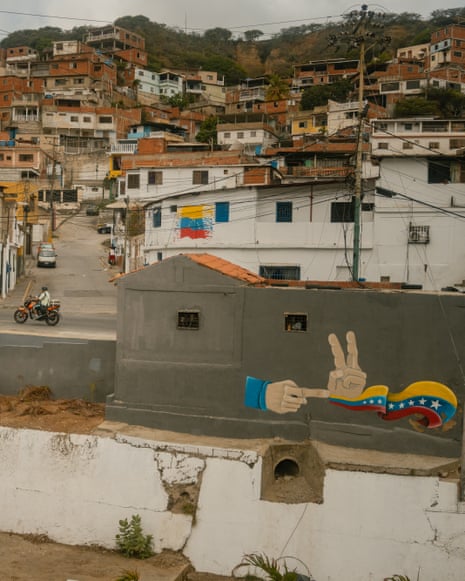
For Jesucita, the violent shaking and sudden collapse brought back haunting memories from 1967, when a powerful earthquake devastated regions along Venezuela's coast. She initially feared that a similar natural disaster had struck, though the reality proved far more sinister—this destruction was man-made, a consequence of the political and security crisis gripping the nation. The incident underscores how Venezuelan citizens continue to suffer the consequences of ongoing instability, regardless of international pressure on political leadership.
The Trump administration's aggressive stance toward the Maduro government has generated considerable discussion about whether such external pressure can catalyze meaningful reform. Proponents argue that increased international scrutiny and sanctions could weaken the regime's grip on power and pave the way for democratic restoration. They point to historical precedents where external pressure, combined with internal resistance movements, has contributed to regime change in other nations.
However, this optimistic narrative contrasts sharply with the lived experiences of ordinary Venezuelans who have witnessed little tangible improvement in their daily lives despite years of political upheaval. The Venezuela economy remains in severe distress, with inflation reaching astronomical levels and basic goods remaining scarce. Power outages plague cities and towns, healthcare systems have collapsed, and millions have been forced to flee their homeland in search of better opportunities abroad.
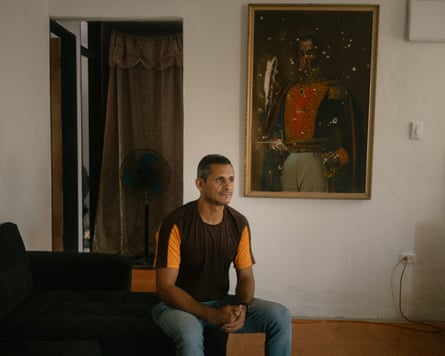
What emerges from conversations with residents across Venezuela is a pervasive sense of exhaustion mixed with resigned skepticism. Many have heard promises of change before—from various opposition politicians, international bodies, and foreign governments—yet the underlying systems of control and political repression persist with remarkable consistency. The machinery of Chavismo, the populist ideology that Hugo Chávez established and Maduro has maintained, continues to operate with institutional inertia that external pressure alone appears unable to dislodge.
The disconnect between international headlines about diplomatic action against Maduro and the grinding reality of Venezuelan life creates what many describe as an illusion—the feeling that significant change is imminent when, in practice, survival remains the primary concern for most citizens. Parents struggle to feed their children, young people lack educational and economic opportunities, and the middle class that once drove the nation's prosperity has largely evaporated or fled.
For those who remain, there is a profound sense of helplessness. While political elites debate and international actors maneuver, regular Venezuelans navigate a landscape where basic services are unreliable, security remains uncertain, and the future appears increasingly bleak. The humanitarian crisis in Venezuela has reached proportions that rival some of the world's worst conflict zones, yet the attention it receives pales in comparison to other international incidents.
The broader geopolitical context reveals why simple solutions remain elusive. Venezuela's government has cultivated deep relationships with other authoritarian regimes, particularly in Russia, China, and Iran. These international partnerships provide economic lifelines and diplomatic cover that complicate efforts by the Trump administration or other Western powers to isolate and pressure the regime into submission. The competing interests of various global powers create a stalemate that leaves ordinary Venezuelans caught in the crossfire.
Additionally, the Venezuelan opposition itself remains fractured and weakened after years of failed attempts to oust Maduro. Multiple opposition leaders have emerged, only to face imprisonment, exile, or irrelevance. This internal fragmentation undermines the effectiveness of any external pressure, as there is no unified alternative government waiting in the wings that could command broad legitimacy among Venezuelans.
The concept of political change in Venezuela has taken on a surreal quality for many citizens. They observe international drama and diplomatic posturing, yet their neighborhoods look the same, their economic situations remain desperate, and the repressive apparatus that maintains control continues to function unabated. Schools operate sporadically, hospitals lack medications, and corruption ensures that resources meant for public benefit disappear into private accounts.
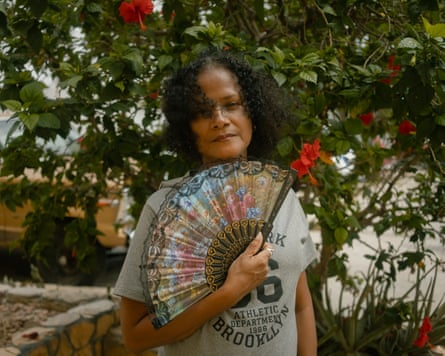
What makes the current moment particularly poignant is that many Venezuelans can remember a different era—when their nation was wealthy, when the oil riches flowed to benefit the population, and when a middle-class lifestyle was achievable through honest work. The contrast between that past and the present creates a profound sense of loss and disillusionment that transcends political ideology. This feeling cuts across class and generational lines, uniting Venezuelans in their shared grief over what has been lost.
For someone like Ángel Linares, surveying the ruins of his home and comforting his elderly mother, the international news about Trump's actions against Maduro may feel distant and abstract. The immediate concern is rebuilding, finding shelter, and figuring out how to survive another day in a nation where the basic social contract has been fundamentally broken. His story, repeated thousands of times across Venezuela, illustrates why external pressure alone cannot solve problems rooted in decades of institutional decay and systemic failure.
Moving forward, any genuine solution to Venezuela's crisis will require not just international pressure on the Maduro administration, but also comprehensive internal reform, economic reconstruction, and a committed effort to rebuild democratic institutions from their foundations. Whether such a transformation is possible remains an open question, but for now, many Venezuelans have learned to view promises of change with profound skepticism, waiting to see if this moment truly represents a turning point or simply another chapter in their nation's long history of unfulfilled hopes.
Source: The Guardian


