
Trump's Presidency Shadows Insider Trading Questions

BBC investigation reveals suspicious trading patterns ahead of Trump announcements. Six accounts show suspicious activity with significant profits from geopolitical bets.
A comprehensive investigation by the British Broadcasting Corporation has uncovered what appears to be a suspicious trading pattern that preceded several significant public announcements made by the sitting United States president. The inquiry raises serious questions about potential insider trading activities and market manipulation during the current administration. The findings have prompted renewed scrutiny into financial regulations and enforcement mechanisms designed to prevent such conduct.
The BBC's analysis identified approximately six trading accounts that demonstrated an unusual spike in betting activity immediately preceding major presidential announcements and policy decisions. These transactions occurred across various financial markets and prediction platforms, suggesting a coordinated pattern rather than isolated incidents. The timing of these trades relative to subsequent public disclosures raises critical concerns about information asymmetry and potential advance knowledge of government actions.
Out of the six accounts identified in the investigation, five have reportedly ceased their trading activities following the BBC's findings becoming public knowledge. However, one particularly notable account has continued its betting strategy with remarkable success, demonstrating an uncanny ability to predict geopolitical outcomes with significant financial rewards. This continued activity has drawn particular attention from financial regulators and watchdog organizations monitoring market integrity.
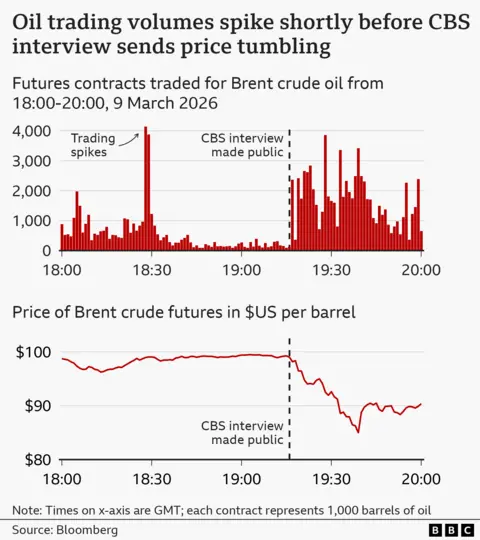
The most striking example involves a US-Iran ceasefire bet placed through one of the suspicious accounts, which reportedly generated approximately $163,000 in profits when the predicted outcome materialized by April 7th. The precision of this prediction, combined with the substantial financial gain, has intensified concerns among financial oversight officials about the source of information informing these trading decisions. Such successful outcomes cannot reasonably be attributed to chance or standard market analysis.
The investigation represents a significant development in ongoing discussions about financial market oversight and the effectiveness of existing regulatory frameworks in preventing insider trading abuses. Securities regulators face mounting pressure to explain how such potentially illegal activities could occur with apparent impunity during a high-profile presidency. The BBC's findings suggest potential gaps in surveillance systems designed to detect anomalous trading patterns before they occur.
The timing of these suspicious trades raises fundamental questions about information flow within the executive branch and access to classified or sensitive government deliberations. Presidential announcements on matters such as foreign policy, trade relations, and military actions represent precisely the kind of material non-public information that securities laws strictly prohibit from being used for trading advantages. The pattern identified by the BBC suggests such protections may have been compromised.
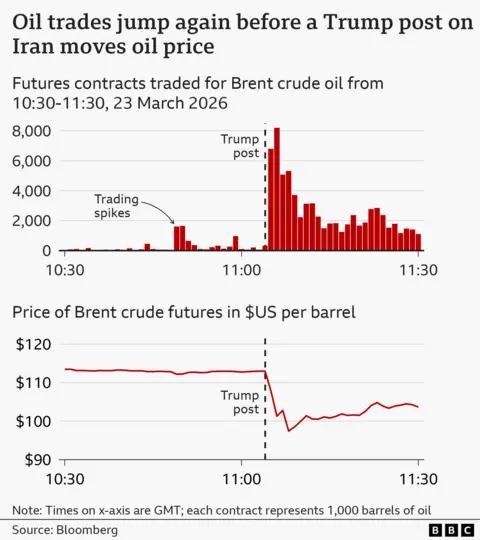
Financial analysts have expressed particular concern about the trading patterns preceding announcements, noting that the statistical probability of such accuracy in prediction is extraordinarily low under normal circumstances. The consistent success rate demonstrated by these accounts suggests access to advance information unavailable to general market participants. Such advantages directly undermine the foundational principle of fair and transparent financial markets where all participants possess equivalent information.
The investigation highlights vulnerabilities in prediction markets and betting platforms that may lack the robust compliance mechanisms typically required of traditional financial institutions. These platforms have experienced exponential growth in recent years, often outpacing the regulatory infrastructure necessary to monitor them effectively. The BBC's findings suggest that regulators must reassess oversight approaches to address these emerging financial mechanisms.
The accounts in question utilized various betting platforms and financial instruments to place their wagers, including contracts for difference, options trading, and specialized prediction markets. This diversification across platforms may have been deliberately designed to avoid triggering detection mechanisms that monitor unusual activity within single trading venues. The sophisticated nature of this approach suggests coordination by individuals with substantial financial market knowledge.
Regulatory bodies including the Securities and Exchange Commission and the Commodity Futures Trading Commission face intensifying pressure to launch formal investigations into the trading patterns identified by the BBC. These agencies must determine whether advance knowledge of government decisions was unlawfully obtained and exploited for financial gain. The reputational stakes for financial regulators are substantial, given the fundamental importance of market integrity to investor confidence.
The investigation comes at a particularly sensitive time for the Trump administration, which has faced previous accusations regarding financial improprieties and conflicts of interest. The emergence of these trading anomalies adds another layer of scrutiny to questions about governance standards and accountability within the executive branch. Political opponents have seized upon the findings as evidence supporting their arguments about the need for enhanced oversight mechanisms.
Former government officials and financial crime specialists have called for comprehensive audits of trading accounts linked to individuals with potential access to non-public government information. Such audits would examine transaction histories, communication records, and financial relationships to establish whether coordination occurred in placing these bets. The scope and scale of such an investigation would be unprecedented in its focus on the presidential administration.

The BBC's investigation methodology involved analyzing thousands of transactions across multiple platforms to identify statistical anomalies that suggested advance knowledge of public announcements. Their findings were corroborated by independent financial analysts who confirmed the improbability of such successful predictions occurring through legitimate forecasting methods. The rigor of this analysis strengthens the credibility of the investigation's conclusions.
The continued trading activity by one account following public disclosure of the investigation raises additional concerns about deterrent effects of regulatory oversight. If traders believe they can operate with relative impunity even after suspicious activities are publicly identified, this suggests fundamental weaknesses in enforcement mechanisms. Prompt regulatory action is essential to restore confidence in the fairness and integrity of financial markets.
The broader implications of this investigation extend beyond the immediate questions about specific traders and trading accounts. The findings underscore the critical importance of robust financial compliance systems and rigorous enforcement of securities laws protecting market integrity. Whether the current regulatory framework is adequate to address emerging challenges in financial markets remains a pressing question for policymakers and oversight officials.
Source: BBC News


