
Trump's Press Tactics: Threats Wrapped in Demands

Examine how the Trump administration applies both subtle and direct pressure on news organizations, from lawsuit threats to editorial demands.
The relationship between political leadership and the press has long been contentious, but recent tactics employed by the Trump administration reveal a troubling pattern of pressure that operates on multiple levels—some overt, others deliberately opaque. What may appear as routine demands for editorial control carry profound implications for press freedom and journalistic independence in America. Understanding these dynamics requires careful examination of both the explicit threats and the more insidious forms of intimidation that have become characteristic of this administration's approach to media management.
In January, following a televised interview conducted by CBS News, Donald Trump issued a striking ultimatum through his press secretary: news organizations must broadcast the complete, unedited interview, or risk legal action. While this demand was conveyed in what might be characterized as a casual manner, the underlying threat is unmistakable and has reverberated through newsrooms across the country. The specificity of the threat—coupled with the potential financial and reputational consequences of litigation—creates a chilling effect that extends far beyond a single interview or news organization.
Such warnings are not delivered lightly within the halls of major broadcasting corporations and news outlets. The implications of potential lawsuits, regardless of their legal merit, impose real costs on media organizations already operating under significant financial pressure. Legal battles consume resources, distract editorial teams, and create uncertainty about coverage decisions. This reality makes the threat itself a form of coercion, effectively forcing newsrooms to consider whether certain editorial choices are worth the potential legal and financial consequences that might follow.
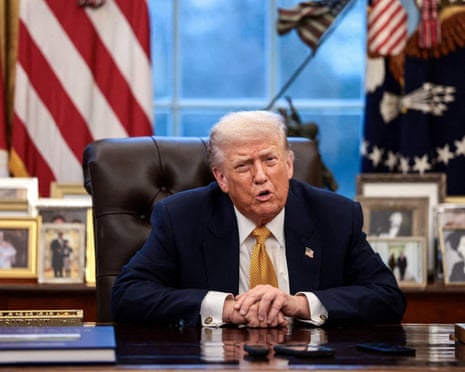
The demand for unedited content publication represents a fundamental challenge to editorial discretion—one of the cornerstones of journalistic practice. News organizations have long maintained the right to edit interviews for clarity, length, context, and accuracy. These editorial choices are not arbitrary; they reflect professional standards designed to serve the public interest. When political figures demand that their words be presented without any editorial mediation, they are essentially demanding the abdication of journalistic responsibility and the transformation of news platforms into unfiltered distribution channels for political messaging.
The subtlety of these pressures should not be underestimated. Unlike overt censorship or explicit bans, which would immediately trigger First Amendment protections and public outcry, these tactics operate in a gray zone. A threat of litigation, while technically legal, functions as a form of intimidation. A demand for complete publication, while not technically a prohibition on certain coverage, constrains editorial freedom through the threat of consequences. These approaches are particularly insidious because they allow those wielding them to claim they are not actually restricting press freedom—they are simply asserting their rights or requesting fair treatment.
Inside newsrooms, the impact of such pressures manifests in concrete ways. Editorial meetings now include discussions of potential legal exposure for coverage decisions. Graphics teams consider whether visual presentations might be deemed unfair or misleading in ways that could invite litigation. Producers weigh the newsworthiness of stories against the resources required to defend them legally. While good journalism has always involved editorial judgment about what stories matter and how to tell them responsibly, the added layer of litigation risk introduces a new calculus that has nothing to do with journalistic merit.
This administration's approach to media relations reflects a broader pattern of political pressure on journalists that has intensified in recent years. Throughout his presidency, Trump has repeatedly characterized unfavorable coverage as "fake news" and has openly questioned the legitimacy of media organizations that challenge his narratives. These rhetorical attacks serve to delegitimize journalism itself in the eyes of supporters while creating an atmosphere of hostility toward the press. When combined with threats of legal action or demands for editorial control, they form a comprehensive strategy designed to influence coverage not through rational argument but through intimidation and coercion.
The historical context matters here. Authoritarian regimes around the world have employed similar tactics to constrain press freedom. The pattern typically begins with rhetorical attacks on journalists and media organizations, proceeds to threats of legal action, and can escalate to more direct forms of censorship. While the United States has robust constitutional protections for the press, the effectiveness of those protections ultimately depends on the willingness of news organizations to challenge encroachments and the public's commitment to defending media independence.
Several news organizations have already begun quietly adjusting their practices in response to these pressures. Some have become more cautious about pursuing stories involving the administration, not because they lack merit but because the legal and reputational costs have become harder to justify. Others have doubled down on their reporting, viewing capitulation as a greater threat than litigation. This divergence reveals how effectively intimidation can fragment the press into entities with different tolerance levels for risk and different commitments to accountability journalism.
The broader implications extend to the public interest in democratic governance. A functioning democracy requires an informed citizenry, and an informed citizenry depends on journalists who are free to investigate, question, and report on those in power without fear of legal reprisal. When political actors use litigation threats to discourage unfavorable coverage, they are effectively placing their interests above the public's right to know. They are asserting that their narrative should supersede journalistic scrutiny, and that those who refuse to accept that hierarchy should face consequences.
Additionally, these tactics disproportionately affect smaller news organizations and independent journalists who lack the legal resources of major networks. A startup news outlet or a local journalist operating on a shoestring budget cannot easily absorb the costs of defending a lawsuit, regardless of whether they would ultimately prevail. This creates a tiered system of press freedom, where well-resourced organizations might be able to maintain independence while others are forced to capitulate simply due to financial constraints. Such inequality in the ability to exercise constitutional rights fundamentally undermines the democratic purpose those rights were designed to serve.
The demands for complete publication of interviews also ignore practical realities of journalism and audience engagement. Television news exists within time constraints. A full interview might run for hours, but a news broadcast has a fixed time slot. Responsible journalism requires condensing, contextualizing, and connecting information in ways that serve public understanding. By demanding unedited publication, political figures are essentially demanding that their words be presented without context or analysis—a format that may serve their interests but does not necessarily serve the public's interest in understanding complex issues.
Moving forward, the question facing American journalism is whether these pressures will fundamentally reshape news organization behavior or whether they will prompt a stronger commitment to editorial independence. The answer will likely depend on multiple factors: the willingness of news organizations to collectively resist intimidation, the actions of courts in responding to litigation threats, and the public's demonstrated commitment to supporting independent journalism. What seems clear is that the relationship between politics and the press has entered a new, more contentious phase—one in which the stakes for press freedom are higher than they have been in decades.
Source: The Guardian


