
Trump's Psychedelics Order: Symbolic Move or Real Change?

Trump administration issues executive order to accelerate psychedelic treatments for mental illness. Experts debate whether the order will have meaningful legal impact.
The Trump administration has made headlines with a high-profile executive order aimed at expediting access to psychedelic medications for individuals suffering from serious mental illnesses. Released earlier this month, the directive represents a notable shift in federal policy toward alternative therapeutic approaches for treating conditions that have long proven resistant to conventional pharmaceutical interventions. However, a closer examination by policy experts and medical professionals reveals that while the order carries significant symbolic weight, its actual legal and practical implications may be far more limited than initial headlines suggest.
The administration's stated rationale for the order centers on addressing what it describes as a critical public health crisis. According to the executive order's language, "Policymakers and the medical field have long struggled to address the burden of suicide and serious mental illness rates in America," emphasizing that many patients remain unresponsive to currently available treatment options. This acknowledgment reflects growing recognition within government circles that the traditional mental health care system has significant gaps, particularly for individuals with treatment-resistant conditions who have exhausted standard pharmaceutical options.
The order itself represents a rare convergence of interests between the current administration and advocates who have long championed psychedelic-assisted therapy as a promising frontier in mental healthcare. Compounds such as psilocybin, MDMA, and LSD have demonstrated remarkable potential in clinical research settings for treating conditions including post-traumatic stress disorder, severe depression, and end-of-life anxiety. The symbolic value of federal recognition cannot be understated, as it signals a potential shift away from decades of prohibition and stigmatization of these substances.
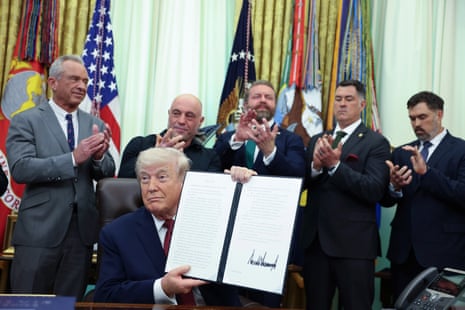
Despite the apparent boldness of the executive action, legal scholars and healthcare policy analysts have raised important questions about what the order can actually accomplish within existing legal frameworks. The fundamental challenge is that psychedelic compounds remain classified as Schedule I substances under the Controlled Substances Act, a classification that severely restricts their availability and research potential. This legal status creates substantial barriers that cannot be easily circumvented through executive order alone, as changing drug scheduling typically requires action from Congress or the Drug Enforcement Administration through formal rulemaking procedures.
"While executive orders can direct federal agencies to prioritize certain initiatives and allocate resources toward specific goals, they cannot unilaterally change the legal status of controlled substances," explains Dr. James Morrison, a policy analyst specializing in drug regulation and healthcare law. The order's actual mechanisms appear to focus on encouraging federal agencies to streamline approval processes for clinical trials and to remove unnecessary bureaucratic impediments to research. These are meaningful steps, but they operate within the existing legal constraints rather than fundamentally restructuring the regulatory environment.
The order does instruct relevant federal agencies, including the Food and Drug Administration and the National Institutes of Health, to expedite review processes for psychedelic treatment research and to collaborate with academic institutions and private companies exploring these therapeutic avenues. This could potentially accelerate the pace at which promising treatments advance through clinical trial phases and toward potential approval. The FDA has already designated certain psychedelic-assisted therapies as "breakthrough therapies," a status that allows for expedited development and review, and the new order seeks to expand and strengthen these pathways.
Industry observers note that the order may have more practical impact on research funding and institutional priorities than on regulatory processes themselves. Universities and research institutions often look to federal leadership and policy direction when deciding where to allocate limited research resources. By signaling federal support for psychedelic medical research, the administration could indirectly encourage more institutions to establish dedicated research programs and attract qualified researchers to the field. This could create momentum that proves valuable regardless of the order's direct regulatory effects.
The mental health advocacy community has responded with cautious optimism, recognizing both the significance of the symbolic gesture and the limitations of what the order can achieve unilaterally. Many advocates have pointed out that lasting, meaningful reform would require Congressional action, particularly regarding drug scheduling or the establishment of new regulatory pathways specifically designed for psychedelic medicines. Some have called for the administration to pursue these more ambitious legislative goals in tandem with the executive order's directives.
The current status of psychedelic medicine development varies considerably across different compounds and therapeutic applications. MDMA-assisted therapy for PTSD, developed by the Multidisciplinary Association for Psychedelic Studies (MAPS), appears closest to potential FDA approval, with Phase 3 clinical trials having demonstrated substantial effectiveness. Psilocybin-assisted therapy for treatment-resistant depression has also shown remarkable promise in clinical settings, though these treatments remain far from standard availability. The executive order could help accelerate timelines for these and other promising candidates to reach patients who might benefit from them.
International context provides additional perspective on the significance of the Trump administration's move. Several countries and jurisdictions have begun exploring regulated access to psychedelic-assisted mental health treatment, with some establishing supervised clinics where patients can receive these therapies under medical supervision. Australia, for instance, has approved certain psychedelic treatments for specific mental health conditions, while countries like Jamaica and the Netherlands have taken varying approaches to regulating these substances. The American executive order suggests the United States may be moving toward a similar posture of pragmatic acceptance based on scientific evidence rather than historical prohibition.
Critics of the order point out that without addressing the underlying Schedule I classification, the impact will remain constrained. Research institutions and pharmaceutical companies operating under federal funding restrictions and DEA oversight will continue to face substantial barriers to large-scale trials and commercialization, even with streamlined approval processes. Some experts argue that the order amounts to rearranging deck chairs on a ship that fundamentally needs new direction from Congress, not just the executive branch.
Nevertheless, the order's symbolic importance in shifting the national conversation around mental health treatment innovation should not be entirely dismissed. Federal recognition of psychedelic medicine's potential helps legitimize decades of research and advocacy work by scientists and organizations that maintained faith in these compounds' therapeutic value despite widespread cultural and legal stigma. This shift in narrative could have long-term effects on policy evolution, public perception, and investment in the field, even if the immediate legal impact proves more modest than hopeful supporters might wish.
Looking forward, observers expect that the true significance of the executive order will become apparent over the coming months and years as federal agencies respond to its directives. If the FDA and other relevant agencies interpret the order expansively and move aggressively to streamline processes for psychedelic medicine development, the practical impact could exceed current skeptics' expectations. Conversely, if agencies move slowly or interpret their directives narrowly, the order may indeed prove to be largely performative, with real change requiring additional legislative action and sustained political commitment.
The path forward likely involves a combination of executive action, regulatory reform, and Congressional involvement to fully realize the therapeutic potential of these compounds for millions of Americans struggling with serious mental illness. While the Trump administration's executive order represents an important symbolic and directional statement, the work of transforming it into meaningful access to psychedelic mental health treatments for patients remains substantial and ongoing.

