
Trump's Support Fractures as Global Crises Mount

As geopolitical tensions escalate and economic challenges intensify, the US president faces unprecedented pressure from key allies and supporters amid policy controversies.
Good morning, and welcome to today's comprehensive political briefing. The landscape surrounding American leadership continues to shift dramatically as international tensions escalate while domestic economic pressures bear down on millions of households across the nation. What emerges is a complex portrait of a presidency navigating unprecedented challenges on multiple fronts simultaneously.
The current administration faces a confluence of critical issues that demand immediate attention and decisive action. Starting with the initiation of a military conflict that appears to be rapidly escalating beyond initial projections, declining approval ratings that have reached second-term lows, and an intensifying cost of living crisis affecting working families nationwide—any traditional American president would be facing severe political jeopardy. The convergence of these three major challenges would typically signal a political downward spiral for conventional political figures.
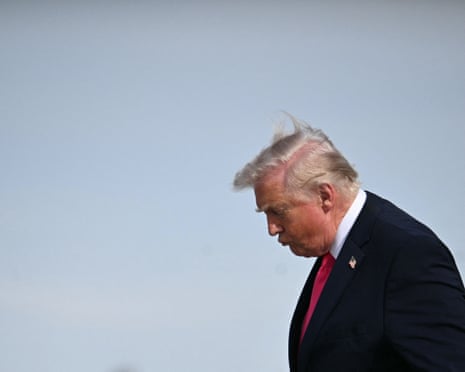
Yet Donald Trump remains an unconventional political force, operating according to a different set of rules than those that have traditionally governed American politics. Despite the global upheaval his administration's policies have triggered, polling data reveals that more than one-third of American voters continue to approve of his overall job performance. This persistent base of support, even in the face of mounting crises, represents a significant departure from historical patterns in American political behavior.
The United Kingdom's political environment provides an instructive parallel case study in how political leadership responds to institutional pressure. Prime Minister Keir Starmer finds himself increasingly isolated as controversies swirl around the Peter Mandelson situation. Recent reporting from the Guardian has revealed deep concerns circulating within cabinet ranks regarding his governance approach and recent personnel decisions. A senior minister within his own government refused to explicitly endorse the dismissal of Olly Robbins, signaling internal disagreements over his administration's direction.
Adding to Starmer's mounting difficulties, multiple civil service officials and government mandarins have begun calling for Robbins' reinstatement, indicating that the controversy extends beyond parliamentary colleagues into the permanent government apparatus itself. The political pressure has intensified further with at least one Labour Member of Parliament making public calls for Starmer to resign altogether. This erosion of internal support demonstrates how quickly political consensus can fracture when key institutional decisions face widespread questioning.
The situation in the Middle East continues to deteriorate as international relations between major powers reach critical junctures. Iranian forces have executed the seizure of two commercial vessels in the Strait of Hormuz, one of the world's most strategically vital maritime passages. The Strait of Hormuz serves as the crucial conduit through which a significant percentage of global petroleum supplies transit daily, making any disruption to shipping patterns a matter of urgent international concern.
This Iranian action represents an escalation in the tit-for-tat dynamic between the United States and Iran, with both nations imposing separate blockades of the strategically critical shipping waterway. The situation has transformed a regional dispute into a matter of profound importance for global energy markets and international stability. The competing blockades threaten to further restrict maritime commerce and could have cascading effects on global energy prices and economic stability. Diplomatic channels remain strained as both nations appear committed to their respective positions despite the potential for further escalation.

The Palestinian territories remain a focal point of regional conflict and humanitarian concerns. Developments in the West Bank continue to evolve amid broader tensions throughout the region. The situation on the ground reflects the complex dynamics that characterize Israeli-Palestinian relations, with multiple stakeholders holding competing interests and objectives.
Observers of Middle Eastern politics note that the interconnected nature of these regional crises creates a challenging environment for diplomatic negotiations and conflict resolution efforts. The simultaneous occurrence of multiple tensions across different areas of the Middle East complicates efforts to establish sustainable peace agreements or temporary ceasefires. International organizations and regional governments continue working to identify pathways toward de-escalation, though progress remains limited.

The broader implications of these geopolitical developments extend far beyond individual regions. The cumulative effect of simultaneous crises in multiple strategic locations creates uncertainty in global markets, affects investment decisions, and influences the calculations of nations worldwide. Economic analysts point to the relationship between regional instability and broader economic indicators, noting how global political instability contributes to market volatility and inflation concerns.
For the American administration, navigating these interconnected challenges while managing domestic economic difficulties represents an extraordinary test of leadership capacity. The divergence between public approval ratings and the severity of underlying challenges suggests that traditional political calculations may not apply in the current environment. Whether this political resilience proves durable or represents a temporary phenomenon will likely define the trajectory of this presidency in the coming months.
The international community watches closely as these situations continue to unfold, aware that the decisions made in Washington, Tehran, London, and Jerusalem will have ripple effects felt across the globe. The coming weeks and months will prove crucial in determining whether diplomatic off-ramps emerge from these escalating tensions or whether further deterioration becomes inevitable.
Source: The Guardian


