
Trump's Taiwan Comments Give China New Leverage

President Trump's remarks on Taiwan arms sales as 'negotiating chips' with Beijing have been seized by Chinese state media, raising concerns in Taipei.
Taiwan's government faced a tense period following Donald Trump's remarks on Taiwan during his diplomatic engagement with Chinese leadership. The statements regarding arms deals being utilized as negotiating leverage with Beijing have provided fresh ammunition for Chinese state media to advance Beijing's geopolitical narrative regarding the disputed island territory. The delicate balance that has long characterized United States-Taiwan relations appears to be shifting, creating uncertainty about America's future commitment to supporting Taipei's security interests.
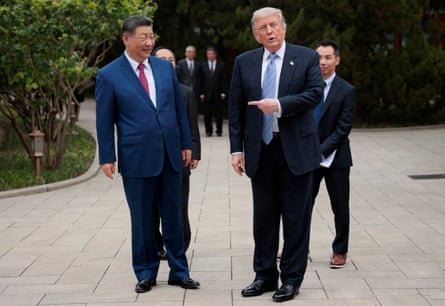
During Trump's significant meeting with Xi Jinping in Beijing on Thursday, Taiwanese officials and international observers held their collective breath, uncertain about how the unpredictable American president might reshape decades of established diplomatic protocol. The fear that Trump could fundamentally alter Washington's longstanding support structure for Taipei weighed heavily on decision-makers in the island nation. This apprehension reflected deeper concerns about the potential for a major realignment in one of the world's most sensitive geopolitical relationships, with profound implications for regional stability and international order.
However, the initial assessment of the meeting's outcomes suggested some positive signals for Taiwan's government. Beyond Xi's characteristically strong statement reasserting China's territorial claims over Taiwan—which Beijing regards as a renegade province that must eventually be reunified with the mainland—the immediate aftermath appeared relatively benign for Taipei's interests. The Chinese leadership's unambiguous rhetoric, while concerning, represented a continuation of existing positions rather than an escalation or new threat.

The Taiwan arms sales issue has long represented one of the most contentious elements of the Washington-Beijing-Taipei triangle. Since the normalization of diplomatic relations between the United States and China in 1979, American military support for Taiwan has been formalized through the Taiwan Relations Act, which obliges the United States to provide Taiwan with defensive military capabilities. This commitment has periodically provoked strong reactions from Beijing, which views American military assistance to the island as interference in its internal affairs and a violation of Chinese sovereignty.
Trump's characterization of weapons sales as negotiating chips represents a significant departure from how previous administrations have framed this issue. Rather than presenting Taiwan's defense capabilities as a matter of principle tied to American commitments and international law, Trump has suggested these arms sales could be leveraged as bargaining tools in broader negotiations with China. This reframing has immediate and troubling implications for how Beijing might approach future discussions with Washington regarding the island's security.
Chinese state media outlets have not hesitated to exploit Trump's remarks for propagandistic purposes. State-controlled newspapers and broadcasting networks have seized upon the president's language, interpreting his statements as evidence that Washington's support for Taiwan is conditional and contingent upon broader bilateral considerations between the United States and China. This messaging serves Beijing's long-term strategic goal of convincing Taiwan that it cannot rely indefinitely upon American protection, thereby potentially encouraging acceptance of unification on Beijing's terms.
The Trump administration's approach to Taiwan has consistently demonstrated a transactional worldview that prioritizes deal-making and economic considerations over established principles. Throughout his first term as president, Trump pursued an unpredictable course regarding Taiwan, at times appearing to question the established framework of relations while at other times approving significant military aid packages. This inconsistency has created persistent uncertainty about America's actual level of commitment to the island's security and independence.
For Taiwan's government, the challenge lies in navigating between competing pressures. On one hand, maintaining strong relations with the United States remains essential to the island's security and economic prosperity. On the other hand, Taiwan must also manage its relationship with China, which remains its largest trading partner and represents both an economic opportunity and a military threat. Any perception that American support is wavering or conditional could undermine Taiwan's negotiating position with Beijing.
The broader context of these diplomatic developments involves the ongoing struggle for influence in the Asia-Pacific region. The United States has long positioned its support for Taiwan as part of its commitment to maintaining a rules-based international order and freedom of navigation in critical sea lanes. China, conversely, views American involvement in the region as neocolonial interference designed to prevent the natural reassertion of Chinese regional dominance. Trump's transactional approach appears to view these strategic considerations as secondary to deal-making with Beijing.
Regional stability concerns have intensified following Trump's statements. Japan, South Korea, and other American allies in Asia have watched carefully to assess whether Washington's security commitments to their nations remain credible. If Taiwan cannot count on consistent American support, questions naturally arise about the reliability of American commitments elsewhere in the region. This uncertainty could prompt some nations to recalculate their foreign policies and defense strategies, potentially leading to increased regional militarization.
Taiwan itself has begun reinforcing its own defense capabilities in response to these geopolitical uncertainties. The island nation has invested heavily in developing indigenous military technologies and procurement programs designed to reduce its dependence on American weapons systems. This process recognizes that Taiwan must ultimately bear primary responsibility for its own security, even as it seeks continued American support. The island's government has also pursued diplomatic initiatives to strengthen relationships with other democratic nations.
The historical context of American-Taiwan relations adds complexity to the current situation. For decades, American presidents have carefully maintained the diplomatic fiction that the United States recognizes the People's Republic of China as the legitimate government while simultaneously maintaining substantive relations with Taiwan through unofficial channels. This arrangement, while imperfect, has provided relative stability and allowed Taiwan to function as a de facto independent nation with substantial international economic engagement.
Looking forward, the situation remains fluid and uncertain. Trump's willingness to deploy Taiwan as a negotiating tool suggests that his administration may pursue significant concessions from China on trade, economic issues, or other matters in exchange for limiting or conditioning American military support for the island. Such an approach would represent a fundamental shift in American policy and would likely have profound consequences for the regional balance of power. Taiwan's government continues to monitor developments closely, hoping that American strategic interests in maintaining a stable Asia-Pacific region will ultimately prevail over transactional considerations.
The coming months will prove critical in determining whether Trump's comments represent merely rhetorical positioning or signal a genuine shift in American policy toward Taiwan. China will almost certainly continue to exploit these statements diplomatically and through its state media apparatus, using them to advance its narrative that Taiwan's security situation is increasingly precarious. For Taiwan, the challenge involves maintaining hope in American support while preparing for potential contingencies and strengthening its own defensive capabilities and international relationships.
Source: The Guardian

