
Trump's War Powers Claim: A Complex Presidential Legacy

Trump claims predecessors bypassed war powers law. Analysis reveals mixed record: Bush, Reagan sought authorization while Obama, Clinton circumvented requirements.
Former President Donald Trump has leveled accusations that his predecessors circumvented the War Powers Resolution, a federal law enacted in 1973 that requires presidents to notify Congress within 48 hours of committing military forces and obtain legislative authorization within 60 days. Trump's assertion, while containing elements of truth, reflects a more nuanced historical record that demonstrates vastly different approaches to executive power among recent administrations.
The War Powers Act was crafted in the aftermath of the Vietnam War, when Congress sought to reassert its constitutional authority over military decisions. This pivotal legislation emerged as a check on unchecked executive authority and aimed to prevent future prolonged conflicts without proper legislative oversight. Despite its intentions, the law has proven challenging to enforce consistently across different presidencies, with various commanders-in-chief interpreting its requirements differently.
Ronald Reagan's administration, contrary to what some might assume about an executive-power-focused conservative president, actually obtained formal congressional authorization for military interventions. During his tenure from 1981 to 1989, Reagan worked with Congress on significant military operations, establishing a precedent of seeking legislative approval for major military commitments. This collaborative approach reflected both constitutional deference and political pragmatism during an era of divided government.
Similarly, both the senior George H.W. Bush administration (1989-1993) and the junior George W. Bush administration (2001-2009) pursued formal authorizations from Congress for their military operations. President George H.W. Bush secured explicit congressional approval for the 1991 Gulf War, a defining moment that demonstrated presidential respect for the legislative branch's war powers. President George W. Bush obtained the Authorization for Use of Military Force (AUMF) in 2001 following the September 11 terrorist attacks, which provided legal foundation for operations in Afghanistan and later the 2003 invasion of Iraq.
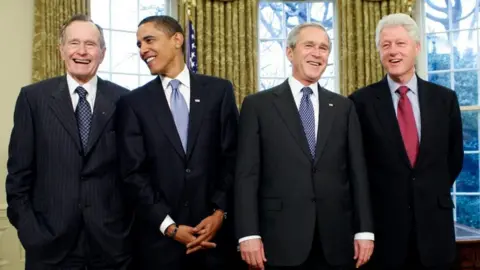
The record becomes significantly different when examining the administrations of Barack Obama and Bill Clinton, who adopted more expansive interpretations of executive power regarding military deployments. President Clinton undertook military operations in Bosnia and Kosovo during the 1990s with limited congressional input or formal authorization. The Kosovo intervention in 1999, which lasted 78 days, proceeded without explicit congressional approval, marking a significant departure from the established practice of seeking legislative authorization for major military operations.
President Obama similarly pursued a more unilateral approach to military decision-making, particularly regarding his 2011 military intervention in Libya. The administration argued that the NATO-led operation, which removed Muammar Gaddafi from power, did not require congressional authorization because it fell below the threshold of sustained combat operations—a legal interpretation that drew significant criticism from both Republican and Democratic lawmakers. This interpretation effectively sidestepped the War Powers Resolution's requirements and represented a notable expansion of presidential authority.
Beyond Libya, the Obama administration conducted extensive drone operations and special operations missions across multiple countries with minimal congressional oversight. These targeted killing operations, particularly in Yemen, Pakistan, and Somalia, represented an unprecedented expansion of executive military power conducted largely outside public view and without formal legislative authorization. The administration justified these operations under the broad 2001 AUMF, an interpretation that legal scholars and congressional leaders from both parties questioned.
Trump's own record on war powers presents additional complexities that complicate his criticism of predecessors. During his presidency, Trump authorized military strikes on Syria in April 2017 in response to a chemical weapons attack, a decision made without seeking congressional authorization. This unilateral action, while limited in scope, demonstrated that Trump himself was not consistently adherent to the War Powers Resolution's requirements—a contradiction that undermines his criticism of prior administrations.
The broader pattern reveals that modern presidents, regardless of party affiliation, have increasingly stretched the boundaries of executive authority regarding military decisions. However, the degree and frequency of this expansion varies considerably. The Reagan and Bush administrations, both Republican, generally sought formal congressional authorization for major military operations, while Democratic administrations under Clinton and Obama more frequently operated in legal gray areas or relied on overly broad interpretations of existing authorizations.
Legal scholars and constitutional experts remain divided on the proper interpretation of presidential war powers. Some argue that the Constitution grants presidents inherent authority to use military force for national defense without legislative approval. Others contend that the War Powers Resolution, despite its constitutional questions, represents the proper baseline for democratic accountability in military decisions. This ongoing debate reflects fundamental tensions between executive efficiency and legislative oversight.
Congress itself bears some responsibility for the erosion of its war powers authority. Lawmakers from both parties have frequently deferred to presidents on military matters, sometimes explicitly and sometimes through legislative inaction. The repeated invocation of the 2001 AUMF—passed with overwhelming majorities in the aftermath of 9/11—has allowed multiple administrations to conduct military operations that would likely not have received specific authorization had they been presented as separate legislative questions.
The practical enforcement of the War Powers Resolution has proven nearly impossible, as presidents have simply ignored its requirements with minimal consequences. No president has faced serious legal repercussions for violating the statute, and Congress has largely failed to impose political costs for non-compliance. This enforcement vacuum has allowed the resolution to become more of a constitutional suggestion than a binding legal requirement, contributing to the expansion of presidential military power across administrations.
The historical record confirms that Trump's assertion about predecessors contains partial truth but omits crucial context. Presidents Reagan and both Bushes generally respected the War Powers Resolution's spirit, if not always its letter, by seeking congressional input for major military decisions. In contrast, Clinton and Obama interpreted executive authority more expansively, conducting significant military operations without formal authorization. Trump's own conduct suggests he follows the latter model rather than the former.
Moving forward, the question of war powers authority remains unresolved and increasingly urgent as military technology, drone operations, and counterterrorism activities continue to blur traditional distinctions between acts of war and law enforcement. Whether future administrations will respect congressional authority or continue the trend of executive expansion depends partly on whether Congress reasserts itself as a co-equal branch in military decision-making. The mixed record of recent presidencies demonstrates that absent congressional resolve, presidential claims to broad military authority will likely continue regardless of which party occupies the White House.
Understanding this complex history proves essential for informed civic debate about military accountability and democratic governance. Trump's invocation of presidential precedent, while containing factual elements, represents selective historical memory that overlooks his own departure from traditional constraints on executive power. As American democracy grapples with the proper balance between swift executive action and democratic accountability, the historical precedents set by Reagan, Bush, Clinton, and Obama provide instructive lessons about the ongoing tension between presidential power and legislative authority in matters of war and peace.
Source: BBC News


