
Trump Sets July 4 Deadline for EU Trade Deal Ratification

Donald Trump demands EU ratify trade agreement by July 4 or face significantly higher tariffs. Negotiations with Ursula von der Leyen intensify.
In a dramatic escalation of trade negotiations between the United States and the European Union, Donald Trump has issued an ultimatum that has sent shockwaves through international commerce circles. The former president announced that the EU must ratify its trade deal with the US by July 4th—America's Independence Day—or face substantially elevated tariffs that would impact billions of dollars in transatlantic commerce. This aggressive positioning reflects Trump's well-documented impatience with what he perceives as sluggish implementation timelines from European bureaucracies.
The announcement came after European officials found themselves unable to reach consensus on the proposed trade agreement, creating an impasse that Trump viewed as unacceptable. Rather than engage in what he considers prolonged negotiations, Trump opted for a decisive public declaration of his expectations. He revealed that he had directly communicated with EU chief Ursula von der Leyen regarding the stalled negotiations and the need for expedited action on the part of European leadership. The conversation apparently resulted in what Trump characterized as an agreement to establish a concrete deadline.
Through his Truth Social platform, Trump articulated the terms of this ultimatum with characteristic directness. He stated that Von der Leyen had agreed to give the EU until "our Country's 250th Birthday"—referring to July 4, 2026—to complete the ratification process. Trump emphasized that failure to meet this deadline would trigger immediate consequences, specifically warning that "their Tariffs would immediately jump to much higher levels." The specificity of the date and the severity of the threatened response underscore Trump's determination to accelerate the EU trade agreement process.
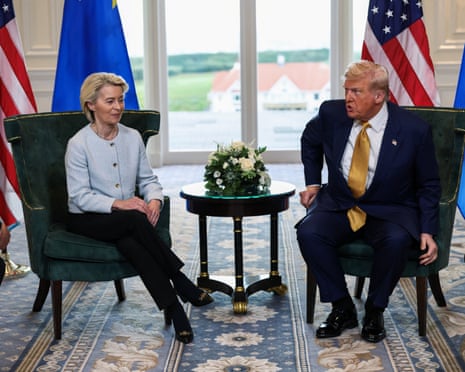
The tariff threat represents a significant pressure tactic in international trade diplomacy. Trump's willingness to weaponize tariff policy has been a defining characteristic of his approach to global commerce throughout his political career. By establishing a public, time-specific deadline with explicit consequences, Trump effectively puts European governments on notice that delay comes with a tangible price. The threat of "much higher" tariffs would ripple through European economies, affecting everything from agricultural exports to manufactured goods, creating substantial political pressure on EU member states to expedite ratification processes.
The EU tariff negotiations context is crucial for understanding the stakes involved in these discussions. The transatlantic trade relationship represents one of the world's largest and most economically significant bilateral relationships. Any substantial increase in tariffs would disrupt supply chains, increase consumer prices on both sides of the Atlantic, and potentially trigger retaliatory measures that could escalate into a broader trade conflict. European manufacturers, agricultural producers, and exporters are acutely aware of how tariff escalation could damage their competitiveness in the American market.
European officials have struggled to achieve the internal consensus necessary to move forward with the trade agreement ratification. The EU's complex decision-making structure, which requires coordination among 27 member states with sometimes divergent economic interests, has historically made rapid implementation of major trade agreements challenging. Some member states harbor concerns about specific provisions in the agreement, while others worry about the broader implications of transatlantic trade policies. This internal complexity is precisely what frustrates American negotiators like Trump, who prefer more streamlined decision-making processes.
The role of Ursula von der Leyen as EU trade negotiator in chief puts her in an extraordinarily difficult position. As the President of the European Commission, she must balance Trump's demands with the need to maintain consensus among EU member states and respect the bloc's institutional processes. Von der Leyen's agreement to the July 4 deadline, as reported by Trump, suggests she recognizes the severity of the situation and the genuine threat that tariff escalation poses to European economies. However, she must now deliver ratification within a timeframe that many observers consider extremely compressed.
The political implications of Trump's deadline extend beyond simple trade mechanics. His willingness to use the American Independence Day as a symbolic reference point while threatening economic consequences reflects a particular negotiating style that combines hardball tactics with theatrical presentation. By invoking a date of deep historical significance to American identity, Trump adds an additional layer of messaging to his ultimatum. This approach appeals to his political base while simultaneously attempting to convey seriousness to European counterparts.
Looking at the practical timeline, EU member states now face intense pressure to accelerate their domestic ratification processes. National parliaments across Europe will need to expedite hearings, debates, and votes on the agreement. This compressed schedule may generate controversy, particularly in countries where political opposition exists to the specific terms of the trade deal. Some European politicians have already criticized the agreement on various grounds, from environmental concerns to labor protections, and the threat of tariffs may force them to recalculate their opposition strategies.
The broader context of US-EU relations suggests that this trade dispute is not isolated but rather part of a larger recalibration of the transatlantic relationship. Trump has previously demonstrated skepticism toward multilateral trade arrangements and European economic policies. His demand for rapid ratification of a new agreement while simultaneously threatening consequences for delay reflects his philosophy that trade relationships should be renegotiated regularly on terms favorable to American interests. This positions the EU in a reactive posture where it must either comply with Trump's demands or prepare for economic consequences.
Economic analysts are carefully monitoring how this situation develops, as the outcome could have significant implications for global trade patterns and economic growth. A tariff escalation would likely trigger increased inflation in both the US and EU, potentially affecting consumer purchasing power and economic growth rates. European businesses that rely on American markets would face reduced competitiveness, while American companies with European supply chains would experience increased costs. The uncertainty alone creates economic drag as businesses postpone investment decisions pending clarity on the final trade regime.
In the coming weeks, European capitals will engage in intensive diplomatic negotiations aimed at bridging internal divisions and achieving the necessary consensus for rapid ratification. The July 4 deadline, while seemingly distant, actually provides relatively little time when accounting for the deliberative processes that EU institutions require. Von der Leyen will likely need to invoke her considerable political capital to shepherd the agreement through member state legislatures and European Parliament procedures. The success or failure of these efforts will significantly shape the future of transatlantic economic relations and may set precedents for how future trade disputes are negotiated.
Source: The Guardian


