
Trump-Xi Summit: No Major Breakthroughs on Key Issues

Analysis of the Trump-Xi Jinping summit reveals limited progress on Iran, Taiwan, and trade. Leaders focused on personal rapport instead of concrete agreements.
The highly anticipated summit between United States President Donald Trump and Chinese President Xi Jinping concluded without achieving substantial breakthroughs on the critical geopolitical issues that have defined US-China relations in recent years. Despite weeks of diplomatic preparation and optimistic rhetoric from both sides, the meeting between the leaders of the world's two largest economies failed to produce concrete agreements on pressing matters including Iran policy, the contentious Taiwan situation, and ongoing trade disputes that have created significant tension between Washington and Beijing.
According to analysis from The Guardian's senior China correspondent Amy Hawkins, the summit represented a strategic shift in focus away from substantive policy negotiations toward the cultivation of personal rapport between the two leaders. Rather than hammering out detailed accords on areas of fundamental disagreement, Trump and Xi apparently prioritized establishing a foundation of mutual understanding and goodwill. This approach reflects a broader diplomatic philosophy that emphasizes personal relationships as essential prerequisites for future negotiations on more contentious issues.
The US-China relationship has been marked by escalating tensions across multiple domains over the past several years. Trade disputes have resulted in tit-for-tat tariff increases, while strategic competition over technology, military capabilities, and regional influence has intensified. The Taiwan question remains particularly sensitive, with Beijing viewing the democratic island as a breakaway province and Washington maintaining unofficial but substantial ties with Taipei. Additionally, disagreements over regional policies, including US-Iran relations and Chinese involvement in Middle Eastern affairs, have created additional friction points.
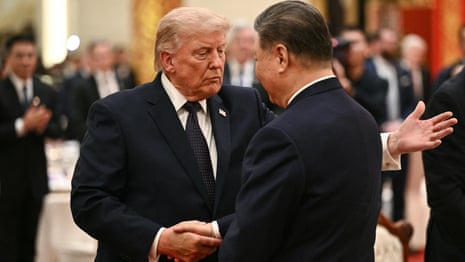
The summit's agenda was notably ambitious, with both governments indicating they intended to address the full spectrum of bilateral concerns. However, the actual outcomes suggest that expectations may have been tempered during the lead-up to the meeting. Rather than producing formal agreements or joint statements outlining new policy directions, the summit appeared designed to reset the diplomatic tone and establish channels for more productive future engagement. This represents a recognition from both Washington and Beijing that the current trajectory of US-China relations requires careful management and sustained dialogue.
On the Iran issue, the two nations continue to maintain fundamentally different strategic interests and policy objectives. The United States has sought to constrain Iran's regional influence and prevent nuclear weapons development, while China has maintained economic and diplomatic ties with Tehran. The summit did not yield any convergence on how to address Iranian activities in the Middle East or the future of nuclear agreements. Instead, both leaders apparently agreed that this issue would require further discussion through established diplomatic channels.
The Taiwan question proved to be equally intractable during the summit discussions. Beijing continues to demand that the United States reduce its military support for Taiwan and cease official recognition of the democratic government in Taipei. Washington, meanwhile, remains committed to the Taiwan Relations Act and maintains that Taiwan's security is essential for regional stability. Rather than resolve these fundamental differences, the two leaders appear to have agreed to manage the issue carefully and prevent it from becoming a source of military escalation or direct confrontation.
Trade tensions between the two nations have created significant economic consequences for both countries and their trading partners. Tariff disputes, technology export controls, and allegations of unfair trade practices have dominated the commercial relationship in recent years. The summit did not produce comprehensive new trade agreements or frameworks, though both sides indicated a willingness to continue discussions aimed at reducing tensions and finding areas of potential cooperation.
According to Hawkins's analysis, the decision to prioritize personal rapport over substantive agreements may reflect a realistic assessment of what is currently achievable in the Trump-Xi relationship. The two leaders come from vastly different political systems, cultural backgrounds, and strategic traditions. Building genuine understanding between them could create opportunities for future breakthroughs on more specific issues. This long-term approach suggests that both governments recognize that the US-China competition will continue for years to come and requires sustained engagement at the highest levels.
The summit also provided an opportunity for Trump to demonstrate his administration's commitment to maintaining dialogue with Beijing despite ongoing strategic competition. For Xi, the meeting allowed him to present China as a responsible stakeholder in the international system willing to engage constructively with the United States. Both leaders benefited from the symbolic importance of the summit itself, regardless of the specific agreements reached or failed to reach during their discussions.
The lack of major breakthroughs should not be interpreted as a complete failure of the summit process. Rather, it reflects the genuine difficulty of resolving deep structural disagreements between two nations with competing interests and fundamentally different approaches to governance and international relations. The willingness of both leaders to continue engaging diplomatically, rather than allowing tensions to escalate into confrontation, represents a positive outcome in its own right.
Looking forward, the summit establishes a foundation for continued dialogue between Washington and Beijing. Senior officials from both governments are expected to engage in more detailed negotiations on specific issues in the coming months. These lower-level talks may yield more concrete results on particular topics, even if the summit itself did not produce comprehensive breakthroughs. The bilateral relationship will likely continue to be characterized by competition and selective cooperation as both nations pursue their respective strategic interests.
The international community will continue to monitor the US-China relationship closely, as the outcomes of their negotiations and their level of cooperation or confrontation will have profound implications for global stability, economic development, and the international order more broadly. The summit's emphasis on maintaining dialogue and personal rapport between the two leaders offers hope that major powers can manage their differences through diplomatic channels rather than military or economic escalation, a crucial consideration in an increasingly multipolar world.
Source: The Guardian


