
Tucker Carlson Distances from Trump Amid Political Fallout

Conservative media personality Tucker Carlson expresses regret over Trump support, signaling potential shift in their political alliance and raising questions about future ambitions.
In a significant moment of political reckoning, conservative podcaster Tucker Carlson has publicly distanced himself from former President Donald Trump, marking what could be a watershed moment in their complex and increasingly fractured relationship. The two figures, once closely aligned within conservative circles, appear to be heading toward a complete political separation that could reshape the landscape of right-wing media and politics heading into the 2028 election cycle.
Carlson's recent statements reveal a profound shift in his perspective regarding his previous endorsement of Trump during the 2024 US presidential election. In a candid admission on Tuesday, the influential media personality confessed that he will be "tormented" for an extended period by his decision to support the former president. More significantly, Carlson took the unusual step of offering a public apology, stating "I want to say I'm sorry for misleading people," an acknowledgment that stands in stark contrast to his typically combative media persona.
The relationship between Carlson and Trump has always been characterized by volatility and mutual convenience rather than deep ideological alignment or personal friendship. Over the years, the two have engaged in a complicated dance of support and criticism, with Carlson frequently serving as a powerful voice amplifying Trump's messages to millions of viewers and listeners. However, this alliance was never monolithic, and tensions have periodically surfaced between the two figures as their interests and priorities diverged on key political matters.
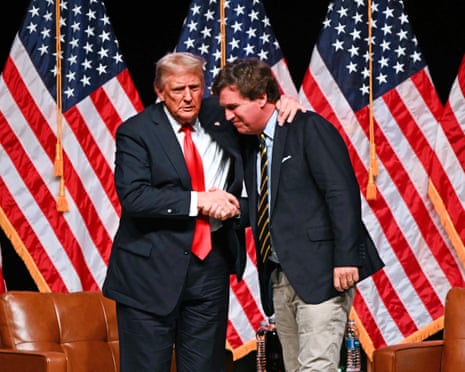
The timing of Carlson's public recantation is particularly significant given the broader political landscape. As the Republican Party continues to grapple with its identity and direction following Trump's defeat in 2024, prominent conservative voices are beginning to reassess their positions and allegiances. Carlson's admission suggests that segments of the conservative movement are growing increasingly critical of Trump's influence and are seeking alternative leadership figures to champion their political vision.
What adds another layer of intrigue to Carlson's recent statements is the unspoken question hovering over his confession: Is he laying the groundwork for his own presidential ambitions in 2028? The podcaster notably stopped short of explicitly addressing whether his public distancing from Trump signals intentions to mount his own campaign. This strategic ambiguity has fueled speculation among political analysts and observers about whether Carlson might be positioning himself as an alternative conservative candidate who could appeal to Trump supporters while maintaining intellectual distance from the former president's more controversial positions and rhetoric.
Throughout his career, Carlson has demonstrated a keen understanding of media influence and political positioning. His ability to reach millions of Americans through his podcast and various media appearances has made him one of the most influential voices within conservative circles. The decision to publicly express regret about supporting Trump represents a calculated move that could enhance his credibility among certain segments of the conservative base while simultaneously differentiating him from Trump as a potential future political figure.
The broader implications of Carlson's statements extend beyond the two individuals involved. His criticism of his previous support for Trump could signal the beginning of a significant realignment within conservative politics and media. As the party navigates its future direction, influential voices like Carlson's carry substantial weight in shaping public opinion and determining which candidates and ideas gain traction within conservative circles. His willingness to publicly criticize his own previous judgment represents a notable departure from the loyalty and consistency typically expected within partisan political circles.
Political analysts have long recognized that the Trump-Carlson relationship represented a marriage of convenience rather than a genuine political partnership grounded in shared values or long-term vision. Trump benefited from Carlson's media platform and rhetorical support, while Carlson gained access to high-profile content and maintained relevance within Trump-dominated conservative discourse. However, as Trump's political fortunes have shifted and his influence within the Republican Party has evolved, the incentives that once bound these two figures together have become increasingly misaligned.
Carlson's public apology also reflects changing attitudes within portions of the conservative media landscape regarding accountability and truthfulness. While conservative media has often been criticized for promoting unsubstantiated claims and misleading narratives, Carlson's acknowledgment that he "misled people" suggests at least some recognition of responsibility for the content and messages he amplified to his substantial audience. This admission, though limited in scope, represents a departure from the defensive posturing that typically characterizes conservative media responses to criticism.
The implications of this political separation could be substantial for the 2028 election cycle. If Carlson does decide to pursue his own presidential campaign or support an alternative conservative candidate, his media platform and substantial audience could prove decisive in shaping the Republican primary race. The conservative base that has followed Carlson's commentary over the years represents a significant electoral constituency, and gaining their support could position any candidate as a formidable challenger to Trump's continued influence within the party.
Looking forward, the trajectory of the Carlson-Trump relationship will likely continue to receive intense scrutiny from political observers, media critics, and the broader public. The extent to which Carlson is genuinely distancing himself from Trump, versus engaging in strategic positioning for future political ambitions, remains an open question. Nevertheless, his public statements represent a significant moment in the evolution of conservative politics and media, suggesting that the once-tight alliance between these two prominent figures is genuinely coming to an end.
As the conservative movement continues to debate its identity and leadership in the post-Trump era, figures like Carlson will play increasingly important roles in determining which voices and visions gain prominence. His decision to publicly acknowledge regrets about his previous Trump support signals that the period of unquestioning loyalty to the former president may be waning among influential conservative media personalities. Whether this represents the beginning of a broader shift within the Republican Party or remains limited to certain media figures and commentators remains to be seen.
Ultimately, the breakdown of the Tucker Carlson-Donald Trump political alliance represents more than just a personal disagreement between two prominent figures. It reflects deeper tensions and realignments occurring within conservative politics as the movement grapples with questions about its future direction, leadership, and values. The coming years will likely reveal whether Carlson's statements represent a genuine shift in his political thinking or represent the opening moves in a strategic repositioning designed to enhance his influence and potential for future political relevance.
Source: The Guardian


