
Turner's Famous Portrait Wasn't a Self-Portrait

Expert claims iconic image inspiring £20 banknote was painted by John Opie, not JMW Turner himself, challenging decades of art history.
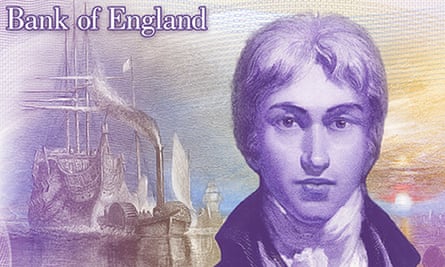
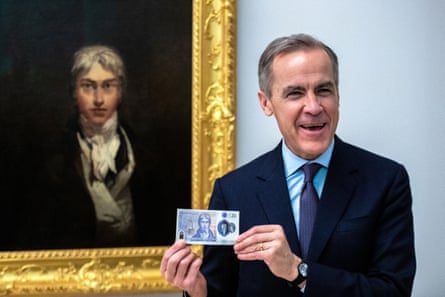
A groundbreaking reassessment of one of the most celebrated works in British art history is challenging long-held assumptions about a portrait that has become synonymous with the Romantic painter JMW Turner. The painting, which graced the new £20 banknote during its 2020 launch by Tate Britain, may not be the iconic self-portrait art historians have believed it to be for centuries.
The revelation comes from Dr James Hamilton, a distinguished Turner scholar who has devoted much of his career to studying the prolific artist and his contemporaries. Hamilton, whose extensive publications on Turner have informed scholarly discourse and whose exhibitions have toured major museums and galleries across the United Kingdom, presents compelling evidence that the portrait currently held in the Tate collection and widely attributed to Turner himself was actually created by another significant figure in the Romantic movement.
The portrait in question has long been considered the most famous image of Turner, serving as the primary visual reference for how the artist is remembered by the public and within academic circles. This attribution has remained largely unchallenged for generations, cementing the work's place in art historical canon and contributing significantly to the public's understanding of Turner's appearance and persona during his lifetime.

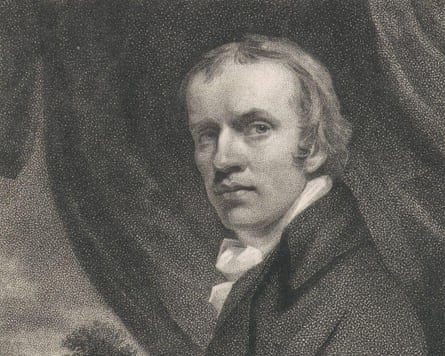
According to Hamilton's analysis, the painting is more likely the work of John Opie, Turner's contemporary and a respected portraitist of the late 18th and early 19th centuries. Opie, who lived from 1761 to 1807, was an accomplished painter in his own right and had connections to the artistic circles in which Turner moved. The stylistic and technical characteristics of the portrait, when examined closely, bear markers consistent with Opie's known techniques and approach to portraiture during this period.
The implications of this attribution shift are far-reaching for the world of art history and conservation. When Tate Britain selected the image for inclusion on the new £20 banknote in 2020, it represented what was believed to be Turner's own rendering of himself, adding an intimate and authentic dimension to the choice. The decision to feature both this portrait and Turner's masterpiece The Fighting Temeraire on the currency was meant to celebrate the artist's enduring cultural significance and artistic achievements.
Hamilton's expertise in Romantic art and his deep familiarity with Turner's body of work, along with that of his peers, positions him as a credible voice in reassessing this work. His previous scholarly contributions have earned him recognition within museum and gallery circles, making his claims worthy of serious consideration by the art historical community.
The question of artistic attribution is never straightforward, particularly when dealing with works created in the 18th and 19th centuries when documentation practices were less rigorous than modern standards. Records regarding the creation, sale, and subsequent ownership of artworks from this era are often incomplete or contradictory, leaving room for scholarly interpretation and reexamination as new evidence or insights emerge.
Hamilton's assertion that the Tate Britain portrait may belong to Opie opens discussions about how institutions catalogue and interpret their collections. Museums and galleries around the world regularly reassess attributions based on new conservation findings, documentary evidence, or scholarly analysis. This process, while sometimes controversial, is essential for maintaining the integrity and accuracy of art historical records.
The timing of this revelation, coming after the portrait's high-profile inclusion on the £20 note, adds another layer of complexity to the situation. The error, if confirmed, would represent one of the more significant misattributions in recent British art history, affecting not just academic understanding but also public perception and the symbolic value assigned to the artwork.
John Opie himself deserves greater recognition in discussions of British Romantic painting, his contributions often overshadowed by more famous contemporaries. If this portrait is indeed his work, it represents a significant example of his skill as a portraitist and his ability to capture the likeness and character of his subjects. Opie's career, though cut short by his death in 1807, produced numerous notable works that merit closer study and appreciation.
The broader context of artistic attribution and expertise becomes relevant here. Art historians rely on multiple forms of evidence including provenance research, stylistic analysis, technical examination, and archival documentation to make determinations about who created a work. When scholars like Hamilton propose revisions to long-accepted attributions, these claims typically undergo rigorous peer review and scrutiny before being widely accepted or formally adopted by major institutions.
The resolution of this attribution question will likely involve consultation with conservation experts, technical analysis, and potentially additional documentary research. Museums such as Tate Britain have sophisticated means of examining artworks at the molecular and microscopic level, allowing conservators and scientists to determine such details as the composition of paints, the age of materials, and the technique employed by the artist.
For the public and for collectors, questions about attribution carry significant weight, affecting not only the historical narrative surrounding an artwork but also its monetary and cultural value. Works thought to be by renowned masters command greater attention and worth than those by lesser-known figures, though this economic reality does not diminish the artistic merit or historical importance of paintings by secondary figures in the canon.
The emergence of this scholarly challenge demonstrates that even the most celebrated and seemingly well-established works remain subject to reexamination and potential reinterpretation. As methodologies in art history continue to evolve and as new evidence sometimes comes to light, our understanding of the past continues to be refined and adjusted. Hamilton's contribution to this ongoing process reflects the dynamic nature of art historical scholarship and the importance of maintaining intellectual rigor in assessing cultural heritage.
Source: The Guardian


