
UAE Investigates Drone Strike Near Abu Dhabi Nuclear Plant

UAE authorities investigate a reported drone strike near Abu Dhabi's nuclear power facility. Officials confirm the incident originated from the western border region.
United Arab Emirates officials have launched a comprehensive investigation into a reported drone strike that occurred near the Abu Dhabi nuclear power plant, marking a significant security incident for the strategically important facility. The strike, which authorities confirm took place in proximity to the nuclear installation, has raised concerns about the nation's air defense capabilities and regional security dynamics. Government representatives have indicated that preliminary findings suggest the unmanned aerial vehicle originated from the country's western border region, though a complete assessment of the incident is still underway.
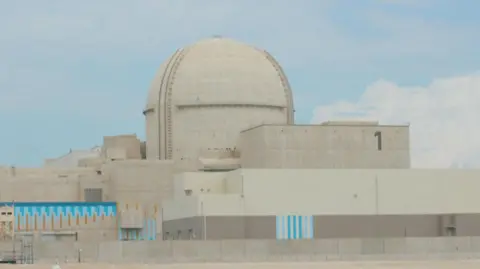
The Abu Dhabi nuclear power plant, formally known as the Barakah Nuclear Energy Plant, represents a critical piece of the UAE's energy infrastructure and has been operating as one of the most advanced nuclear facilities in the Middle East. The plant, located approximately 270 kilometers southwest of Abu Dhabi city, began commercial operations in 2020 and supplies a significant portion of the emirate's electricity needs through its reactor units. The facility adheres to stringent international safety standards and regulatory frameworks established by the International Atomic Energy Agency, making any security incident involving the installation a matter of considerable concern for regional observers and international partners.
Authorities have not disclosed the precise distance between the drone impact and the actual nuclear facility, nor have they provided detailed information regarding any potential damage or casualties resulting from the incident. The investigation team, comprising officials from the UAE's defense ministry and relevant security agencies, is working to identify the source, nature, and capabilities of the unmanned vehicle responsible for the strike. Initial assessments will likely focus on determining whether the drone was remotely operated by hostile forces or represented an accidental incursion into UAE airspace.
The western border region mentioned by UAE officials has historically been a point of concern regarding cross-border security issues and potential infiltration routes for unauthorized aircraft and drones. This geographic area has previously witnessed various incidents involving unmanned systems, and its proximity to neighboring territories adds a layer of complexity to the nation's air defense strategies. The UAE maintains sophisticated radar and missile defense systems designed to detect and intercept airborne threats, making the successful approach of any drone to the nuclear facility a matter requiring urgent clarification regarding system performance and response protocols.
Regional analysts have noted that drone operations in the Persian Gulf region have become increasingly sophisticated over recent years, with various state and non-state actors acquiring advanced unmanned aerial capabilities. The incident near the Barakah plant underscores vulnerabilities that may exist in even heavily defended installations and highlights the evolving nature of modern security threats. Previous years have witnessed multiple drone-related incidents throughout the region, ranging from attacks on critical infrastructure to border surveillance operations, establishing a troubling pattern that security officials continue to address through enhanced countermeasures and international cooperation.
The UAE government has reaffirmed its commitment to maintaining the highest standards of nuclear facility security and protecting its critical infrastructure from all potential threats. International nuclear regulatory bodies and energy organizations have been notified of the incident in accordance with standard protocols for safety-significant events involving nuclear installations. These institutions work closely with the UAE to ensure that all necessary steps are being taken to investigate the incident thoroughly and implement any required corrective measures to prevent similar occurrences in the future.
The timing of this incident carries geopolitical implications given the broader security landscape in the Middle East and the UAE's strategic positioning as a major economic and energy hub. The country's leadership has historically maintained a policy of deterrence through advanced military capabilities and strong defense partnerships with international allies, including the United States and European nations. The drone strike investigation will likely inform future decisions regarding air defense infrastructure investments and coordination mechanisms with regional and international partners to enhance overall security posture.
Security experts suggest that the incident may prompt the UAE to conduct comprehensive reviews of its air defense systems and operational protocols to identify any gaps in coverage or response capabilities. Such reviews typically involve detailed analysis of radar coverage maps, missile defense positioning, and communication systems to ensure optimal effectiveness against evolving threats. The results of these internal assessments may lead to recommendations for system upgrades, additional defensive measures, or procedural modifications designed to strengthen protection of critical national infrastructure.
The investigation's findings, once completed, are expected to be shared with relevant international organizations and key diplomatic partners as part of the UAE's commitment to transparency regarding security incidents involving nuclear facilities. Understanding the origin and intent of the drone strike will be crucial for assessing whether the incident represents an isolated occurrence or part of a broader pattern of hostile activity. This information will also help regional governments and international observers better understand the nature of contemporary security challenges in the Persian Gulf region.
As the investigation proceeds, the Barakah Nuclear Energy Plant continues to operate under standard safety protocols and heightened security measures implemented in response to the incident. The facility's operators have confirmed that all safety systems are functioning normally and that there has been no impact on power generation or environmental safety. International observers will continue monitoring developments in the investigation to assess implications for broader regional security dynamics and the viability of nuclear energy expansion plans throughout the Gulf region.
Source: BBC News


